
Sustainable Food Programs Lotus Ministry Trust: Best Initiatives & Impact

Lotus Ministry Trust's Sustainable Kichuri Initiative has delivered over 1.8 million meals to food-insecure communities across Bangladesh's most remote regions — and the number keeps climbing.
Unlike standard food aid, this program is built to last — sourcing ingredients locally, training women-led enterprises, and establishing community-managed food reserves that function long after relief teams leave.
Kichuri isn't just convenient — it's culturally embedded, micronutrient-fortified, and designed specifically for the nutritional realities of Bangladesh's most vulnerable populations.
The program's local sourcing model keeps economic benefits circulating within communities, turning food relief spending into a stabilizing force for regional farmers and suppliers.
Lotus Ministry Trust identified a critical gap larger aid organizations consistently miss — keep reading to understand exactly how they're filling it, and why their model is drawing attention as a blueprint for effective humanitarian food relief.
Most food aid programs parachute in foreign supplies, hand out packages, and disappear — Lotus Ministry Trust built something fundamentally different in Bangladesh, and the results are impossible to ignore.
Providing Sustainable Humanitarian Relief
Support Lotus Ministry Directly Through The Founders' PayPal

Sustainable food programs are increasingly recognized as the standard for effective humanitarian relief — not because they distribute the most food, but because they create conditions where communities can eventually sustain themselves. The difference between a program that feeds people once and a program that builds lasting food security comes down to design, local integration, and long-term commitment. Lotus Ministry Trust's work in Bangladesh is a direct demonstration of what that looks like in practice.
Article-At-A-Glance: Sustainable Food Programs & Real-World Impact
1.8 million+ meals served across Bangladesh's most food-insecure regions
Cultural relevance is a core design principle, not an afterthought
Local sourcing keeps relief spending inside the communities it serves
Women-led micro-enterprises are embedded into the program structure
Community-managed food reserves provide emergency protection that outlasts relief operations
Lotus Ministry Trust Is Redefining Food Relief in Bangladesh
The standard model of food aid has a well-documented problem: it addresses immediate hunger without touching the systems that create it. Lotus Ministry Trust's Sustainable Kichuri Initiative was designed from the ground up to do both — deliver immediate nutritional relief while simultaneously strengthening the local food economy, building community capacity, and creating income pathways that persist after the relief teams leave.
Since its launch, the initiative has served over 1.8 million meals across Bangladesh's most isolated and underserved communities. That figure is significant not just as a volume metric, but as evidence of sustained operational commitment — consistent delivery across difficult terrain, changing weather conditions, and the logistical complexity of reaching villages that larger organizations routinely miss.
The Gap Lotus Ministry Trust Was Built to Fill
Lotus Ministry Trust identified a critical gap in Bangladesh's humanitarian landscape early: large international aid organizations were consistently failing to reach the most isolated, rural communities. The infrastructure requirements, bureaucratic overhead, and scale-first operational models of major aid bodies made last-mile delivery not just difficult, but functionally impossible in many regions.
Why Large Aid Organizations Miss the Most Vulnerable Communities
Large aid organizations are optimized for efficiency at scale — which means they concentrate resources in areas that are easiest to access and document. Remote villages without reliable road access, consistent communication infrastructure, or proximity to regional distribution hubs fall off the map entirely. This isn't a failure of intent; it's a structural consequence of how large-scale humanitarian logistics work.
The result is a persistent coverage gap at the community level. Families in flood-prone char lands, isolated river delta villages, and mountainous border regions receive little to no formal food assistance during crisis periods — not because aid doesn't exist, but because the delivery systems aren't built to reach them. Lotus Ministry Trust specifically designed its operations to serve exactly these populations.
How Lotus Ministry Trust Maps and Reaches Isolated Villages
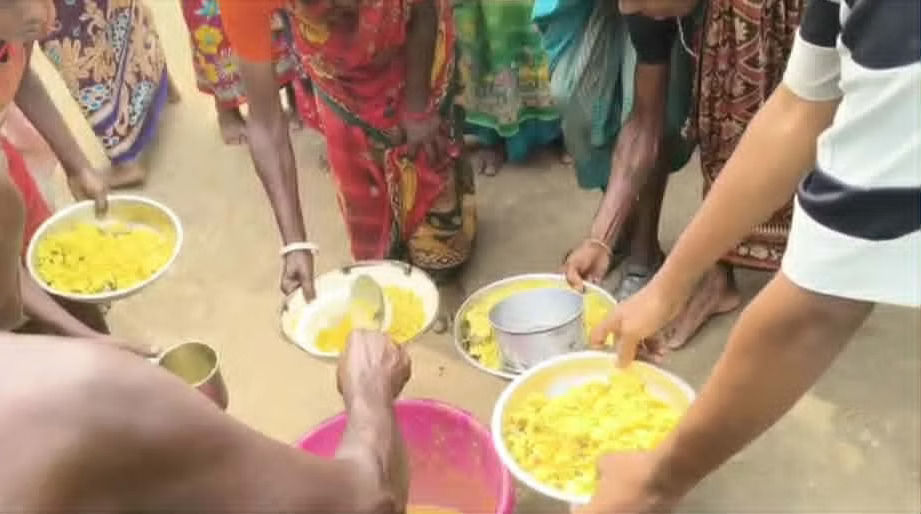
Lotus Ministry Trust uses community-level mapping and volunteer networks to identify and prioritize underserved populations. Rather than relying on centralized government data — which frequently undercounts rural poverty — the organization builds on direct community relationships and field intelligence to locate families who have been consistently overlooked by formal aid systems. Mobile distribution units extend this reach further, allowing volunteers to prepare and serve fresh kichuri on-site in locations where centralized kitchen distribution would be logistically impractical.
What Is the Sustainable Kichuri Initiative
The Sustainable Kichuri Initiative is Lotus Ministry Trust's flagship food relief program — a structured, scalable operation that delivers ready-to-eat, micronutrient-fortified kichuri meals directly to food-insecure families across Bangladesh's most remote regions. It is not a temporary emergency response. It is an ongoing program built around consistent delivery, local sourcing, community integration, and long-term food system strengthening.
Why Kichuri Is the Right Food for Bangladesh's Food Crisis
Kichuri — a traditional dish made from rice and lentils, cooked together with vegetables and spices — is one of the most deeply embedded foods in Bangladeshi culture. It is prepared in homes across every region of the country, recognized immediately by recipients, and carries no cultural friction whatsoever. That cultural familiarity matters enormously in food relief contexts, where unfamiliar or imported foods are frequently rejected, wasted, or consumed reluctantly.
Beyond cultural fit, kichuri is nutritionally practical. The combination of rice and lentils provides complementary amino acids, delivering a more complete protein profile than either ingredient alone. When fortified with micronutrients and prepared with vegetables, it addresses multiple nutritional deficiencies simultaneously — making it an efficient vehicle for both caloric and micronutrient delivery in a single meal.
How Cultural Relevance Makes This Program More Effective Than Standard Aid

Support Food Aid Programs Of Lotus Ministry Trust
Support Lotus Ministry Directly Through The Founders' PayPal
Standard food aid programs frequently ship in commodities that are nutritionally adequate but culturally foreign — dried goods, canned items, or fortified blends that recipients don't recognize and don't know how to prepare. The waste rates in these programs are well-documented. Lotus Ministry Trust's decision to center its program on kichuri eliminates this problem entirely. Recipients receive food they know, trust, and want — which means consumption rates stay high, dignity is preserved, and the social stigma often attached to receiving foreign charity is dramatically reduced.
This isn't a minor operational detail — it is a core design principle. When food relief aligns with local food culture, uptake improves, community cooperation increases, and the program builds the kind of trust that enables longer-term engagement. That trust is what allows Lotus Ministry Trust to move beyond simple meal delivery into deeper community development work.
Nutritional Science Behind the Meal Design
Kichuri's Nutritional Profile: The rice-lentil base of kichuri provides complementary amino acids that together deliver a more complete dietary protein than either ingredient alone. When prepared with vegetables and fortified with micronutrients, a single serving addresses caloric needs, protein requirements, and key micronutrient gaps — including iron, zinc, and B vitamins — that are common in food-insecure populations across Bangladesh.
The fortification component of Lotus Ministry Trust's kichuri recipe is particularly important given Bangladesh's documented micronutrient deficiency profile. Iron deficiency anemia, zinc insufficiency, and vitamin B deficiencies are prevalent across the populations the program serves — especially among young children and women of reproductive age. By building micronutrient fortification directly into the meal recipe rather than relying on separate supplementation programs, the initiative addresses these deficiencies at scale without requiring additional behavioral change from recipients. To learn more about their efforts, visit the Bangladesh Food Relief update. Ingredient sourcing also plays a direct role in nutritional outcomes. Fresh vegetables — sourced from regional farmers wherever supply chains allow — contribute phytonutrients, fiber, and vitamins that dried or processed food aid cannot replicate. The commitment to fresh, locally sourced ingredients isn't just an economic decision; it is a nutritional one, and it reflects a sophisticated understanding of what comprehensive food relief actually requires. The operational infrastructure behind the meal — central kitchens combined with mobile preparation units — ensures that the nutritional quality designed into the recipe is preserved through to delivery. Meals prepared fresh on-site maintain far higher nutritional integrity than pre-packaged alternatives that may have been stored for extended periods, and the mobile unit model makes this level of quality achievable even in the most geographically challenging distribution zones. Learn more about the sustainable food programs that support this initiative.
How Local Sourcing Creates a Stronger Food Economy
Most food relief programs treat procurement as a logistics problem — find the cheapest supplier, move the most volume, minimize cost per meal. Lotus Ministry Trust treats procurement as a development tool. By sourcing rice, lentils, vegetables, and spices from regional farmers and suppliers whenever supply chains allow, the program ensures that a meaningful portion of every relief dollar stays inside the communities it's meant to serve.
This approach transforms food relief from a one-directional transfer into a two-way economic relationship. Farmers gain a reliable institutional buyer with consistent volume requirements. Communities receive fresh, high-quality ingredients that reflect their own food traditions. And the program builds the kind of supplier relationships that strengthen over time — creating a more resilient local food system as a direct byproduct of the relief operation itself.
Buying From Local Farmers Instead of Foreign Suppliers
The decision to source locally rather than import standardized aid commodities carries significant economic consequences. When food aid is imported, the procurement spending leaves the country entirely — benefiting foreign producers and international logistics companies while contributing nothing to the local agricultural economy. Lotus Ministry Trust's local sourcing model keeps that spending circulating regionally, supporting farm-level income, local transport networks, and community markets simultaneously.
How Consistent Institutional Buying Stabilizes Farmer Income
Small-scale farmers in Bangladesh's rural regions face chronic income instability — harvests fluctuate, market prices are unpredictable, and access to reliable buyers is limited. Institutional buyers who purchase consistently and at fair prices represent something genuinely rare in these markets: predictability. When Lotus Ministry Trust purchases from local suppliers across multiple growing seasons, it functions as a stabilizing force in the local agricultural economy, giving farmers the income consistency they need to invest in their own operations.
This stabilizing effect compounds over time. Farmers with reliable income reinvest in better inputs, improve yields, and expand production capacity — which in turn improves the quality and volume of ingredients available to the program. The relationship between institutional buyer and local supplier becomes mutually reinforcing, building agricultural resilience in the same communities that the food relief operation is designed to protect.
Why Women-Led Enterprises Are Central to Long-Term Food Security
Research on household food security consistently shows that when women control income, a higher proportion is directed toward food, nutrition, and children's health compared to male-controlled income. In Bangladesh specifically, women's economic empowerment has been identified as one of the most powerful levers for reducing child malnutrition and improving household dietary diversity. Lotus Ministry Trust's focus on women-led enterprises isn't a social statement — it's a strategic choice grounded in the evidence on what actually improves food security outcomes at the household level.
Women-led food enterprises also create visible economic role models within communities, normalizing female entrepreneurship and expanding the social permission for women's economic participation. Over time, this cultural shift has food security implications that extend far beyond the individual enterprises the grants support — creating communities where women's economic agency is expected, protected, and built upon.
Community-Managed Food Reserves: Emergency Protection Built Into the Program
Bangladesh is one of the world's most disaster-exposed countries. Cyclones, floods, and seasonal food shortages are not exceptional events — they are predictable features of the country's climate and geography. Community-managed food reserves address this reality directly, building emergency food protection into the fabric of communities rather than relying on external response that may arrive too late, at insufficient scale, or not at all.
Lotus Ministry Trust's approach to food reserves goes beyond simply stockpiling supplies. The reserves are community-managed, meaning local people are trained to govern, replenish, and deploy them according to community-determined protocols. This builds institutional capacity at the village level — the kind of practical governance experience that strengthens communities' ability to manage other collective resources over time. When a flood hits or a harvest fails, communities with functioning food reserves don't wait for outside help. They activate a system they already own and already understand.
Lotus Ministry Trust's Expansion Plans and Future Impact

Help Build A Strong Foundation Of Expansion
Support Lotus Ministry Directly Through The Founders' PayPal
The program's track record across Bangladesh's most challenging distribution environments has created a strong foundation for strategic expansion. Lotus Ministry Trust has identified both a clear numerical target and a geographic framework for scaling its impact — adding beneficiaries while extending the mobile distribution network into regions that remain critically underserved.
The 50,000 Additional Beneficiary Target
Lotus Ministry Trust's expansion goal centers on reaching 50,000 additional beneficiaries across Bangladesh's underserved regions. This target is not a round-number aspiration — it reflects specific community-level mapping of populations currently outside the program's reach, combined with a realistic assessment of the operational capacity required to serve them reliably. Achieving it will require expanded kitchen infrastructure, a larger volunteer network, and increased procurement capacity, all of which are being developed in parallel with the organization's ongoing fundraising efforts.
Extending the Mobile Distribution Network Into New Regions
Mobile distribution units are the operational backbone of Lotus Ministry Trust's ability to reach communities that fixed kitchen infrastructure simply cannot serve. Each unit is equipped to prepare fresh kichuri on-site, maintaining meal quality while eliminating the logistical constraints that force other programs to choose between scale and reach. Expanding this network into new regions means more villages get the same quality of service that established program areas already receive — not a reduced version, not a packaged substitute, but fresh, culturally appropriate, nutritionally complete meals prepared and served on location. For more information on their efforts, check out the Bangladesh Food Relief update.
The expansion into new regions also activates the program's broader development mechanisms — local sourcing relationships, women-led enterprise micro-grants, and community food reserve establishment — in communities that currently have none of these protections in place. Every geographic expansion is simultaneously a food security expansion, an economic development intervention, and an emergency preparedness investment. That layered impact is what separates Lotus Ministry Trust's model from single-purpose food delivery operations and makes each new region added to the network a genuine long-term commitment rather than a short-term coverage exercise.
How to Support Lotus Ministry Trust's Food Programs in Bangladesh
Supporting Lotus Ministry Trust's work directly funds meal delivery, local ingredient sourcing, micro-grant disbursement, and food reserve establishment across Bangladesh's most food-insecure communities. Donations are channeled through the organization's active GoFundMe campaign, which supports both ongoing operations and the expansion toward 50,000 additional beneficiaries. Every contribution — regardless of size — translates into measurable outcomes: meals served, farmers supported, women-led enterprises funded, and emergency reserves established in communities that have never had them before.
Frequently Asked Questions
Sustainable food programs go beyond immediate hunger relief — they build the local systems, economic capacity, and community infrastructure that reduce food insecurity over time. Here are the most common questions about how Lotus Ministry Trust's model works in practice.
What Is the Sustainable Kichuri Initiative by Lotus Ministry Trust?
The Sustainable Kichuri Initiative is Lotus Ministry Trust's flagship food relief program in Bangladesh. It delivers ready-to-eat, micronutrient-fortified kichuri meals — made from rice, lentils, vegetables, and spices — directly to food-insecure families in remote, underserved communities. Since its launch, the initiative has served over 1.8 million meals across Bangladesh's most isolated regions, combining immediate nutritional relief with local economic development, women-led enterprise support, and community-managed food reserve establishment.
How Does Lotus Ministry Trust Reach Remote Communities in Bangladesh?
Lotus Ministry Trust uses community-level mapping, direct volunteer networks, and field intelligence to identify and prioritize populations that larger aid organizations consistently miss. Rather than relying on centralized government data that frequently undercounts rural poverty, the organization builds on direct community relationships to locate families who have been overlooked by formal aid systems.
Mobile distribution units extend this reach further — each unit is equipped to prepare fresh kichuri on-site, making quality meal delivery possible in locations where centralized kitchen distribution would be logistically impractical. This combination of ground-level community intelligence and mobile operational infrastructure allows Lotus Ministry Trust to serve the most geographically isolated populations in Bangladesh with the same quality of meal service provided in more accessible areas.
How Are Community-Managed Food Reserves Used During Emergencies?
Community-managed food reserves are stockpiles of essential food staples — rice, lentils, and other core ingredients — governed, replenished, and deployed by local community members according to protocols they establish and manage themselves. When a flood, cyclone, or seasonal food shortage hits, communities with functioning reserves don't wait for external relief response. They activate a system they already own, distributing supplies according to locally determined priorities before outside assistance arrives. For more insights into community initiatives, read about the Sustainable Food Programs by Lotus Ministry Trust.
The management component is as important as the stock itself. Lotus Ministry Trust trains community members to govern the reserves practically — tracking inventory, establishing replenishment schedules, and making deployment decisions collectively. This builds real institutional capacity at the village level, strengthening communities' ability to manage collective resources well beyond the food security context.
In Bangladesh's disaster-exposed landscape — where cyclones and floods are predictable seasonal events rather than rare emergencies — community-managed reserves aren't supplementary infrastructure. They are a core component of any food security strategy that takes the country's climate and geographic realities seriously. Lotus Ministry Trust builds them into every community it works with, not as an optional add-on, but as a non-negotiable element of lasting food resilience.
How Can I Donate to Lotus Ministry Trust's Food Relief Programs?
Donations to Lotus Ministry Trust's food relief programs are accepted through the organization's active GoFundMe campaign, which funds ongoing meal delivery operations, local ingredient sourcing, micro-grant disbursement to women-led enterprises, and community food reserve establishment across Bangladesh's underserved regions.
Contributions at any level translate directly into program impact. Ingredient procurement for a single day of kichuri production, a micro-grant that capitalizes a women-led food enterprise, or a reserve stockpile that protects a village through the next flood season — each of these outcomes is funded by individual donor support. The program's local sourcing model also means that donations generate economic impact beyond the meals themselves, circulating relief spending through regional agricultural markets and keeping the financial benefits of food aid inside the communities it's designed to serve.
Lotus Ministry Trust has been making significant strides in promoting sustainable food programs. Their initiatives focus on providing nutritious meals while minimizing environmental impact. One of their notable efforts is the Sustainable Food Programs which aim to educate communities about eco-friendly eating habits and support local farmers.





Comments