
Sustainable Food Programs by Lotus Ministry Trust

Article At A Glance
Lotus Ministry Trust's Sustainable kichuri Initiative has served over 1.8 million meals to food-insecure communities across Bangladesh's most remote regions.
Kichuri — a traditional rice and lentil dish — is fortified with micronutrients to meet international nutritional standards while honoring local food culture.
The program's ready-to-eat format removes critical barriers to food access, especially in emergency situations where cooking facilities are unavailable.
Local sourcing from regional farmers doesn't just feed communities — it actively strengthens the local economy and builds long-term food security.
Lotus Ministry Trust's expansion plans aim to reach 50,000 additional people, but the real story is how they're doing it — and why their model is turning heads in humanitarian relief circles.
Most food aid programs parachute in foreign supplies, hand out packages, and leave — Lotus Ministry Trust built something entirely different in Bangladesh.
Support Sustainable Food Relief In Bangladesh
Support Lotus Ministry Directly Through The Founders' PayPal

Lotus Ministry Trust identified a critical gap in Bangladesh's humanitarian landscape: large aid organizations were consistently missing the most isolated, food-insecure communities. Rather than replicate what wasn't working, they designed a program rooted in cultural respect, nutritional science, and local economic investment. The result is the Sustainable Kichuri Initiative — a food relief model that is redefining what sustainable food aid actually looks like on the ground.
Lotus Ministry Trust Is Feeding Bangladesh Differently
Bangladesh faces some of the most complex food security challenges in South Asia. Geographic isolation, seasonal flooding, and economic marginalization push millions of families into acute hunger — particularly in the country's northern regions. Larger aid organizations, constrained by logistics and scale requirements, often cannot reach the villages where the need is greatest.
Lotus Ministry Trust fills that gap with precision. Their specialized logistics teams have physically mapped hundreds of isolated communities, cross-referencing food insecurity levels with existing aid presence. Where the map shows the most need and the least coverage, that's exactly where they go.
What Is the Sustainable Kichuri Initiative
The Sustainable Kichuri Initiative is Lotus Ministry Trust's flagship food relief program in Bangladesh. It delivers ready-to-eat, culturally appropriate, micronutrient-fortified kichuri meals directly to families in remote, underserved communities — with a focus on regions that larger humanitarian organizations consistently overlook. The program integrates local sourcing, community-managed food reserves, and resilience-building activities to move communities from immediate relief toward long-term food security.
Kichuri is a dish deeply embedded in the food traditions of South Asia — a simple, comforting combination of rice and lentils that families across Bangladesh have eaten for generations. Lotus Ministry Trust took that cultural foundation and built a nutritional powerhouse on top of it. Every serving is carefully formulated to deliver essential calories, protein, and targeted micronutrients in a single, complete meal.
The initiative isn't just about feeding people today. It's structured to address the root conditions that make communities vulnerable to food insecurity in the first place. From local farmer partnerships to community-managed food reserves, every element of the program is designed with sustainability — not just survival — in mind.
Why Kichuri Works as Sustainable Food in Relief
Choosing kichuri wasn't accidental. It was a deliberate, evidence-informed decision that separates this program from aid efforts that impose foreign food solutions on communities with their own established food cultures. Here's why it works so effectively as a relief food:
Cultural familiarity: Recipients recognize and accept the meal immediately, eliminating the resistance that foreign food aid frequently triggers.
Easy digestibility: The rice and lentil combination is gentle on digestive systems, including those of malnourished children and elderly recipients.
Complete nutrition in one serving: The dish provides carbohydrates, plant-based protein, and essential micronutrients without requiring supplemental foods.
Low preparation complexity: Central kitchen production is highly scalable, allowing Lotus Ministry Trust to rapidly increase output during crisis periods.
Local ingredient availability: Core ingredients are grown regionally, supporting local supply chains rather than disrupting them.
The cultural dimension matters more than many aid organizations acknowledge. When recipients see familiar food, participation rates climb and the dignity of the relief experience is preserved. Lotus Ministry Trust understood this from the beginning, and it shows in their results.
Micronutrient Fortification for Vulnerable Populations
A bowl of plain kichuri feeds hunger. Lotus Ministry Trust's fortified version addresses the hidden hunger that standard food relief misses entirely. The organization enhances every serving with carefully selected micronutrients specifically chosen to target the most common nutritional deficiencies found in Bangladesh's vulnerable populations. This level of nutritional intentionality is rare in grassroots food relief programs and reflects a sophisticated understanding of what true food security actually requires.
Ready-to-Eat Format Removes Barriers to Access
In emergencies — floods, displacement, infrastructure collapse — cooking facilities disappear fast. A food relief program that requires recipients to cook creates an immediate access barrier for the most vulnerable. Lotus Ministry Trust's ready-to-eat format eliminates that barrier entirely.
Meals arrive prepared, portioned, and ready to consume. For families without fuel, without functioning kitchens, or without the physical capacity to cook — this distinction isn't a convenience. It's the difference between eating and going without.
How Sustainable Food Gets From Kitchen to Remote Village

Your Donations Help Keep Them Nourished
Support Lotus Ministry Directly Through The Founders' PayPal
The logistics behind large-scale food relief in rural Bangladesh are genuinely complex. Road infrastructure in northern regions is often unpaved, narrow, and seasonally impassable. Lotus Ministry Trust has built a distribution system specifically engineered for these conditions — not adapted from systems designed for urban aid delivery, but purpose-built for the communities they serve.
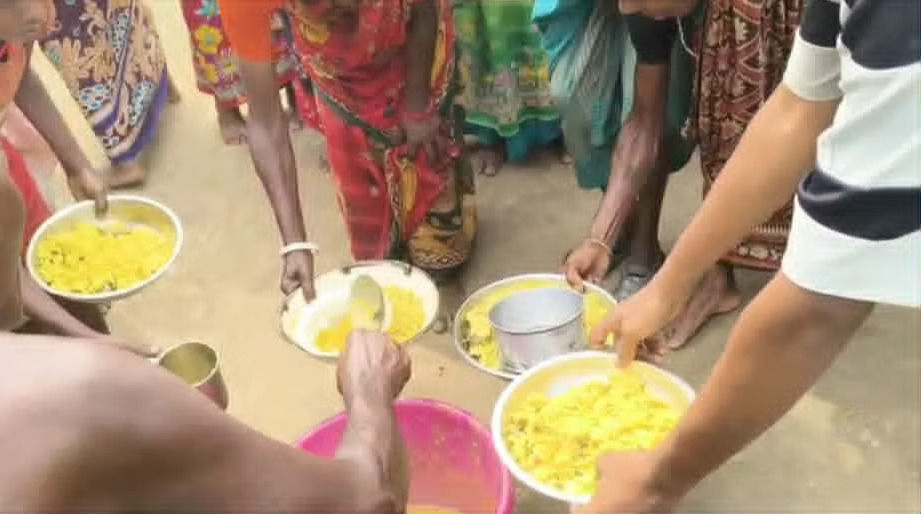
Central kitchens handle large-scale daily meal production using locally sourced ingredients wherever possible. From there, a fleet of specially adapted vehicles — capable of navigating the narrow rural roads that standard aid vehicles cannot access — carries prepared meals to distribution points across hundreds of villages. Portable kitchen infrastructure extends the reach even further, allowing on-site preparation in the most remote locations.
Distribution at a Glance: 📅 Daily meal production at central kitchens → 🚌 Specially adapted vehicles for narrow rural roads → 🏠 Village distribution points → 🍳 Ready-to-eat meals delivered directly to families
Central Kitchens and Daily Meal Production
Behind every bowl of kichuri is a production system designed for both scale and nutritional consistency. Lotus Ministry Trust operates central kitchens that source rice, lentils, vegetables, and spices from regional farmers and suppliers whenever supply chains allow. This local purchasing approach keeps ingredient quality high, costs competitive, and economic benefits circulating within the communities the program serves.
Mobile Distribution Networks in Hard-to-Reach Areas
Getting food to isolated villages requires more than good intentions — it requires infrastructure built specifically for the challenge. Lotus Ministry Trust's mobile distribution network uses specially adapted vehicles that can navigate the narrow, often unpaved roads connecting Bangladesh's most remote communities. Routes are mapped and updated seasonally to account for monsoon flooding and road degradation, ensuring that distribution continues even when conditions deteriorate.
Portable kitchen units extend the network's reach into villages where even adapted vehicles struggle to deliver pre-prepared meals at scale. These units allow Lotus Ministry Trust volunteers to prepare fresh kichuri on-site, maintaining meal quality while eliminating the logistical constraints of long-distance food transport. It's a flexible, resilient system — and that flexibility is precisely what makes it work where others fail.
The Numbers Behind 1.8 Million Meals
Numbers tell part of the story. Since the Sustainable Kichuri Initiative launched, Lotus Ministry Trust has served over 1.8 million meals across Bangladesh's most food-insecure regions. That figure represents not just volume, but sustained operational commitment — consistent delivery through flooding seasons, infrastructure failures, and the compounding crises that define life in Bangladesh's most vulnerable communities. Behind every meal is a logistics decision, a sourcing choice, and a volunteer showing up.
150,000 Beneficiaries Across 217 Communities
Total meals served: Over 1.8 million and growing
Direct beneficiaries reached: 150,000 individuals
Communities served: 217 villages across Bangladesh's most isolated regions
Primary focus areas: Northern Bangladesh, where food insecurity and aid gaps are most severe
Priority recipients: Children, elderly populations, and women-headed households
These numbers reflect a program that has moved well beyond pilot phase. Serving 217 distinct communities requires a level of geographic reach and operational consistency that most grassroots organizations never achieve. Lotus Ministry Trust has built the systems to sustain it.
The beneficiary profile matters as much as the count. Children in early developmental stages, elderly individuals with limited mobility, and women-headed households facing compounded economic hardship represent the highest-need recipients — and they are precisely the populations Lotus Ministry Trust prioritizes in its distribution planning.
What's particularly significant is that these are communities where, in many cases, no other organized food relief was reaching them at all. The 150,000 beneficiaries aren't duplicates of populations served by larger organizations. They are people who were, until Lotus Ministry Trust arrived, simply being missed.
Childhood Malnutrition Reductions in Supported Areas
Acute malnutrition in early childhood creates consequences that last a lifetime — stunted physical development, compromised cognitive function, and weakened immune systems that compound vulnerability across generations. In communities supported by the Sustainable Kichuri Initiative, the micronutrient-fortified meals directly target the specific deficiencies most responsible for these outcomes. Consistent access to nutritionally complete meals, delivered over sustained periods rather than as one-time interventions, is what drives measurable change in childhood nutrition status.
Local Sourcing Turns Relief Into Economic Investment
Most food relief programs create a one-directional flow: resources come in from outside, food gets distributed, and the economic activity stops there. Lotus Ministry Trust deliberately broke that model. By prioritizing local sourcing for ingredients, the Kichuri Initiative transforms every meal produced into a small act of local economic investment. The farmers who grow the rice and lentils, the suppliers who provide spices and vegetables, the women-led enterprises involved in food preparation — all of them benefit directly from the program's activity.
Partnerships With Regional Farmers and Suppliers
Rather than importing standardized food aid that undercuts local agricultural markets, Lotus Ministry Trust purchases ingredients from regional farmers and suppliers whenever supply chains allow. This approach keeps procurement costs competitive while ensuring that the economic benefit of food relief spending stays within the communities it's meant to serve. Local farmers gain a reliable institutional buyer; Lotus Ministry Trust gains fresh, culturally appropriate ingredients; and communities receive meals that reflect their own food traditions. It's a supply chain designed to create value at every point rather than extract it.
How Local Purchasing Builds Future Food Security
When local farmers earn consistent income from supplying a reliable institutional buyer, they can invest in their own production capacity — better seeds, improved storage, more resilient farming practices. That increased capacity means more food available locally during future shortage periods, reducing the community's overall vulnerability to the supply chain disruptions that trigger food crises in the first place. Lotus Ministry Trust's local purchasing strategy isn't just ethical sourcing — it's a long-term investment in the food system resilience of every community it touches.
Plans to Reach 50,000 More People

Any Small Gift Is A Massive Benefit
Support Lotus Ministry Directly Through The Founders' PayPal
Lotus Ministry Trust isn't slowing down. The organization has outlined concrete expansion plans targeting 50,000 additional beneficiaries across new communities in Bangladesh's most underserved regions. This growth isn't simply about scaling meal numbers — it involves extending the mobile distribution network, establishing new community-managed food reserves, and deepening local sourcing partnerships to sustain the increased volume without compromising nutritional quality or cultural appropriateness.
Funding remains the primary variable determining how quickly that expansion happens. Every donation directly translates into mapped communities, adapted vehicles on narrow roads, and fortified bowls of kichuri reaching families who have no other consistent source of nutritional support. The infrastructure exists. The demand is documented. What closes the gap is sustained financial support from people who understand that real food security requires real, ongoing investment — not one-time charity.
Lotus Ministry Trust's Model Is What Sustainable Food Relief Looks Like
Sustainable food programs aren't defined by how much food they distribute — they're defined by what they leave behind. Lotus Ministry Trust's Kichuri Initiative leaves behind stronger local food economies, community-managed emergency reserves, women with income-generating capacity, and farmers with reliable institutional buyers. The meals are the entry point. The systemic change is the goal. In a humanitarian landscape full of programs that feed people once and move on, Lotus Ministry Trust is building something that compounds — and that distinction is exactly why their model deserves attention from anyone serious about what sustainable food relief can actually achieve.
Frequently Asked Questions
As the Sustainable Kichuri Initiative continues to grow, supporters, partners, and community members consistently raise questions about how the program works, who it reaches, and how to get involved. The answers below address the most common inquiries directly.
What Is Kichuri and Why Does Lotus Ministry Trust Use It for Sustainable Food Relief?
Kichuri is a traditional South Asian dish made from rice and lentils, deeply familiar to communities across Bangladesh
It provides a complete nutritional profile — carbohydrates, plant-based protein, and essential micronutrients — in a single serving
Lotus Ministry Trust fortifies each serving with targeted micronutrients to address the specific deficiencies most common in vulnerable populations
Its cultural familiarity drives high acceptance rates and preserves recipient dignity in ways that foreign food imports cannot
The dish is easily digestible, making it appropriate for children, elderly recipients, and individuals with compromised health
Kichrui is not a compromise or a second-best option — it is the right food for the right context. Lotus Ministry Trust's decision to center the program on a culturally embedded food rather than an imported commodity reflects a genuine understanding of what effective, dignified food relief requires.
The fortification layer elevates the dish from a comfort food to a clinical nutritional intervention. That combination — cultural resonance plus targeted nutritional science — is what makes the Sustainable Kichuri Initiative distinctly effective compared to relief programs that treat all populations as nutritionally identical regardless of local context.
How Does Lotus Ministry Trust Reach Remote Villages in Bangladesh?
Lotus Ministry Trust uses a purpose-built mobile distribution network consisting of specially adapted vehicles capable of navigating the narrow, often unpaved rural roads that connect Bangladesh's most isolated communities. Routes are mapped and updated seasonally to account for monsoon flooding and infrastructure degradation. Where vehicle access is limited, portable kitchen units allow on-site meal preparation, ensuring that geographic barriers never become reasons to leave a community unserved.
How Many People Has the Sustainable Kichuri Initiative Helped So Far?
The initiative has served over 1.8 million meals to more than 150,000 direct beneficiaries across 217 communities in Bangladesh. The focus has been deliberately concentrated in northern Bangladesh, where the combination of geographic isolation and acute food insecurity creates the greatest unmet need. These are communities that, in many cases, had no consistent organized food relief presence before Lotus Ministry Trust arrived.
The scale of 217 communities is operationally significant. It reflects not just ambition but the actual logistical capacity Lotus Ministry Trust has built — mapped routes, community relationships, local sourcing networks, and volunteer infrastructure that makes consistent, repeated delivery possible rather than occasional. These aren't one-time distributions. They represent sustained nutritional support across some of Bangladesh's hardest-to-reach populations.
How Does Lotus Ministry Trust Support Local Economies Through Food Relief?
Lotus Ministry Trust purchases rice, lentils, vegetables, and spices from regional farmers and suppliers whenever supply chains allow, keeping the economic benefit of procurement spending circulating within the communities the program serves. This local sourcing strategy creates a reliable institutional market for small-scale regional farmers, enabling them to invest in their own production capacity and build greater agricultural resilience over time.
Beyond ingredient sourcing, the organization provides micro-grants to women-led food enterprises within supported communities. These grants build household-level income capacity that persists independently of relief operations — transforming the program from a food delivery service into a genuine economic development intervention. Together, local purchasing and micro-grant support create the conditions for communities to gradually reduce their reliance on external food relief entirely.
How Can I Support Lotus Ministry Trust's Sustainable Food Programs in Bangladesh?
Direct financial contributions are the most immediate way to extend the Kichuri Initiative's reach. Every donation funds meal production, distribution logistics, local ingredient sourcing, and the community reserve systems that protect villages during future crises. Contributions of any size translate directly into operational capacity — more routes covered, more communities mapped, more families eating consistently nutritious meals.
You can support the program directly through Lotus Ministry Trust's urgent food relief campaign, where funds are allocated specifically to Bangladesh food security operations. The campaign page provides transparency into how contributions are used and tracks progress toward the 50,000 additional beneficiary goal.





Comments