
Lotus Ministry Trust Relief Amid Rising Food Prices

Article At A Glance
Food prices in 2026 are predicted to increase 3.4% overall, with 9 out of 15 food categories growing faster than their 20-year historical average.
The Strait of Hormuz conflict, extreme weather, and agricultural labor shortages are the three compounding forces pushing food costs to levels not seen since 2022.
Lotus Ministry Trust is on the front lines of food relief, serving vulnerable communities at a time when the cost of putting food on the table has never been harder.
Farm-level vegetable prices alone are predicted to spike 20.5% in 2026 — a direct threat to food banks and relief organizations trying to stretch every donated dollar.
Keep reading to find out which food categories are hit hardest, and how organizations like Lotus Ministry Trust are adapting their relief operations in real time.
Food Prices Are Rising Fast — Here Is What Lotus Ministry Trust Is Doing About It

We Are All Feeling The Pinch - Please Help
Support us directly through the founders' PayPal

Groceries just had their biggest price hike in years, and experts warn it is about to get worse. For families already living on the edge, that is not a headline — it is a dinner table reality. Lotus Ministry Trust is one of the organizations stepping into that gap, providing food relief to communities that simply cannot absorb another price increase.
According to the USDA's May 2026 Food Price Outlook, all food prices are predicted to rise 3.4% this year, with food-at-home prices climbing 3.2%. That follows increases of 2.3% in 2024 and 2.9% in 2025 — a trend that has been slow to ease and shows no sign of stopping. For a food relief ministry operating on donations and volunteer labor, every percentage point matters.
Why Food Relief Efforts Matter More Than Ever in 2026
The pressure on food relief organizations in 2026 is unlike anything seen since the inflation spike of 2022, when food prices surged 9.9% — the fastest increase since 1979. While the rate of increase has slowed since then, prices have not come down. They have continued climbing on top of an already elevated base, meaning families are paying significantly more than they were just four years ago.
What makes 2026 particularly challenging is that multiple crises are hitting at the same time. It is not one bad harvest or one supply chain disruption. It is several compounding pressures colliding, making food more expensive to grow, process, transport, and stock on store shelves.
Geopolitical conflict disrupting shipping through the Strait of Hormuz
Extreme weather events reducing crop yields across key agricultural regions
Immigration policy changes creating labor shortages on farms
Higher fertilizer costs passed directly to consumers through the supply chain
Price increases taking three to six months to appear on store shelves — meaning the worst is still ahead
For ministries and food banks, this environment means sourcing food costs more, donations don't stretch as far, and the number of people needing help keeps growing. That is the reality Lotus Ministry Trust is operating in right now.
What Is Driving Food Prices Up in 2026
Three forces are colliding in 2026 to push food prices higher: geopolitical conflict, climate disruption, and domestic labor shortages. Purdue University economists Ken Foster and Bernhard Dalheimer have noted that higher costs to produce, process, store, and transport food typically take three to six months to show up on supermarket shelves — and once prices rise, they fall slowly. That delay means consumers and relief organizations haven't yet felt the full weight of what's coming.
"We're waiting to see what the June numbers and the May numbers might show as they come out in terms of… the extent to which energy shocks in the Strait of Hormuz and shipping blockades and so forth are going to impact food prices."— Purdue University Economists, May 2026
Middle East Conflict and Strait of Hormuz Disruptions
The Strait of Hormuz is not just an oil chokepoint — approximately 30% of the world's fertilizer supply moves through it. When that shipping lane is disrupted, fertilizer costs spike, and those costs seep down the supply chain directly into the price of growing food. Higher production costs for farmers eventually become higher prices at the register, with a lag of several months between the disruption and the grocery store impact.
Extreme Weather Shrinking Crop Yields
Climate-driven weather events are shrinking harvests at the source. Unpredictable growing seasons, droughts, and flooding are reducing the volume of produce available, which drives up prices even before transportation and processing costs are added. Farm-level vegetable prices are predicted to increase 20.5% in 2026, with a wide prediction interval ranging from 3.6% to 42.7% — a range that reflects just how volatile weather-driven supply has become.
How Fuel Costs Ripple Through the Food Supply Chain
Energy shocks don't stay contained to gas stations. When fuel costs rise due to Strait of Hormuz disruptions, the cost of running refrigerated trucks, processing plants, and cold storage facilities all increase simultaneously. That ripple effect touches nearly every step between a farm and a food pantry shelf.
Fertilizer Costs and the 30% Supply Risk Through the Strait
With roughly 30% of global fertilizer supply routed through the Strait of Hormuz, any prolonged disruption directly threatens agricultural productivity worldwide. Higher fertilizer prices mean higher costs to grow everything from vegetables to grain — costs that farmers cannot absorb indefinitely and that eventually pass to consumers, food banks, and relief organizations buying supplies in bulk.
Which Food Categories Are Hit Hardest

Times Are Tough For Everyone—Your Support Can Keep Us Going
Support us directly through the founders' PayPal
Not all food categories are rising at the same pace, but the ones climbing fastest are the ones that matter most for families and food relief programs. Fresh fruits and fresh vegetables are among the categories predicted to grow faster than their 20-year historical average in 2026. These are staple proteins and produce items — the building blocks of a nutritious meal — and they are becoming harder to afford and harder to source in bulk.
Food Categories Growing Faster Than Their 20-Year Average
According to the USDA's May 2026 Food Price Outlook, the following categories are all projected to outpace their historical average growth rates this year:
Fresh fruits — vulnerable to weather events and seasonal supply gaps
Fresh vegetables — farm-level prices predicted to spike up to 20.5% in 2026
Processed fruits and vegetables — rising input and packaging costs compounding shelf prices
Dairy products — feed costs and energy price increases hitting production
Fats and oils — supply chain sensitivity to both weather and geopolitical disruptions
For food relief organizations purchasing these items in volume, even a 3% to 5% increase across multiple categories adds up to thousands of dollars in additional operational costs per month.
The Bright Side: Some Categories Are Declining
Cereal and bakery products are among the categories predicted to grow slower than their 20-year historical average in 2026. Dairy products, and fats and oils are actually predicted to decline compared to 2025 prices. These categories represent an important opportunity for food relief programs to stretch their budgets by leaning into lower-cost protein and staple options where possible.
How Lotus Ministry Trust Is Responding to the Food Crisis
Sourcing affordable bulk staples during price dips to extend food relief supplies
Coordinating with local donors and food businesses to reduce procurement costs
Focusing distribution on the most nutritionally vulnerable community members
Adapting meal and parcel programs to reflect what is actually affordable and available
Relying on volunteer networks to keep operational costs low while demand grows
Food relief ministry work is not static — it has to move with the market. As beef prices climb and fresh vegetables become harder to source affordably, organizations like Lotus Ministry Trust must constantly recalibrate what they can offer and how they deliver it. That kind of operational flexibility is what separates ministries that survive difficult economic periods from those that cannot keep up.
The 2026 food price environment is particularly demanding because it is not one spike in one category — it is broad-based pressure across almost every item on a weekly shopping list.
When food categories are all rising faster than their long-term average simultaneously, there is no easy substitution strategy. The whole basket costs more, and that is exactly what relief organizations are navigating right now.
Community support has never been more critical. When individuals donate to food relief efforts, they are not just covering the cost of a single meal — they are helping an organization absorb rising procurement costs, maintain consistent distribution, and keep showing up for families who have nowhere else to turn. Every dollar donated in 2026 has to work harder than it did in 2024, and that makes donor participation more meaningful than ever. For more insights, read about the biggest price hike in years and its impact on families.
The organizations that are best positioned to weather this period are the ones with strong community roots, lean operations, and a clear mission. Lotus Ministry Trust fits that profile — a ministry that knows its community, understands the need, and is actively adapting its food relief model to meet the moment.
Who Lotus Ministry Trust Serves
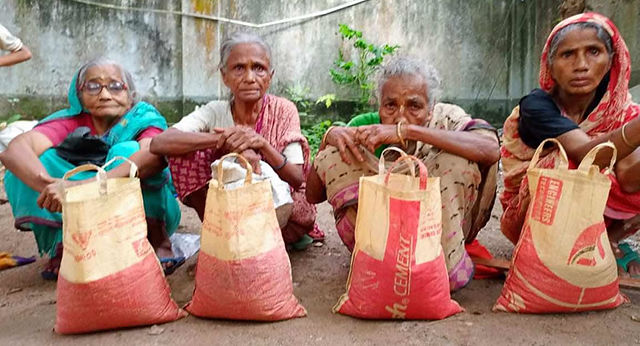
Lotus Ministry Trust directs its food relief efforts toward individuals and families facing food insecurity — people for whom rising food prices are not a news story but a daily hardship. This includes low-income households, elderly individuals on fixed incomes, and families caught between working and still not being able to afford consistent, nutritious food. As food-at-home prices continue to rise, the gap between what these households can afford and what they actually need grows wider.
The Types of Food Relief Provided
Food relief from Lotus Ministry Trust is designed to be practical and consistent. Rather than one-off distributions, the ministry focuses on regular support that families can rely on — whether that is weekly food parcels, community meals, or emergency provisions for households in sudden crisis. The goal is dignified, dependable access to food. This effort is crucial as food prices have seen significant hikes, making food security a pressing issue.
The types of food provided are adapted based on availability, cost, and nutritional value. With fresh vegetables predicted to spike as much as 20.5% in 2026, relief packages may lean more heavily on shelf-stable alternatives like canned goods, dried legumes, and cereal products — categories where prices are holding steadier. That kind of real-time adaptation is what effective food relief looks like on the ground.
How the Rising Cost of Food Affects the Trust's Operations
When food prices go up, food relief organizations feel it from two directions at once. The cost of sourcing food increases while the number of people needing assistance also grows — because rising food prices push more households into food insecurity. It is a squeeze that tightens with every percentage point increase in the Consumer Price Index.
For Lotus Ministry Trust, this means that maintaining current levels of food relief in 2026 costs meaningfully more than it did in 2023 or even 2025. The ministry must raise more, source smarter, and operate leaner — all while ensuring that the people who depend on them continue to receive the support they need without interruption.
How You Can Support Lotus Ministry Trust's Food Relief Work

Let’s Pull Together to Make a Difference
Support us directly through the founders' PayPal
Supporting Lotus Ministry Trust does not require a large commitment — it requires a consistent one. In an environment where food prices are rising across nearly every category, even a small monthly donation creates a reliable foundation that allows the ministry to plan, purchase in advance, and serve more people without interruption. Whether you give financially, donate food directly, or offer your time as a volunteer, every form of support translates directly into meals for families who need them.
If you are looking for the most impactful way to help, monetary donations typically go further than food donations during high-inflation periods. That is because organizations like Lotus Ministry Trust can leverage bulk purchasing relationships and supplier partnerships to stretch every donated dollar further than an individual could at a retail store. Your $20 donation may purchase significantly more food through the ministry's channels than it would off a supermarket shelf.
Donate financially — recurring monthly donations help the ministry forecast and plan distributions
Donate food — shelf-stable items like canned goods, dried legumes, rice, and pasta are always needed
Volunteer your time — food sorting, packing, and distribution events rely on hands-on community support
Spread the word — sharing the ministry's work on social media and within your community increases reach and donor participation
Organize a food drive — workplaces, schools, and community groups can collect and deliver donations in bulk
The most important thing is to act now. With food prices predicted to keep rising through the remainder of 2026, demand on food relief organizations will continue to grow. The communities Lotus Ministry Trust serves cannot wait for conditions to improve on their own — they need support today.
Frequently Asked Questions
These are the questions most commonly asked about Lotus Ministry Trust and the broader food relief situation in 2026. If you are new to this topic or looking for a quick reference, this section covers the most important ground.
What Is Lotus Ministry Trust and What Do They Do?
Lotus Ministry Trust is a food relief organization that provides consistent, dignified food support to individuals and families experiencing food insecurity. The ministry operates through a combination of community donations, volunteer labor, and supplier partnerships to source and distribute food to those who need it most — including low-income households, elderly individuals on fixed incomes, and families in sudden financial crisis. Their work is especially critical in 2026, as rising food prices push more households below the threshold of food security.
Why Are Food Prices So High in 2026?
Food prices in 2026 are being pushed higher by three compounding forces hitting simultaneously:
Geopolitical conflict disrupting shipping through the Strait of Hormuz, affecting fuel and fertilizer costs
Extreme weather events reducing crop yields and shrinking the supply of fresh produce
Agricultural labor shortages driven by changes in immigration policy, reducing the workforce available to harvest crops
According to the USDA's May 2026 Food Price Outlook, all food prices are predicted to increase 3.4% in 2026, with food-at-home prices rising 3.2%. Nine out of fifteen food categories tracked are growing faster than their 20-year historical average rate of increase — meaning this is not a short-term blip but a broad structural shift in what food costs.
Purdue University economists Ken Foster and Bernhard Dalheimer have noted that price increases typically take three to six months to appear on supermarket shelves after the underlying cost pressures occur. That delay means consumers have not yet seen the full impact of 2026's disruptions reflected in grocery store prices.
The last time food price inflation was this severe was 2022, when prices surged 9.9% — the fastest increase since 1979. Although the pace has slowed since then, prices have continued rising on top of an already elevated base, meaning the cumulative impact on household budgets is significant.
How Does the Strait of Hormuz Conflict Affect Food Prices?
Approximately 30% of the world's fertilizer supply is transported through the Strait of Hormuz. When conflict or shipping blockades disrupt that route, fertilizer becomes more expensive globally. Farmers pay more to grow crops, those costs are passed on to food processors and distributors, and eventually — three to six months later — consumers see higher prices on store shelves. It is a supply chain reaction that starts with geopolitics and ends at the grocery register.
Which Foods Are Expected to Get More Expensive in 2026?
The USDA's May 2026 Food Price Outlook identifies fresh fruits and fresh vegetables as among the categories predicted to grow faster than their 20-year historical averages. Farm-level vegetable prices alone are predicted to increase 20.5% in 2026, with a prediction interval as high as 42.7%. On the other side, cereal and bakery products are among the categories expected to see slower growth or even price declines — offering some relief for households and food relief organizations that can shift their sourcing accordingly.
How Can I Donate or Volunteer With Lotus Ministry Trust?
Getting involved with Lotus Ministry Trust starts with a single step — reaching out through their website or showing up to a local distribution or volunteer event. The ministry welcomes both first-time and recurring donors, and both in-person and remote forms of support. For more insights on how rising food prices impact such initiatives, you can read about the biggest price hike in years.
Monetary donations are the most flexible form of support because they allow the ministry to purchase what is most needed at any given time, respond to supply shortages, and plan distributions with confidence. In a year when food costs are rising faster than most household budgets, that flexibility is especially valuable.
Food donations are also welcome, particularly shelf-stable items that store easily and provide consistent nutrition. Canned proteins, dried beans and lentils, rice, oats, and pasta are among the most useful items for a food relief operation managing unpredictable fresh produce costs.
Volunteering your time is another high-impact option — food sorting, packaging, and distribution events are logistically intensive, and every extra set of hands allows the ministry to serve more families per event. Even a few hours per month makes a measurable difference in how many people receive food relief.
Lotus Ministry Trust is a community-powered organization, and its ability to respond to the 2026 food crisis depends entirely on whether the community shows up — visit their website to find out exactly how to get involved and what support is most needed right now.









Comments