
Lotus Ministry Trust Brings Food Security To Rural Bangladesh

Food insecurity in rural Bangladesh affects millions of families, driven by extreme poverty, seasonal flooding, and systemic agricultural vulnerabilities that large international organizations often fail to address at the community level.
Northern Bangladesh's five most vulnerable districts — Kurigram, Lalmonirhat, Nilphamari, Rangpur, and Gaibandha — consistently record the highest poverty and food insecurity rates in the country.
Lotus Ministry Trust operates a three-phase model combining immediate rice and lentil distribution, agricultural rehabilitation with flood-resistant seeds, and climate-adaptive farming education — moving families from crisis to self-sufficiency.
Cultural relevance is not optional in food aid — distributing familiar, trusted staples like rice and lentils ensures every package delivers its full intended impact rather than being rejected or wasted.
Keep reading to learn how targeted, locally-grounded food relief in Nilphamari district produced measurable improvements in household food security after just two years of consistent programming.
Millions of rural Bangladeshi families go to bed hungry every night — not because food doesn't exist, but because the systems meant to reach them keep falling short. Lotus Ministry Trust is one organization working directly inside these communities to close the gap between emergency hunger and long-term food security.
You Can Help Bring Food Security To Neglected Villagers
Support Lotus Ministry Directly Through The Founders' PayPal

Food Insecurity in Rural Bangladesh Is More Severe Than Most People Realize
Bangladesh has made remarkable economic progress over the past two decades, but that progress has not reached everyone equally. Rural communities — particularly in the northern regions — remain trapped in cycles of poverty, agricultural instability, and chronic hunger that national development statistics frequently obscure. The problem is not simply a shortage of food. It is a collapse of access, infrastructure, and resilience at the household level.
Seasonal hunger gaps hit hardest in the months just before harvest, when stored food has run out and new crops haven't come in yet. For families already living at the edge, this window can mean skipping meals for days, pulling children out of school to work for food, or taking on debt that locks them into poverty for another season.
Why Northern Bangladesh Faces the Worst Hunger Conditions
The northern region of Bangladesh sits at the bottom of nearly every development indicator in the country. Geographic isolation, poor road infrastructure, and distance from urban economic centers mean that market access is limited, wages are low, and government services are slow to arrive. Families in districts like Kurigram and Lalmonirhat depend almost entirely on subsistence agriculture — and when that agriculture fails, there is no safety net waiting for them.
How Climate Change Destroys Small Farming Communities
Bangladesh is already one of the most climate-vulnerable countries on the planet, and its northern farming communities absorb the worst of it. Flooding from the Brahmaputra and Teesta river systems can wipe out an entire season's crop in a matter of days. Erratic monsoon timing throws off planting schedules that families have relied on for generations. When floodwaters recede, they leave behind waterlogged, nutrient-depleted soil that can take months to recover — if it recovers at all before the next flood cycle begins.
The compounding effect is devastating. A family might survive one bad flood season by drawing down savings or borrowing. A second consecutive failure pushes them into acute food crisis. A third can permanently displace them from their land.
Climate Impact on Northern Bangladesh Agriculture at a Glance:
Climate Threat | Direct Agricultural Impact | Household Consequence |
Seasonal Flooding | Crop destruction, soil waterlogging | Total harvest loss, debt cycle |
Erratic Monsoons | Disrupted planting schedules | Reduced yields, food gaps |
River Erosion | Loss of arable land | Displacement, loss of livelihood |
Post-Flood Soil Damage | Nutrient depletion, slow recovery | Multi-season food insecurity |
What makes this particularly cruel is that the families most devastated by climate change are the ones who contributed least to it. Northern Bangladeshi smallholder farmers are not abstract statistics in a climate report — they are real households making impossible decisions about who eats and who doesn't.
The Gap Between Large Aid Organizations and Local Families
Large international aid organizations do important work, but their scale creates a structural problem: the further aid travels from its source to the recipient, the more gets lost to logistics, administration, and bureaucracy. In rural Bangladesh, this gap is especially wide. Communities in Gaibandha or Nilphamari don't always appear on the priority lists of major agencies until a disaster reaches international news coverage — and by then, the acute crisis has already done its damage.
Local knowledge matters enormously in food aid. Understanding which families are most vulnerable, which roads are passable after flooding, and which food items will actually be accepted and consumed requires embedded community relationships that take years to build. This is precisely where smaller, hyperlocal organizations have a structural advantage that no amount of international funding can replicate.
Lotus Ministry Trust Was Built Specifically for This Crisis

We Can End Hunger for Neglected Villagers — With Your Help
Support Lotus Ministry Directly Through The Founders' PayPal
Most aid organizations identify a broad geographic region and work outward from there. Lotus Ministry Trust did the opposite — it was founded in 2021 with a deliberate, hyperlocal mandate focused exclusively on the northern Bangladeshi districts where food insecurity is most acute and least addressed. That specificity is not a limitation. It is the organization's greatest operational strength.
Founded in 2021 With a Hyperlocal Focus on Northern Bangladesh
Lotus Ministry Trust entered northern Bangladesh with a clear-eyed understanding of what the region actually needed: not generic food aid dropped from a logistical distance, but culturally appropriate, community-embedded relief built on real relationships with the families it serves. Since its founding, the organization has prioritized depth of impact over breadth of reach — ensuring that the communities it serves receive consistent, accountable support rather than one-time interventions.
Districts Served: Kurigram, Rangpur, and Nilphamari
Lotus Ministry Trust currently operates across five northern districts: Kurigram, Lalmonirhat, Nilphamari, Rangpur, and Gaibandha. These are not randomly selected — they represent the highest concentrations of poverty and food insecurity in the entire country. By concentrating resources in these specific districts, Lotus Ministry Trust builds the kind of local infrastructure and community trust that makes sustained food security programming possible.
Working in these five districts also means Lotus Ministry Trust's teams understand the specific flooding patterns, agricultural calendars, and social structures of each community they serve — intelligence that cannot be bought or imported from outside.
Why Cultural Relevance in Food Aid Matters
Food aid that ignores cultural context gets wasted. In rural Bangladesh, rice is not simply a food preference — it is the nutritional and cultural foundation of daily life. Distributing unfamiliar food items, even nutritionally adequate ones, creates rejection, confusion, and community distrust that can undermine an entire relief program. Lotus Ministry Trust centers its food packages around rice and lentils precisely because these are the staples that Bangladeshi families know, prepare, and depend on.
Sourcing food locally wherever possible also reduces logistical delays, cuts transportation costs, and keeps money circulating within struggling local economies. It is a practical decision and a community investment at the same time.
How Lotus Ministry Trust's Food Packages Are Designed
Rice and Lentils: The Nutritional Backbone of Every Package

Your Support Can Restore Food Security to Forgotten Communities
Support Lotus Ministry Directly Through The Founders' PayPal
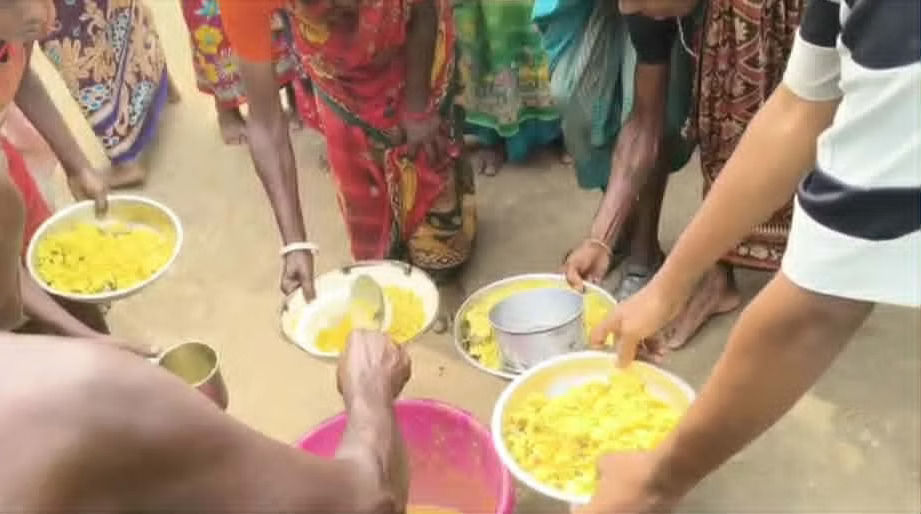
Every Lotus Ministry Trust food package is built around two staples: rice and lentils. This is not a budgetary shortcut — it is a deliberate nutritional and cultural decision. Rice provides the caloric foundation that families need to function, work, and recover. Lentils deliver the protein and micronutrients that prevent the kind of malnutrition that hits hardest in children and pregnant women during prolonged food crises. Together, they form a complete, sustaining meal base that requires no specialized cooking knowledge or equipment to prepare.
The simplicity of this combination is also its strength in emergency deployment. When flooding cuts off road access and distribution windows are measured in hours, not days, a package built around two familiar, stable, easy-to-store ingredients moves fast and gets used immediately. There is no confusion, no waste, and no barrier between the package and the family's next meal.
Why Culturally Appropriate Food Aid Works Better
The failure mode of culturally inappropriate food aid is well-documented but frequently repeated. When aid organizations distribute unfamiliar grains, canned goods requiring openers families don't own, or protein sources that conflict with dietary practices, the aid either sits unused or gets traded away at a fraction of its value. Either outcome is a waste of donor resources and a failure of the families the program was meant to serve. For more insights, you can explore strategies and solutions for combating food insecurity.
Lotus Ministry Trust sidesteps this failure entirely by designing packages around what rural Bangladeshi families already eat, already know how to prepare, and already trust. The result is 100% utilization of every distributed package — no waste, no rejection, no secondary market diversion. When every package reaches its intended purpose, the cost-per-impact calculation changes dramatically in favor of the communities being served.
From Emergency Aid to Long-Term Food Security
Emergency food distribution stops acute hunger. It does not, by itself, create food security. The distinction matters enormously, and it is where most short-term aid programs stop short. Lotus Ministry Trust's model is built on the understanding that a family rescued from a hunger crisis needs a pathway to self-sufficiency — not an indefinite supply of external food packages. That pathway moves through three distinct, sequenced phases.
Immediate Food Relief for Families in Crisis
When flooding, cyclones, or pre-harvest hunger gaps push families into acute food crisis, Lotus Ministry Trust mobilizes rice and lentil packages through its established community networks with speed as the primary operational priority. Household vulnerability assessments run simultaneously, identifying which families face the deepest need. The immediate relief phase is non-negotiable — no family moves toward long-term recovery on an empty stomach.
How Local Leadership Keeps the Program Running
Lotus Ministry Trust's exit strategy from any given community is not withdrawal — it is the handoff of a fully functioning local food security infrastructure to community leaders who were trained and supported throughout the program's duration. By embedding local leadership into every phase of the model, the organization ensures that the knowledge, relationships, and systems it builds don't disappear when external support scales back. This is what separates a program that creates dependency from one that creates resilience.
Real Results in Nilphamari District
The evidence from Nilphamari district demonstrates what this three-phase model produces in practice. Two years of targeted rice distribution combined with agricultural rehabilitation support — flood-resistant seeds, tools, and farming education — produced measurable improvements in household food security across the communities Lotus Ministry Trust served there. Families that entered the program in acute crisis were producing viable harvests within a single growing season.
What makes the Nilphamari results particularly significant is their durability. Short-term food aid programs frequently show positive outcomes during the distribution period, only to see families return to crisis once the packages stop coming. The agricultural rehabilitation component changes that trajectory by giving families the means to feed themselves — turning a relief intervention into a permanent shift in household food security status.
How Donations Are Used Inside the Program
Every donation to Lotus Ministry Trust moves through a transparent, accountable system designed to maximize impact at the household level. Contributions directly fund three categories of intervention:
Emergency rice and lentil packages for families in acute food crisis across the five priority northern districts
Flood-resistant seed varieties and basic farming tools for agricultural rehabilitation in the season immediately following a disaster
Training materials and community educator support for climate-adaptive farming education programs
A single donation can cover rice and lentil packages for a family in acute crisis, fund flood-resistant seeds for an entire growing season, or provide training materials for a community group learning climate-adaptive techniques. The program is designed so that every contribution, at any level, connects directly to a specific, traceable outcome — not to overhead, not to administration, but to food on a family's table.
What Each Contribution Directly Funds
Lotus Ministry Trust structures its funding so that every dollar has a clear, specific destination. Emergency rice and lentil packages go to households in acute food crisis across the five priority northern districts. Flood-resistant seed varieties and basic farming tools go directly to families ready to transition into agricultural rehabilitation. Training materials and community educator support fund the climate-adaptive farming education that makes long-term self-sufficiency possible. No contribution disappears into a general fund — each one connects to a real family at a specific stage of recovery.
Transparency and Accountability in Fund Distribution
Accountability is not a marketing promise at Lotus Ministry Trust — it is an operational requirement built into every stage of the program. Community-level vulnerability assessments determine which families receive aid and at what phase. Distribution records track packages from origin to household. Local leadership involvement ensures that community members themselves are watching how resources move through their neighborhoods. For donors who want to know that their contribution is doing exactly what it was intended to do, this level of embedded accountability matters.
Food Security in Bangladesh Is Winnable With the Right Support

You Can Help Bring Food Security to Villages Left Behind
Support Lotus Ministry Directly Through The Founders' PayPal
The scale of food insecurity in rural Bangladesh can feel paralyzing — but the evidence from Lotus Ministry Trust's work in Nilphamari and across the five northern districts tells a more hopeful story. When aid is culturally grounded, locally embedded, and structured to move families from emergency relief to agricultural self-sufficiency, it works. Families recover. Harvests return. Communities stabilize. The crisis is severe, but it is not unsolvable — and every targeted, well-executed intervention proves that. Lotus Ministry Trust is on the ground making that happen, one district at a time. For more on their strategies, read Lotus Ministry Trust's strategies and solutions.
Frequently Asked Questions
Below are answers to the most common questions about food security in rural Bangladesh and how Lotus Ministry Trust's programs operate on the ground.
What areas of Bangladesh does Lotus Ministry Trust serve?
Lotus Ministry Trust serves five northern districts of Bangladesh: Kurigram, Lalmonirhat, Nilphamari, Rangpur, and Gaibandha. These districts were specifically selected because they consistently record the highest rates of poverty and food insecurity in the country. The organization's hyperlocal focus means its teams have deep community relationships, district-specific agricultural knowledge, and established distribution networks in each of these areas — infrastructure that took years to build and cannot be replicated by organizations operating at a national or international scale.
What food items are included in Lotus Ministry Trust's aid packages?
Lotus Ministry Trust's emergency food packages are built around rice and lentils — the two staples that form the nutritional and cultural foundation of daily life in rural Bangladesh. Rice provides the caloric base families need to function and recover. Lentils supply the protein and micronutrients that prevent malnutrition, particularly in children and pregnant women during extended food crises.
This combination is not a compromise — it is a deliberate design choice. Both items are familiar, trusted, easy to prepare without specialized equipment, and stable enough to store through distribution delays. The result is a package that gets used immediately and completely, with no waste, no rejection, and no secondary market diversion.
How does Lotus Ministry Trust differ from larger international aid organizations?
The core difference is structural. Large international organizations operate at a scale that creates unavoidable distance between donor funding and household impact — distance that gets filled with logistics, administration, and coordination layers. Lotus Ministry Trust was built from the ground up to eliminate that distance by operating exclusively in five specific northern Bangladeshi districts with community-embedded teams and local leadership at every level of the program.
Hyperlocal focus: Five specific districts, not a broad national or regional mandate
Cultural grounding: Food packages designed around what families actually eat and trust
Three-phase model: Moves families from emergency relief through agricultural rehabilitation to self-sufficiency
Local leadership integration: Community members are trained and empowered to sustain programs after external support scales back
Direct accountability: Vulnerability assessments and distribution records connect every contribution to a specific household outcome
This structural difference shows up in results. Families in Nilphamari district who received Lotus Ministry Trust support moved from acute food crisis to producing viable harvests within a single growing season — an outcome that requires exactly the kind of locally embedded, sequenced support that large organizations structurally struggle to deliver.
None of this means large international organizations are not valuable. They are. But for the specific, chronic food insecurity crisis in northern Bangladesh's most isolated communities, a hyperlocal, culturally grounded model consistently outperforms broad-mandate relief operations.
How does climate change specifically affect food security in rural Bangladesh?
Bangladesh ranks among the most climate-vulnerable countries in the world, and its northern farming communities sit at the center of that vulnerability. The Brahmaputra and Teesta river systems that run through districts like Kurigram and Gaibandha flood with increasing frequency and severity, wiping out entire growing seasons in a matter of days. When floodwaters recede, they leave behind waterlogged, nutrient-depleted soil that can take months to recover — often not before the next flood cycle begins.
Erratic monsoon timing compounds the problem. Rural Bangladeshi farmers depend on predictable seasonal patterns to time their planting, and those patterns are now shifting in ways that even experienced farmers cannot anticipate. A delayed monsoon pushes planting back. An early end to the rainy season cuts the growing window short. Either scenario reduces yields. Both together can mean a failed harvest.
The human cost accumulates across seasons. A family might absorb one failed harvest by drawing down savings or taking on short-term debt. A second consecutive failure pushes them into acute food crisis. A third can permanently displace them from their land. Climate change in northern Bangladesh is not a future threat — it is an active, compounding driver of food insecurity that is happening right now.
Increased flooding frequency: River system floods destroy crops and degrade soil across multiple growing seasons
Monsoon unpredictability: Shifting rainfall patterns disrupt planting calendars families have relied on for generations
Soil degradation: Post-flood nutrient depletion reduces land productivity even when crops survive
River erosion: Progressive loss of arable land permanently removes farming families from their livelihoods
Compounding season failures: Consecutive bad harvests push families from marginal food security into acute crisis faster than any single event
How can someone support Lotus Ministry Trust's food relief programs?
The most direct way to support food security in rural Bangladesh is to fund the specific interventions Lotus Ministry Trust deploys on the ground. A single contribution can cover rice and lentil packages for a family in acute crisis, flood-resistant seeds for an entire growing season, or training materials for a community group learning climate-adaptive farming techniques. Every dollar has a clear, traceable destination — no contribution disappears into overhead or administrative costs.
Supporting Lotus Ministry Trust also means supporting a model that is built for durability. Because the program moves families through emergency relief, agricultural rehabilitation, and farming education in sequence, each contribution does not just address today's hunger — it reduces the likelihood that the same family will need emergency relief again next season. That multiplier effect means the impact of any given donation extends well beyond the immediate distribution event.




Comments