
Lotus Ministry Trust Strategies & Solutions for Combating Food Insecurity

Article At A Glance
Combating food insecurity in Bangladesh means helping millions of rural families, driven by extreme poverty, climate disasters, and systemic agricultural vulnerabilities.
Lotus Ministry Trust, founded in 2021, delivers culturally appropriate food aid in northern Bangladesh's most underserved districts, including Kurigram, Rangpur, and Nilphamari.
Their food packages are built around rice and lentils — the dietary staples of Bangladesh — ensuring families receive aid they can actually use and digest.
Lotus Ministry Trust's model moves beyond emergency handouts, combining immediate relief with agricultural rehabilitation and climate-adaptive farming education.
Keep reading to discover why large international aid organizations consistently miss the families that need help most — and how a hyperlocal approach changes everything.
Combating food insecurity in Bangladesh is not a distant dream — it is a daily survival crisis for millions of rural families who have almost nothing left to fall back on.
You Can Help Combat Food Insecurity
Support us directly through the founders' PayPal

Lotus Ministry Trust is one organization working directly inside these communities to close the gap between emergency hunger and long-term food stability. Before understanding their solutions, it helps to understand exactly what these families are up against.
Combating Food Insecurity in Bangladesh - A Crisis That Demands Real Solutions
Bangladesh is one of the most densely populated countries on earth, with over 170 million people sharing a landmass roughly the size of Iowa. In rural areas, the pressure on food systems is immense. Families depend almost entirely on smallholder farming, seasonal labor, and subsistence agriculture — systems that are fragile by design and increasingly stressed by climate change.
The northern districts are the hardest hit. Regions like Kurigram, Lalmonirhat, Nilphamari, Rangpur, and Gaibandha consistently report the highest rates of poverty and food insecurity in the entire country. In these areas, daily caloric intake regularly falls below minimum thresholds, and malnutrition among children under five is widespread.
What makes Bangladesh's food crisis particularly difficult to solve is that it is not caused by a single problem. It is a collision of poverty, geography, climate vulnerability, and limited infrastructure — all feeding into each other in a cycle that is extremely hard to break without targeted, community-level intervention.
Extreme poverty — Many rural families survive on less than $2 USD per day, leaving almost no financial buffer when food prices rise or harvests fail.
Land fragmentation — Smallholder plots are often too small to produce enough food for a family year-round, forcing dependence on markets they cannot afford.
Seasonal hunger gaps — Known locally as monga, these pre-harvest hunger periods can last weeks and push already vulnerable families into crisis.
Limited infrastructure — Poor roads and remote locations mean food aid and market access are inconsistent at best, nonexistent at worst.
Climate disruption — Shifting monsoon patterns are making traditional planting calendars unreliable, eroding the agricultural knowledge passed down through generations.
Why Rural Bangladeshi Families Face the Worst of It
Urban Bangladeshis have more access to food markets, government programs, and economic opportunities. Rural families — especially women-headed households and landless laborers — operate with none of those safety nets. When a harvest fails or flood waters rise, there is simply no backup plan. Children are pulled from school to work, meals are skipped for days at a time, and families are forced to sell what little they own just to eat.
How Natural Disasters Make Combating Food Insecurity Worse
Bangladesh is one of the world's most disaster-prone nations. Annual flooding, cyclones, and riverbank erosion destroy crops, contaminate water supplies, and displace entire communities with devastating regularity. A single flood event can wipe out an entire season's harvest — the difference between a family eating and not eating for months. Climate projections indicate these events will increase in frequency and intensity, making the need for resilient, adaptive food systems more urgent every year.
Who Is Lotus Ministry Trust and What Do They Actually Do?
Lotus Ministry Trust is a nonprofit organization operating at the intersection of emergency food relief and long-term community development. Rather than applying a one-size-fits-all international aid model, they work from the ground up — embedding into local communities to understand specific needs before deploying any resources. The result is food aid that actually fits the people receiving it.
Founded in 2021 With a Hyperlocal Focus on Northern Bangladesh
Lotus Ministry Trust launched in 2021 with a deliberate focus on northern Bangladesh's most underserved districts — precisely the regions where combating food insecurity is most acute and where larger organizations have the least reach. Their founding principle was simple but powerful: the communities most affected by hunger should be central to designing the solutions. That philosophy shapes everything from how food packages are assembled to how local leaders are trained and empowered.
Why Cultural Relevance in Food Aid Matters
Food aid fails when it ignores culture. Distributing unfamiliar foods that families do not know how to prepare, or that conflict with dietary customs, leads to waste, rejection, and distrust of the aid organization itself. Lotus Ministry Trust builds every food package around rice and lentils — the nutritional and cultural foundation of the Bangladeshi diet. Families receive food they recognize, trust, and know exactly how to use, which means every package delivers its full intended impact rather than sitting unused.
The Rice Rescue Initiative: Immediate Food Relief That Works
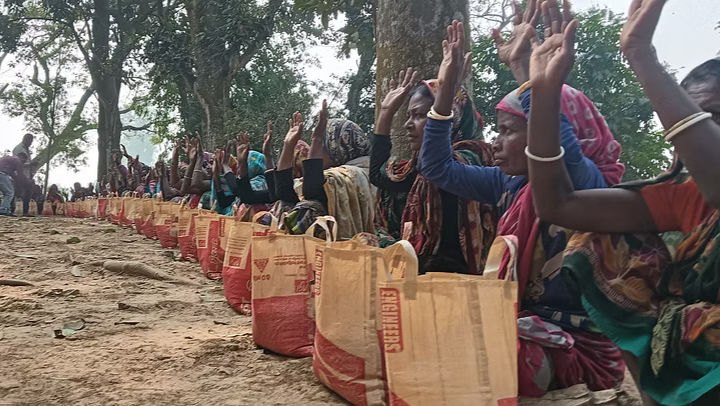
Thank You For Coming To The Rescue
Support us directly through the founders' PayPal
At the core of Lotus Ministry Trust's emergency response is what can be described as a rice-centered relief model — immediate, high-impact food distribution designed to stop acute hunger fast. When disaster strikes or seasonal hunger gaps hit, speed and cultural fit are everything. A delayed or mismatched food response can cost lives.
Their distribution teams operate in priority zones across the five northern districts, moving quickly through established community networks to reach families before hunger becomes starvation. By sourcing food locally wherever possible, Lotus Ministry Trust also reduces logistical delays, cuts transportation costs, and keeps money circulating within struggling local economies — a triple benefit that purely imported aid cannot replicate.
What Goes Inside a Lotus Ministry Trust Food Package
Each food package is assembled to address both caloric needs and common nutritional deficiencies in rural Bangladesh. Rice forms the caloric base, while lentils provide critical protein. Additional components address vitamin and mineral gaps that are endemic in communities with limited dietary diversity. The packages are not luxury items — they are precision tools designed to sustain a family through a crisis period while maintaining the nutritional baseline needed for children to develop and adults to work.
How Direct Distribution Reaches the Most Isolated Communities
One of the defining features of Lotus Ministry Trust's model is that they do not wait for vulnerable families to come to them. Their teams go directly into remote villages, coordinating with local leaders and community volunteers who know exactly which households are most at risk. This last-mile distribution approach is critical in areas where poor roads, flood damage, and lack of transportation make centralized aid collection impossible for the families who need help most.
Community volunteers play a central role in identifying priority households — families with young children, elderly members, pregnant women, or those who have recently lost their primary income source to flooding or crop failure. This ground-level intelligence allows Lotus Ministry Trust to direct resources with far greater precision than a top-down distribution model ever could.
The targeting criteria are not arbitrary. Lotus Ministry Trust uses a needs-assessment framework informed by direct household surveys, local health worker referrals, and coordination with Bangladesh's Department of Disaster Management. This multi-source verification process ensures that aid consistently reaches the most vulnerable rather than the most visible.
Transparency is built into every step. Donors and partner organizations receive detailed reporting on distribution outcomes, including the number of households served, geographic coverage, and nutritional content delivered. This accountability infrastructure is what allows Lotus Ministry Trust to maintain donor trust while continuously improving their operational efficiency on the ground.
Direct household surveys identify families below critical food security thresholds before distribution begins.
Local health worker referrals flag high-risk cases including malnourished children and pregnant women requiring immediate intervention.
Community leader coordination ensures cultural sensitivity and community buy-in throughout the distribution process.
Government agency alignment with Bangladesh's Department of Disaster Management prevents duplication and maximizes coverage.
Post-distribution reporting tracks outcomes at the household level to verify impact and identify gaps for follow-up.
Why Larger International Aid Organizations Often Miss These Families
Large international aid organizations operate with significant resources but also significant constraints. Their procurement processes, reporting requirements, and operational structures are built for scale — which means they are optimized for reaching large, accessible populations rather than scattered rural households down unpaved roads in flood-prone northern Bangladesh. By the time a major organization completes its needs assessment and mobilizes a response, weeks can pass. For a family with nothing left to eat, weeks is too long.
There is also a trust gap. Rural Bangladeshi communities, particularly those that have experienced repeated cycles of aid dependency or broken promises, are often skeptical of outside organizations. Lotus Ministry Trust's hyperlocal model — built on existing community relationships and staffed largely by people from the region — sidesteps this problem entirely. Families recognize the people delivering their food packages, and that familiarity translates directly into cooperation, honest feedback, and more effective distribution on every level.
From Emergency Aid to Long-Term Food Security
Emergency food relief saves lives in the short term, but it does not solve food insecurity. Lotus Ministry Trust understands this distinction clearly, which is why their operational model is structured in three deliberate phases — each one building on the last to move families from crisis dependence toward genuine self-sufficiency. This phased approach is what separates their work from traditional charity distribution and positions it as a real strategy for lasting change.
Phase 1: Emergency Food Relief
The first phase is immediate, non-negotiable, and fast. When flooding, cyclones, or pre-harvest hunger gaps push families into acute food crisis, Lotus Ministry Trust mobilizes rice and lentil packages through their established community networks. Speed is the priority. The goal is simple: stop families from going hungry right now while the foundation for longer-term recovery is put in place.
This phase is not passive distribution. Every household receiving emergency food aid is also assessed for their broader vulnerabilities — agricultural capacity, household composition, health risks, and economic baseline. That assessment data directly informs Phase 2, ensuring that the transition from relief to rehabilitation is seamless rather than disconnected.
Emergency relief also creates a critical window of community trust. When families see that Lotus Ministry Trust delivers on its promises quickly and without bureaucratic delays, they become active participants in the longer recovery process rather than passive recipients. That shift in dynamic is foundational to everything that follows.
The geographic focus during Phase 1 is strategic. Resources are concentrated in Kurigram, Lalmonirhat, Nilphamari, Rangpur, and Gaibandha — the five northern districts where food insecurity rates are highest and where the combination of poverty, flood risk, and agricultural fragility creates the most severe humanitarian need.
Phase 1 At a Glance: Immediate rice and lentil distribution to households in acute food crisis across five priority northern districts, combined with household vulnerability assessments that inform the transition to agricultural rehabilitation. Delivery is driven by community volunteers and verified through coordination with Bangladesh's Department of Disaster Management.
Phase 2: Agricultural Rehabilitation and Seed Distribution
Once immediate hunger is addressed, Lotus Ministry Trust shifts focus to restoring families' capacity to produce their own food. Phase 2 centers on agricultural rehabilitation — providing flood-resistant seed varieties, basic farming tools, and hands-on technical support to help smallholder farmers get back into production as quickly as possible. For families who lost their entire crop to flooding or storm damage, this is the intervention that determines whether next season looks different from the last. Seed distribution is carefully timed to align with Bangladesh's planting calendars, maximizing germination success and harvest yield for each household served.
Beyond Food: The Full Scope of Support Lotus Ministry Trust Provides
Food security does not exist in isolation. Lotus Ministry Trust recognizes that a family struggling with contaminated water, inadequate shelter after a flood, or children in poor health cannot fully benefit from food aid alone. Alongside food packages, families in their programs receive essential non-food items including water pumps, clothing, and hygiene supplies — addressing the intersecting vulnerabilities that compound hunger and slow recovery. This integrated support model ensures that food aid lands in households that are stable enough to actually use it effectively, rather than diverting food resources to cover other survival gaps.
How Community Ownership Makes Lotus Ministry Trust's Model Unique
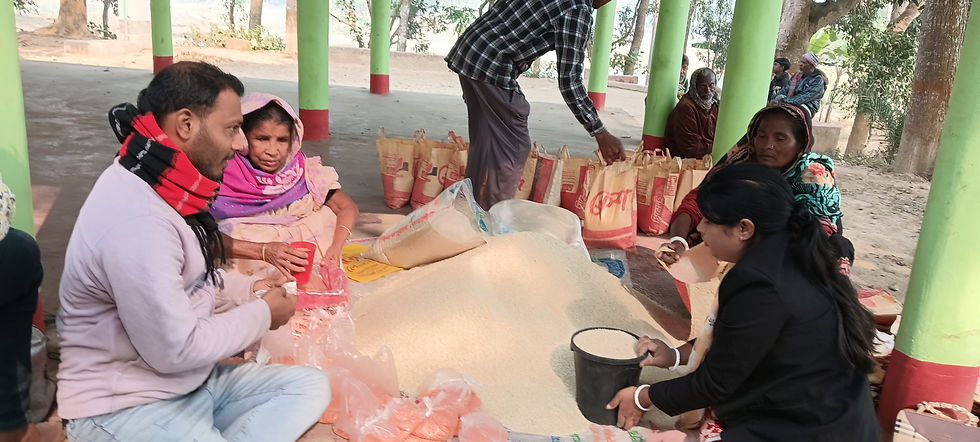
Your Support Shows Them That You Care
Support us directly through the founders' PayPal
Most aid organizations design programs at headquarters and implement them in the field. Lotus Ministry Trust inverts that model. Community members are involved from the needs assessment stage through to program evaluation, creating a sense of ownership that fundamentally changes how programs are received and sustained. When a community helps design the solution, they protect it, maintain it, and adapt it when circumstances change — without waiting for an outside organization to authorize the next move.
Why Programs Designed by Communities Last Longer
The evidence on community-led development is consistent: programs designed with direct community input have higher participation rates, lower dropout rates, and longer operational lifespans than top-down interventions. In the context of food security, this matters enormously. A seed distribution program that the community helped design will see seeds actually planted, properly tended, and harvested — not sold out of desperation or misused due to lack of context. Community co-design is not just a feel-good principle; it is a measurable driver of program effectiveness.
How Locals Lead the Transition From Relief to Self-Sufficiency
Lotus Ministry Trust deliberately builds local leadership capacity at every phase of their work. Community volunteers are trained as agricultural educators, distribution coordinators, and household needs assessors — roles that give them skills, authority, and community standing that outlast any individual program cycle. By the time Lotus Ministry Trust reduces its direct operational presence in a community, it has left behind a network of trained local leaders capable of sustaining food security initiatives, identifying emerging risks, and connecting households to additional resources independently. That handoff is the real measure of success.
How Your Support Directly Aids Combating Food Insecurity in Bangladesh
Every contribution to Lotus Ministry Trust's food relief programs moves through a transparent, accountable system designed to maximize impact at the household level. Donations fund rice and lentil packages for families in acute crisis, flood-resistant seeds for agricultural rehabilitation, training programs that build lasting food production capacity, and the community leadership infrastructure that keeps all of it running long after the initial intervention. Whether you give once or commit to ongoing support, your contribution enters a system built for efficiency, cultural fit, and long-term change — not overhead and bureaucracy. Learn more about our life-saving food aid solutions that are making a difference in rural Bangladeshi communities.
1. Make a Direct Donation
The most direct way of combating food insecurity in Bangladesh is to fund the food packages, seeds, and training programs that Lotus Ministry Trust deploys on the ground. A single donation can cover rice and lentil packages for a family in acute crisis, flood-resistant seeds for an entire growing season, or training materials for a community agricultural education session. Every dollar is tracked, reported, and deployed through a system built for maximum household-level impact.
2. Run a Fundraising Campaign
Lotus Ministry Trust's website provides easy-to-use tools for launching personalized fundraising campaigns connected to birthdays, athletic challenges, workplace initiatives, or community events. Peer-to-peer fundraising consistently outperforms individual giving because it multiplies reach — your network becomes an extension of the organization's donor base, and each new donor you bring in represents another family that receives food aid this season rather than going without.
3. Raise Awareness in Your Network
Not every contribution is financial. Sharing accurate, compelling information about combating food insecurity in rural Bangladesh — the seasonal hunger gaps, the flood cycles, the specific districts where families are most at risk — helps build the public understanding that sustains long-term donor engagement. When people genuinely understand the problem, giving follows naturally.
Social media posts, community presentations, and conversations with friends and colleagues all expand the circle of people who know that this crisis exists and that targeted, community-led solutions like Lotus Ministry Trust's model are already working. Awareness is the pipeline that keeps funding flowing and programs running between disaster cycles.
Food Security in Bangladesh Is Winnable With the Right Support
The scale of food insecurity in Bangladesh can feel overwhelming, but the evidence from Lotus Ministry Trust's work in northern Bangladesh tells a different story. In Nilphamari district, two years of targeted rice distribution combined with agricultural rehabilitation support produced measurable improvements in household food security and reduced dependence on emergency aid. Communities that entered the program in acute crisis transitioned through all three phases — relief, rehabilitation, and climate-adaptive farming — and emerged with the local leadership capacity to sustain their own food security going forward. The model works. What it needs is consistent, informed support from people who understand that solving hunger requires more than dropping food from a truck.
Frequently Asked Questions
What areas of Bangladesh does Lotus Ministry Trust serve?
Lotus Ministry Trust currently prioritizes five districts in northern Bangladesh: Kurigram, Lalmonirhat, Nilphamari, Rangpur, and Gaibandha. These districts consistently record the highest rates of poverty and food insecurity in the country, combined with severe flood exposure and limited infrastructure — making them both the highest-need and hardest-to-reach zones for standard aid delivery. Donors may specify program type preferences when contributing, and Lotus Ministry Trust maintains transparent geographic reporting so supporters can track exactly where their funds are deployed.
How does Lotus Ministry Trust ensure food packages are culturally appropriate?
Every food package is built around rice and lentils — the dietary staples that form the nutritional and cultural foundation of the Bangladeshi diet. This is a deliberate design choice, not a convenience. Food aid that ignores cultural context gets wasted, rejected, or creates community distrust that undermines the entire relief effort. By centering familiar, trusted staples, Lotus Ministry Trust ensures that every package delivers its full intended nutritional impact without the friction that culturally mismatched aid consistently produces.
How sustainable are Lotus Ministry Trust's food relief programs?
Sustainability is built into the model from Phase 1. Emergency food relief is always accompanied by household vulnerability assessments that feed directly into agricultural rehabilitation planning. By Phase 3, communities are implementing climate-adaptive farming techniques, managing their own distribution coordination through trained local volunteers, and operating with the agricultural knowledge needed to maintain food production through increasingly unpredictable monsoon seasons. Lotus Ministry Trust's exit strategy is not withdrawal — it is the handoff of a fully functioning local food security infrastructure to community leaders who were trained and supported throughout the entire process.
What percentage of donations go directly to food aid?
Lotus Ministry Trust operates with a lean organizational structure specifically designed to maximize the proportion of donations that reach program delivery rather than administration. Their local sourcing model — purchasing rice and other staples from Bangladeshi suppliers wherever possible — further reduces costs while simultaneously supporting local agricultural economies. Detailed financial reporting is available to donors and partner organizations, providing full transparency on how contributions are allocated across food packages, agricultural inputs, training programs, and community leadership development.
It is worth noting that administrative overhead in effective aid organizations is not inherently wasteful — the community training programs, volunteer coordination systems, and monitoring infrastructure that Lotus Ministry Trust funds through operational spending are precisely what makes their food relief more effective than raw distribution-only models. The right question is not just what percentage reaches food packages, but what percentage creates lasting change. At Lotus Ministry Trust, the answer to both questions points in the same direction.
How quickly does Lotus Ministry Trust respond during flood emergencies?
Speed is a core operational priority for Lotus Ministry Trust, and their response time during flood emergencies is significantly faster than larger international organizations because their infrastructure is already embedded in the communities they serve. Community volunteers are pre-identified, distribution networks are pre-established, and priority household lists are maintained and updated regularly — meaning that when flooding hits, the mobilization phase that delays most aid organizations is already complete.
Their coordination with Bangladesh's Department of Disaster Management also provides advance warning data that allows pre-positioning of food packages in high-risk districts before peak flood events strike. This proactive staging capability means that distribution can begin within hours of a disaster rather than days, closing the critical window where acute hunger transitions into severe malnutrition for the most vulnerable households.
Families in Lotus Ministry Trust's program communities consistently report receiving food aid faster than neighboring villages served by larger organizations — a direct result of the trust, local knowledge, and pre-built logistics that come from operating hyperlocally rather than at scale. In food emergencies, the difference between a 24-hour response and a 72-hour response is not a logistical detail. For a family with young children and nothing left in the house to eat, it is everything.
If you are looking for a proven, community-driven organization working at the front lines of combating food insecurity in Bangladesh, Lotus Ministry Trust offers transparent, culturally grounded, and measurably effective programs that turn your support into lasting food security for the families who need it most.





Comments