
Rice And Food Aid Boost Community Well-being, Support & Development

Article At A Glance
Rice is the cornerstone of food security in Bangladesh, providing the primary source of daily calories for the majority of the population, making it the most impactful aid commodity available.
Rice and food aid programs directly improve community well-being by freeing up household resources for healthcare, education, and economic participation — not just immediate hunger relief.
Lotus Ministry Trust delivers targeted rice aid to the most vulnerable Bangladeshis, with structured distribution systems built on local trust and volunteer capacity.
There is a surprising link between rice and food aid and long-term poverty reduction — discover how consistent food support breaks generational cycles of dependency further in this article.
International collaboration and local NGO efforts are both essential to scaling effective rice and food aid programs that create lasting community development outcomes.
Right now, millions of families in Bangladesh are deciding between feeding their children and paying for medicine — rice and food aid is one of the most direct tools available to change that equation.
Help Lotus Ministry Provide Rice And Food Aid
Support Lotus Ministry Directly Through The Founders' PayPal

Bangladesh sits at a difficult crossroads. It is one of the most densely populated countries on earth, highly vulnerable to climate-related disasters, and home to tens of millions living below the poverty line. Despite significant economic growth over recent decades, food insecurity remains deeply entrenched in rural areas, urban slums, and communities repeatedly disrupted by flooding and cyclones. Lotus Ministry Trust works directly in these communities, providing rice aid that reaches the people most overlooked by larger systems.
Rice And Food Aid Is Changing Lives in Bangladesh Right Now
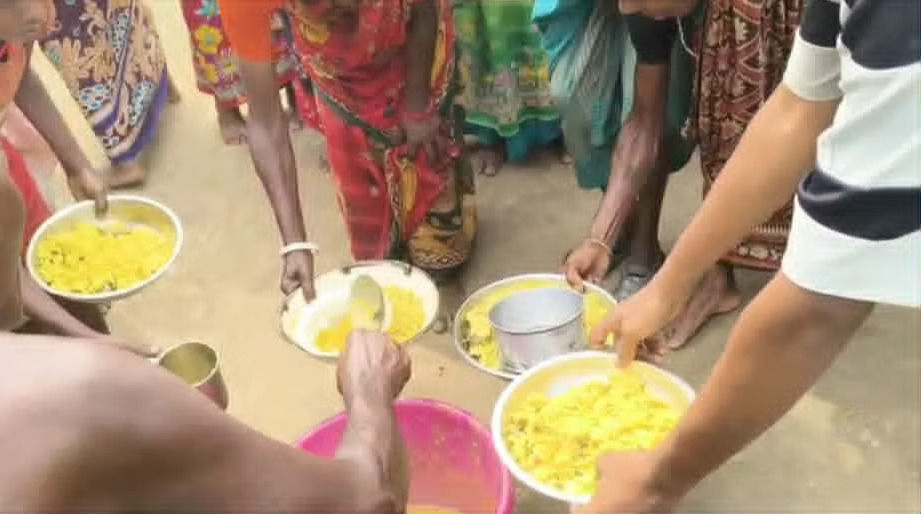
Rice and food aid in Bangladesh is not a distant, abstract concept — it is happening in villages and urban settlements daily, with real consequences for real families. When a distribution point opens, it is not uncommon to see mothers who have walked hours to reach it. The demand is urgent, and the relief is immediate.
Why Rice Is Central to Food Security in Bangladesh
Rice is not simply a food preference in Bangladesh — it is cultural, biological, and economic identity rolled into one grain. The average Bangladeshi consumes rice two to three times per day, and it accounts for the majority of daily caloric intake across income levels. No other single food item touches as many households or carries as much nutritional weight in the national diet.
From an aid logistics standpoint, rice is also highly practical. It stores well, travels without refrigeration, cooks with minimal fuel, and is immediately recognized and trusted by recipients. When organizations design rice and food aid packages for Bangladesh, centering them on rice is not just culturally sensitive — it is strategically sound. Communities know how to use it, stretch it, and incorporate it into meals that also maximize other available ingredients.
The economic dimension matters too. When families receive rice aid, they are essentially receiving a buffer against one of their largest daily expenses. In the most food-insecure households, purchasing rice can consume over half of total daily income. Eliminating that burden — even temporarily — creates real financial space with measurable downstream effects.
Who Is Most Vulnerable to Food Insecurity
Food insecurity in Bangladesh does not affect everyone equally. Certain groups face compounding vulnerabilities that make access to consistent nutrition extremely difficult without external support.
Women-headed households — often widowed or abandoned, with limited access to income-generating work and land ownership
Day laborers and seasonal agricultural workers — whose income disappears entirely during monsoon flooding or post-harvest lean seasons
Children under five — facing the highest risk of stunting and malnutrition due to inadequate caloric and nutritional intake
Elderly individuals without family support — frequently excluded from both formal employment and government safety nets
Displaced communities — living in low-lying char lands or climate migration camps with no stable food source
Understanding who is most affected shapes how effective organizations like Lotus Ministry Trust design and target their distribution programs. Aid that reaches the wrong hands — or is distributed without understanding community power dynamics — can fail even the most well-funded efforts.
How Rice And Food Aid Directly Improves Community Well-being
The benefits of rice and food aid extend far beyond a single meal. When a family receives a consistent, reliable supply of rice, the ripple effects touch nearly every dimension of community health and development. This is what separates thoughtful food aid from simple charity — its capacity to unlock change across interconnected areas of life.
Child Nutrition and Growth Outcomes
Children are the most immediately measurable beneficiaries of rice and food aid. Chronic undernutrition during the first 1,000 days of a child's life causes irreversible physical and cognitive damage. When rice aid stabilizes household food supply during this critical window, the developmental outcomes shift significantly.
Consistent caloric intake from rice provides the foundational energy children need to absorb other nutrients, attend school with focus, and resist common infections that hit malnourished children far harder. Communities that receive sustained rice and food aid report measurable reductions in child absenteeism from school and improvements in attention and learning capacity among younger recipients.
Rice provides a calorie-dense base that supports the absorption of micronutrients from other foods
Stabilized meals reduce childhood stress responses linked to food anxiety and behavioral issues
School attendance increases when children are not kept home to help search for food
Reduced illness rates result from better baseline nutrition strengthening immune function
These outcomes compound over time. A child who avoids stunting at age two has a dramatically higher chance of completing education, entering productive employment, and raising a healthier next generation.
Household Resource Reallocation Toward Healthcare and Education
One of the most underappreciated benefits of rice and food aid is what it frees families to do with money they no longer have to spend on rice. In the poorest households, food costs crowd out everything else. When that pressure is relieved, even partially, families begin making investments they previously could not afford — a child's school enrollment fee, a visit to a health clinic, or medicine that was previously skipped.
Social Cohesion Built Through Reliable Aid Programs
Rice and food aid, when delivered consistently and fairly, does something powerful at the community level: it builds trust. Communities that experience equitable, transparent distribution develop stronger internal bonds and increased confidence in collective action.
Distribution events become community gathering points. Neighbors coordinate, share information, and support one another in accessing aid. Over time, this social infrastructure strengthens the community's ability to organize around other shared needs — water access, school maintenance, disaster preparedness.
The absence of food security, by contrast, breeds competition and conflict. Scarcity fractures communities along existing fault lines of gender, class, and ethnicity. Reliable rice and food aid removes that pressure and replaces it with stability — and stability is the foundation on which every other form of community development is built.
The Role of Lotus Ministry Trust in Rice Aid Distribution

Share The Villagers' Gratitude
Support Lotus Ministry Directly Through The Founders' PayPal
Lotus Ministry Trust operates on the ground in Bangladesh with a model built around direct community relationships rather than top-down distribution systems. That distinction matters enormously in determining whether aid actually reaches those who need it most or gets absorbed by intermediaries along the way.
The trust has cultivated deep ties with local leaders, community health workers, and volunteer networks who understand the specific dynamics of the areas they serve. This local knowledge is not incidental — it is the operational backbone of everything the organization does. Without it, targeting the most vulnerable households becomes guesswork.
What makes Lotus Ministry Trust's approach particularly effective is its emphasis on dignity in the distribution process. Recipients are not treated as passive beneficiaries. Community members are involved in logistics, in identifying neighbors in need, and in providing feedback that shapes future distributions. This participatory model turns rice and food aid from a transaction into a community-building event.
How Rice Is Collected, Packaged, and Distributed
The logistics of rice aid distribution require precise coordination, particularly in a country where infrastructure can be disrupted rapidly by flooding or political instability. Lotus Ministry Trust sources rice through trusted local suppliers where possible, ensuring the aid economy also supports Bangladeshi agricultural producers rather than bypassing them entirely.
Volunteer and Local Leader Capacity-Building
Volunteers are not simply labor in Lotus Ministry Trust's model — they are the connective tissue between the organization and the communities it serves. Local volunteers undergo structured orientation that covers everything from proper rice handling and hygiene standards to recipient registration and conflict de-escalation during high-demand distributions.
Local leaders — whether religious figures, teachers, or elected community representatives — are deliberately brought into the planning process early. Their endorsement reduces suspicion, increases participation rates, and creates accountability structures that exist entirely within the community itself. When a trusted local figure is visibly involved in distribution, the process carries legitimacy that no outside organization can manufacture on its own.
Volunteers are trained in accurate household needs assessment to identify the most vulnerable
Local leaders help resolve disputes at distribution points before they escalate
Community health workers cross-reference recipient lists with nutrition monitoring data
Post-distribution debriefs with volunteers surface problems that formal reporting would miss
This investment in local human capacity does something aid packages alone cannot — it leaves behind a stronger, more organized community infrastructure that persists long after any single distribution event ends.
Community Participation in Aid Planning
Lotus Ministry Trust actively involves community members in shaping how aid programs are designed and delivered. Before major distribution cycles, community consultations identify which households should be prioritized, what distribution timing works around local work schedules, and whether any logistical barriers — such as distance or mobility limitations — need special accommodation.
This participatory planning process reduces exclusion errors significantly. The families most likely to be missed by standardized targeting systems — those without documentation, those ostracized by local power structures, or those too ill to advocate for themselves — are more likely to be identified when their neighbors are actively involved in the planning conversation.
Key Challenges Facing Rice And Food Aid Programs
Even the most well-designed rice and food aid programs operate within difficult, often unpredictable environments. Bangladesh presents a specific combination of geographic, political, and logistical challenges that require constant operational adaptation. Organizations that fail to plan for these realities quickly find their aid stalling before it reaches those who need it.
Funding volatility is one of the most persistent structural challenges. Donor contributions often surge immediately after high-profile disasters and then decline sharply once media attention moves on — even though the underlying food insecurity that existed before the disaster continues long afterward. This boom-and-bust funding cycle makes it extremely difficult to build the consistent, sustained programs that actually change long-term outcomes.
Logistical Barriers During Monsoon Season
Bangladesh's monsoon season, which runs roughly from June through October, transforms the country's infrastructure in ways that directly obstruct aid delivery. Roads that are navigable in dry months become impassable rivers of mud. Bridges wash out. Low-lying char lands — home to some of the country's most food-insecure communities — become entirely cut off from the mainland for weeks at a time.
Distributing rice during this period requires advance planning, pre-positioned stock, and alternative transport solutions including boats and community storage facilities located within flood-prone areas themselves. The cost per beneficiary rises significantly during monsoon operations, and the logistical complexity demands experienced coordination that smaller or newer organizations often struggle to maintain.
Despite these challenges, the monsoon season is often when food insecurity peaks. Agricultural work stops. Daily laborers lose income. Stored food from previous harvests runs out. The need for rice aid intensifies precisely when delivery becomes hardest — which makes advance planning and community-level pre-positioning not a luxury but an operational necessity.
Ensuring Fair Distribution and Preventing Corruption
Any aid system that involves scarce, valuable resources is vulnerable to diversion. In contexts where local power dynamics are unequal — and in rural Bangladesh, they often are — rice intended for the most vulnerable can be redirected toward those with more social or political influence. This is not a hypothetical risk; it is a documented pattern across aid programs globally.
Lotus Ministry Trust addresses this through layered accountability: cross-verified recipient lists, independent community monitors present during distributions, and post-distribution surveys that ask recipients directly whether they received their full allocation. Transparency in the process is not just an ethical requirement — it is what preserves community trust in the program over time.
Rice Aid as a Seasonal Lifeline for Farming Households
For farming households, food insecurity follows a predictable but brutal seasonal rhythm. The period just before harvest — known in food security literature as the "lean season" or locally as monga — is when stored food runs out, agricultural work is scarce, and families are most exposed. Rice aid delivered precisely during this window does not just prevent hunger; it prevents the debt spiral that forces families to sell future harvest rights, borrow at exploitative rates, or pull children from school to generate income. Hitting that timing correctly is one of the highest-leverage interventions in the entire rice and food aid toolkit.
Beyond Relief: Building Long-Term Food Security

Team Up With These Volunteers
Support Lotus Ministry Directly Through The Founders' PayPal
Emergency rice distribution addresses the immediate crisis. But the most impactful rice and food aid programs are designed with one eye on what happens after the bags are empty. Lotus Ministry Trust and organizations operating at a similar level of community integration increasingly pair rice distribution with programming that reduces the conditions that create food insecurity in the first place — building toward a future where the aid itself becomes less necessary.
Reducing Post-Harvest Losses and Diversifying Diets
A significant but often overlooked driver of food insecurity in Bangladesh is post-harvest loss — rice and other crops that are grown successfully but spoil before reaching households due to inadequate storage, poor handling, or disrupted market access. Estimates suggest that post-harvest losses in South Asia can range from 10 to 30 percent of total production depending on the crop and storage conditions. Community-level storage education and access to simple, low-cost storage solutions can meaningfully increase the effective food supply without growing a single additional grain.
Integrating Disaster Preparedness and Income Diversification
Training households in drought-resistant and flood-tolerant crop varieties that maintain yield under climate stress
Supporting small-scale income diversification through poultry, fish farming, or vegetable cultivation that reduces dependence on rice agriculture alone
Building community early warning systems that trigger pre-positioned rice and food aid before a disaster fully develops
Connecting rice and food aid recipients to savings and micro-finance programs that build financial buffers against future shocks
Each of these strategies works best when layered on top of a stable food foundation. Families that are not in survival mode are far more able to engage in training programs, adopt new agricultural practices, and participate in savings groups. Rice aid, in this sense, is not the end goal — it is the platform that makes every other development intervention more effective.
The relationship between immediate relief and long-term development is not a tension to be resolved but a sequence to be managed. You cannot build sustainable food security in a community where people are acutely hungry today. The rice in the bag right now is what buys the time needed to implement the changes that reduce future need.
Income diversification, in particular, has proven transformative in communities across Bangladesh. When a household is not entirely dependent on a single rice harvest for its annual income, the collapse of that harvest — through flood, drought, or pest — does not translate directly into a food crisis. Diversified income sources act as a natural shock absorber, rice and food aid programs actively promote this transition are investing in their own eventual irrelevance.
Disaster preparedness deserves equal emphasis. Bangladesh faces an increasing frequency of high-intensity weather events driven by climate change, and communities with pre-established response protocols, pre-positioned food stocks, and trained local emergency coordinators consistently recover faster and with less severe food insecurity than those without such systems in place.
International and Local Organizations Working Together
No single organization — regardless of its funding or reach — can solve food insecurity in Bangladesh alone. The scale of the challenge requires coordinated effort across international bodies, national government agencies, local NGOs, and community-based organizations that each bring different resources, relationships, and operational capabilities to the table. The most effective rice and food aid ecosystems are built on functional partnerships between these layers, not competition among them.
International organizations bring financial scale, technical expertise, and global supply chain access. Local organizations bring the community relationships, cultural fluency, and ground-level accountability that determine whether that scale actually translates into impact. When these two types of capacity are deliberately combined — rather than one simply contracting the other — the result is food aid programming that is both efficiently resourced and genuinely community-responsive.
The World Food Programme and Donor Country Contributions
The World Food Programme (WFP) operates as one of the largest institutional players in Bangladesh's rice and food aid landscape, coordinating large-scale rice procurement, logistics infrastructure, and emergency response frameworks that smaller organizations plug into. WFP's presence in Bangladesh creates a backbone system — warehouse networks, transport protocols, and needs assessment data — that local NGOs like Lotus Ministry Trust can leverage to extend their own reach without duplicating costly infrastructure.
How International and Local Aid Organizations Complement Each Other in Bangladesh International Bodies (e.g., WFP): Large-scale rice procurement, emergency logistics networks, global donor coordination, technical nutrition data, policy advocacy at government level. National NGOs: Regional distribution management, government liaison, beneficiary registration systems, cultural and language competency across districts. Local Organizations (e.g., Lotus Ministry Trust): Direct community relationships, household-level targeting, volunteer coordination, post-distribution accountability, culturally sensitive delivery. Community Structures: Local leader endorsement, peer-to-peer beneficiary identification, grassroots feedback channels, dispute resolution at distribution points.
Donor countries — including the United States, United Kingdom, European Union member states, and Australia — channel significant funding into Bangladesh rice and food aid through both WFP and bilateral agreements with national NGOs. This funding does not arrive uniformly throughout the year. It tends to spike following cyclones, floods, or periods of acute political instability and then taper as those headlines fade. The organizations that manage this funding volatility most effectively are those with diversified donor bases and strong financial reserves that allow them to maintain programming continuity between major donor cycles.
The coordination between international donors and local implementers works best when reporting requirements are proportional to organizational capacity. Smaller organizations like Lotus Ministry Trust are most effective at direct community delivery — but excessive administrative reporting burdens can pull staff time and attention away from that core function. The international aid community has increasingly recognized this tension, with WFP and major bilateral donors moving toward simplified reporting frameworks for vetted local partners operating at the community level.
How NGOs Embed Aid Within Broader Development Goals
The most sophisticated NGOs operating in Bangladesh do not treat rice distribution as a
standalone activity. They use it as an entry point — a moment of community engagement that opens doors to health education, agricultural training, savings group enrollment, and child development programming. When a family receives rice aid from a trusted organization, they are also more likely to engage with that organization's other services. This integration model dramatically increases the development return on each rice distribution event, turning what might otherwise be a transactional handout into a sustained relationship between the organization and the community it serves.
Rice and Food Aid Breaks the Cycle of Poverty and Dependency
There is a common misconception that rice and food aid creates dependency — that communities receiving ongoing assistance become passive and disengaged from their own development. The evidence from well-designed food aid programs tells a different story. When aid is delivered with dignity, targeted accurately, and paired with complementary development programming, it functions as a launching pad rather than a crutch. Families that are not in survival mode can think longer term. They invest in children's education, engage in skills training, and participate in community governance in ways that are simply not possible when daily hunger dominates every decision.
Breaking the poverty cycle requires interrupting it at multiple points simultaneously — and consistent, reliable food access is one of the most powerful interruption points available. A child who does not experience severe malnutrition before age five has measurably better cognitive development outcomes. A mother who is not spending every waking hour sourcing food has time and energy to participate in income-generating activities. A household that is not borrowing at exploitative interest rates to buy rice is not trapped in debt that consumes future income before it is earned. Rice aid, at its best, is not charity — it is the removal of a structural barrier that would otherwise prevent an entire community from moving forward.
Frequently Asked Questions
Rice and food aid in Bangladesh generates important questions from donors, community members, policymakers, and development practitioners alike. The answers to these questions shape how programs are designed, funded, and evaluated — and getting them right matters enormously for the millions of people whose food security depends on these systems functioning well.
Below are the most common questions about rice and food aid benefits, community development impact, and how organizations like Lotus Ministry Trust operate in Bangladesh's complex humanitarian environment.
How Does Rice and Food Aid Improve Community Development in Bangladesh?
Rice and food aid improves community development by removing the most immediate barrier to human potential — hunger. When households have reliable access to sufficient calories, every other dimension of community life becomes more accessible. Children attend school more consistently. Adults engage in skills training and income-generating activities. Community meetings have higher participation rates because people are not preoccupied with sourcing the next meal.
The development impact extends into social infrastructure as well. Communities that experience fair, consistent rice and food aid distribution develop stronger internal trust networks, higher civic participation, and greater capacity for collective action around shared community needs. These social assets — sometimes called social capital — are foundational to every other form of community development, from building schools to organizing local markets.
Over longer timeframes, the compounding effects of improved child nutrition, reduced household debt, and increased educational participation produce measurable shifts in community economic capacity. The connection between food security today and community prosperity a generation from now is direct, documented, and significant.
What Makes Rice the Ideal Food Aid Commodity for Bangladesh?
Rice is the ideal food aid commodity for Bangladesh for reasons that are simultaneously nutritional, cultural, logistical, and economic. Nutritionally, rice provides the caloric density needed to address acute hunger quickly and efficiently. Culturally, it is the foundational food of Bangladeshi identity — recipients know how to prepare it, integrate it into diverse meals, and use it to maximum nutritional effect within their existing cooking practices.
From a logistics standpoint, rice stores without refrigeration for extended periods, tolerates transport across difficult terrain, and can be packaged at multiple scales — from large sacks for family distribution to smaller quantities for individual meal support. Economically, sourcing rice locally where possible keeps aid expenditure circulating within the Bangladeshi agricultural economy rather than being exported to international suppliers, creating an additional development benefit beyond the direct nutritional impact.
How Does Lotus Ministry Trust Ensure Rice Aid Reaches the Most Vulnerable?
Lotus Ministry Trust uses a multi-layered targeting and accountability system designed to minimize exclusion of the most vulnerable and prevent diversion of aid to those who need it less. The process begins with community-level consultations that involve local leaders, health workers, and community members themselves in identifying the households that should be prioritized.
That community input is cross-referenced against objective vulnerability indicators — household income level, number of dependents, presence of disability or chronic illness, female headship, and recent disaster impact. The resulting recipient lists are verified independently before distributions occur, and post-distribution surveys confirm that registered recipients actually received their full allocation.
Community consultations identify the most vulnerable households before targeting decisions are finalized
Objective vulnerability criteria are applied alongside community knowledge to reduce bias in selection
Independent community monitors are present at every distribution point
Post-distribution surveys conducted with recipients verify full and accurate delivery
Feedback channels allow community members to report problems directly to Lotus Ministry Trust coordinators
This system is not perfect — no targeting system in a complex humanitarian environment ever is — but the layered accountability structure significantly reduces the most common failure modes of rice and food aid distribution: elite capture, exclusion of the marginalized, and diversion by intermediaries.
What makes this approach particularly robust is that it embeds accountability within the community itself rather than relying solely on external monitoring. When community members are involved in both planning and oversight, they have both the information and the motivation to flag problems that would otherwise go unreported.
What Are the Biggest Obstacles to Effective Rice and Food Aid Distribution?
The biggest obstacles are funding volatility, monsoon-season logistics, accurate targeting in communities with complex power dynamics, and the chronic gap between emergency response capacity and long-term development programming. Funding that arrives in surges after disasters and disappears afterward makes it nearly impossible to build the sustained, relationship-based programming that produces genuine community development outcomes.
Logistically, Bangladesh's flood-prone geography creates seasonal windows where the communities most in need become the hardest to reach — requiring advance planning, pre-positioned stock, and alternative transport solutions that add cost and complexity to every monsoon-period distribution. Addressing these obstacles simultaneously requires organizational resilience, diversified funding, deep community relationships, and operational flexibility that takes years to build. Learn more about rice food aid in Bangladesh and its impact on community well-being.
How Can Individuals Support Rice and Food Aid Efforts in Bangladesh?
The most direct way individuals can support rice and food aid in Bangladesh is through financial contributions to vetted organizations with proven ground-level operations. Monetary donations are significantly more flexible and efficient than in-kind rice donations from abroad, which carry enormous shipping costs and logistical complications. Cash contributions allow organizations like Lotus Ministry Trust to purchase rice locally, support Bangladeshi agricultural producers, and respond to changing community needs in real time.
Beyond direct financial support, individuals can contribute by raising awareness within their own networks, advocating for sustained government foreign aid commitments that do not evaporate after disasters fade from headlines, and supporting organizations that prioritize community participation and long-term development integration alongside immediate relief. The difference between food aid that creates lasting change and food aid that merely postpones hunger lies almost entirely in the quality and sustainability of the programming behind it — and public advocacy for higher standards matters.
If you want to take immediate action, Lotus Ministry Trust's food relief campaign is an accessible, transparent way to put resources directly into the hands of a community-embedded organization working on the ground in Bangladesh right now — where every contribution translates into rice that reaches a family that genuinely needs it.





Comments