
Lotus Ministry Trust Success Stories & Transformation Examples
- Jeffrey Dunan
- Sep 8, 2025
- 17 min read

Key Takeaways
Lotus Ministry Trust has transformed thousands of lives in Bangladesh through its comprehensive food relief programs since 2021.
Volunteers report profound personal growth and perspective shifts after serving with Lotus Ministry Trust in remote villages.
Beyond immediate hunger relief, Lotus Ministry's approach creates sustainable change through education and community development.
Real transformation stories show how targeted support can break generational cycles of poverty and create lasting resilience.
Getting involved with Lotus Ministry Trust offers multiple pathways to contribute to meaningful change, regardless of your location.
In the heart of Bangladesh's most vulnerable communities, a remarkable transformation is taking place. One meal, one child, one family at a time. Lotus Ministry Trust has become a catalyst for change, offering not just food relief but a pathway to sustainable futures for those caught in cycles of poverty and hunger. Their success isn't measured merely in meals served, but in lives fundamentally transformed.
What began as emergency food relief in 2021 has blossomed into a comprehensive support system that addresses root causes of vulnerability while meeting immediate needs. Through Lotus Ministry Trust's dedicated efforts, communities once trapped in desperation are finding new hope, resources, and pathways to self-sufficiency that ripple through generations.
The power of Lotus Ministry's approach lies in its recognition that true transformation requires more than temporary solutions. By combining immediate relief with long-term development strategies, they've created a model that doesn't just sustain life – it enables it to flourish in places where flourishing once seemed impossible.
Life-Changing Moments: Real Stories from Lotus Ministry Trust
"When Lotus Ministry volunteers arrived in our village, it wasn't just the food they brought that changed us. It was the dignity they restored. For the first time in months, I could feed my children without begging. That moment gave me back my strength to fight for our future." — Fatima, mother of three from Rajshahi District
Behind every statistic of meals delivered or villages served stands a person with a unique story of transformation. Take Fatima, who watched helplessly as her children grew weaker during a particularly harsh season. The nutritious kichri meals provided by Lotus Ministry volunteers gave her family the strength to weather the crisis, but it was the skills training that followed that truly changed their trajectory.
Then there's Habib, an elderly man who had lost hope after flooding destroyed his small farm. The regular meals from Lotus Ministry allowed him to redirect his meager savings toward rebuilding rather than mere survival. Today, his small vegetable garden not only feeds his family but produces enough surplus to sell at local markets. "They gave me more than food," he explains with tears in his eyes. "They returned my purpose."
The ripple effects of these individual transformations create waves of change throughout entire communities. Children who once were too weak from hunger to attend school now learn eagerly. Parents who spent every waking hour searching for food can now focus on stable livelihoods. The elderly who were often overlooked now find community and purpose through group meal programs.
How Lotus Ministry Trust Transforms Communities
The secret to Lotus Ministry Trust's remarkable success lies in their three-pronged approach that addresses immediate needs while building foundations for lasting change. Rather than creating dependency, their programs are designed to strengthen community resilience and self-sufficiency over time.
Food Relief That Goes Beyond Hunger
Lotus Ministry's signature kichri program delivers nutritionally balanced meals to the most vulnerable populations, particularly focusing on children, pregnant women, and the elderly. Made from locally-sourced rice, lentils, and vegetables, these meals provide immediate hunger relief while supporting local food systems. But food distribution serves as more than sustenance – it becomes the entry point for deeper community engagement. During distribution events, volunteers identify additional needs, build relationships, and connect families with appropriate support services.
Educational Support Programs
Recognizing that education represents the clearest pathway out of poverty, Lotus Ministry Trust has developed targeted interventions to keep children in school during times of family crisis. Their "Nourish to Flourish" initiative ensures that school attendance doesn't drop during food shortages by providing meals at schools. This simple yet effective approach has increased school retention rates by 65% in participating villages.
Additionally, adult education programs teach essential literacy, numeracy, and vocational skills. These classes often take place immediately following food distribution, leveraging the gathering of community members. By combining immediate relief with skills development, Lotus Ministry creates sustainable pathways out of poverty that extend far beyond the immediate crisis response.
Community Development Initiatives
The true genius of Lotus Ministry's approach lies in their community-driven development model. Rather than imposing external solutions, they work closely with village leaders to identify local priorities and leverage existing resources. Community members participate in decision-making processes and contribute their own labor and skills to improvement projects.
This participatory approach has led to remarkable successes, including community gardens that supplement food relief with fresh produce, water purification systems that reduce waterborne illnesses, and cooperative savings groups that help families weather financial emergencies. By building on local knowledge and fostering community ownership, these initiatives continue to thrive long after Lotus Ministry's direct involvement ends.
4 Powerful Individual Transformation Stories
Every success story at Lotus Ministry Trust has a face, a name, and a journey unique to that individual. These five stories represent the diverse ways in which targeted support can transform lives and create lasting change.
1. Amina's Journey from Hunger to Hope
When Lotus Ministry volunteers first met Amina, she was a widow struggling to feed her four children after losing her husband to illness. Daily meals were uncertain, and her children had stopped attending school to scavenge for food or work odd jobs. The regular nutritional support from Lotus Ministry's food relief program initially stabilized the family's situation, allowing the children to return to school.
2. Rafi's Path to Education After Crisis
At twelve years old, Rafi had already dropped out of school for two years when Lotus Ministry arrived in his village. Severe flooding had destroyed his family's small farm, forcing him to work as a day laborer to help feed his younger siblings. With consistent food support from Lotus Ministry, Rafi was able to return to school, where his exceptional mathematical abilities quickly became apparent.
3. The Rahman Family's Rebuilding Story
When seasonal flooding destroyed the Rahman family's home and farmland, they faced impossible choices. Should they use their meager savings to rebuild their home or to buy food? Should they keep their children in school or send them to work? The arrival of Lotus Ministry's emergency food relief program allowed them to focus their resources on rebuilding their livelihood rather than merely surviving.
4. Karim's Health Transformation
Chronic malnutrition had left eight-year-old Karim susceptible to frequent illnesses, stunting his growth and cognitive development. His frequent absences from school due to preventable illnesses threatened to derail his education permanently. The nutritionally balanced meals provided through Lotus Ministry's school feeding program gradually improved his health and immunity.
Within a year, Karim's attendance had stabilized, and his academic performance showed remarkable improvement. The health education his parents received through complementary workshops helped them make better nutritional choices even with limited resources. "We always tried our best," his mother explains, "but we didn't know how important certain foods were. Now my son rarely falls ill, and he's one of the top students in his class."

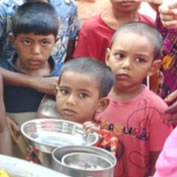
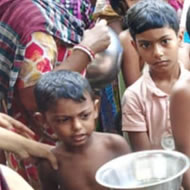
Lotus Ministry Trust Volunteers Deliver Nutritional Support to Rural Bangladesh Communities
Family Resilience Through Support
Support Type | Immediate Impact | Long-Term Change |
Food Relief | Alleviates hunger, prevents malnutrition | Resources redirected to education and livelihood |
Skills Training | Builds confidence, provides immediate income | Economic independence, diversified family income |
Community Development | Creates social support networks | Sustainable village-level solutions to poverty |
The transformation of individual lives inevitably extends to strengthen entire family units. When parents secure reliable food sources through Lotus Ministry's programs, they can focus their limited resources on other critical needs like housing, healthcare, and education. This shift from crisis management to forward planning marks the beginning of true resilience.
For families like the Chowdhurys, who lost everything in a devastating cyclone, the regular support from Lotus Ministry provided a crucial stability that allowed them to gradually rebuild.
"When you don't know how you'll feed your children tonight, you cannot think about tomorrow," explains Mrs. Chowdhury. "Once our basic needs were met consistently, we could begin planning for our future again."
The intergenerational impact of this support cannot be overstated. Children who remain in school rather than working to supplement family income break the cycle of limited opportunity. Parents who gain new skills create more stable household economies. Extended family members who benefit from community development initiatives contribute to a network of mutual support that can weather future challenges.
The Lasting Impact of Nutritional Security
Consistent access to nutritious food does more than satisfy immediate hunger—it lays the foundation for all other forms of progress. Children who receive adequate nutrition during critical developmental stages avoid the permanent physical and cognitive impairments associated with malnutrition. This nutritional security creates a foundation for educational achievement and future earning potential that extends far beyond the period of direct support.
Research conducted in villages served by Lotus Ministry Trust shows significant improvements in child health indicators, including reduced stunting, improved cognitive development, and fewer school days lost to preventable illness. These benefits accumulate over time, positioning the next generation for greater success than their parents could achieve.
Breaking Cycles of Poverty
Perhaps the most profound aspect of Lotus Ministry's success lies in its ability to interrupt intergenerational poverty cycles. When families move from crisis response to stable planning, they begin making different decisions about resource allocation, education, and future investment. Parents who have experienced the dignity of self-sufficiency become determined that their children will never face the same deprivations they endured.
The skills and knowledge gained through Lotus Ministry programs become family assets that cannot be destroyed by natural disasters or economic downturns. A mother who learns sustainable farming techniques teaches her children. A father who develops carpentry skills passes this trade to his sons and daughters. This transfer of knowledge and capability creates resilience that extends far beyond the immediate intervention.
In communities where Lotus Ministry has operated for three or more years, remarkable trends have emerged—higher school completion rates, increased household savings, more diverse income sources, and stronger community governance structures. These indicators suggest that the changes initiated through food relief and complementary programs have taken root in ways that will continue to bear fruit for generations.
"The true measure of our success isn't what happens when we're present in a village. It's what continues to happen long after we've moved on to serve other communities in need. When we see children who once received our meals now graduating from high school, or families who once depended on our relief now helping their neighbors—that's when we know we've made a lasting difference." — Lotus Ministry Trust Field Coordinator
Volunteer Perspectives: Those Who Serve
Behind every successful Lotus Ministry initiative stands a dedicated team of volunteers whose own lives have been profoundly impacted by their service. These individuals come from diverse backgrounds—local Bangladeshi professionals, international aid workers, students, retirees—yet they share a common experience of personal transformation through giving.
Nasreen, a university student from Dhaka who volunteers during school breaks, describes the shift in her worldview: "I came thinking I would help others, but I've received so much more than I've given. Seeing the resilience of people facing unimaginable hardship has completely changed how I view my own challenges and privileges. These villages have become my greatest classroom."
For international volunteers like James, a retired engineer from Australia, the experience provides perspective impossible to gain any other way. "You can read about poverty or see it on television, but when you sit with a family, share their food, and hear their stories firsthand—it transforms you. I've gained a deeper understanding of what truly matters in life."
Changed Lives on Both Sides
The transformative power of Lotus Ministry Trust extends beyond those receiving aid to profoundly impact the volunteers themselves. Many report significant personal growth, deeper empathy, and a reevaluation of priorities after witnessing both extreme hardship and extraordinary resilience in the communities they serve. This reciprocal transformation creates a powerful dynamic where both givers and receivers experience meaningful change.
Medical volunteers like Dr. Sharmin find that their professional skills take on new meaning in resource-limited settings. "In my regular practice, I focus on treating disease. Here, I'm forced to consider the whole person—their nutrition, their living conditions, their access to clean water. It's made me a better doctor even when I return to my hospital in Chittagong."
"What amazes me most is the joy I find in these villages despite such difficult circumstances. Children play and laugh, neighbors share what little they have, and families welcome us as honored guests. I came to teach them about nutrition, but they've taught me about gratitude and community. This experience has permanently altered my perspective on what constitutes a rich life." — Sophia, Nutrition Educator Volunteer
What Keeps Volunteers Coming Back
The retention rate among Lotus Ministry volunteers is remarkably high, with many returning year after year despite challenging conditions. When asked what motivates this continued commitment, volunteers consistently point to the tangible impact they witness, the meaningful relationships formed, and the profound personal growth they experience through service.
For local volunteer Tarek, the connection to his roots keeps him engaged: "I could have easily been born into one of these villages rather than my comfortable urban life. These are my people, my country. Seeing concrete improvements in children's health and education gives me hope for Bangladesh's future in a way nothing else can."
International volunteers often describe their service as the most meaningful experience of their lives, one that continues to influence their choices long after returning home. Many become advocates and fundraisers, sharing stories of transformation with their home communities and expanding Lotus Ministry's network of support.
Measuring Real Impact in Bangladesh
Beyond anecdotal success stories, Lotus Ministry Trust maintains rigorous impact measurement systems to ensure resources achieve maximum benefit. Their approach combines quantitative metrics like nutrition indicators and school attendance rates with qualitative assessments that capture less tangible but equally important changes in community resilience and individual wellbeing.
Villages Transformed
In villages where Lotus Ministry has maintained consistent programming for three or more years, remarkable transformations become evident even to casual observers. School buildings once abandoned now buzz with activity as attendance rates climb above 90%. Community gardens flourish where barren land once stood. Most tellingly, emergency food relief gradually transitions to targeted support for only the most vulnerable as general food security improves.
Comprehensive baseline and follow-up surveys document these changes systematically. In Patuakhali District, for example, stunting rates among children under five decreased from 42% to 27% over three years of intervention. In the same period, household savings rates increased by 65%, creating financial buffers against future crises.
Perhaps most significantly, villages that have "graduated" from intensive support often become resources for neighboring communities, sharing knowledge, seeds, and even volunteer hours. This multiplication effect extends Lotus Ministry's impact far beyond their direct service areas.
Sustainable Change Indicators
Indicator | Short-Term Measurement | Long-Term Measurement |
Food Security | Meals provided, Dietary diversity scores | Reduced reliance on external food aid, Local food production |
Education | School attendance rates, Academic performance | Graduation rates, Advanced education pursuit |
Economic Resilience | Household income, Savings rates | Income diversification, Entrepreneurship levels |
Community Capacity | Participation in programs, Leadership development | Self-initiated projects, Reduced external management needs |
The Ripple Effect of Targeted Support
One of the most significant findings from Lotus Ministry's impact assessments is the multiplier effect that occurs when support is strategically targeted. For example, when women receive skills training alongside food relief, the benefits extend to their children's education, family nutrition, and community engagement. This ripple effect maximizes the return on every resource invested in community transformation.
Independent evaluations have documented how initial food relief programs create foundations of trust that enable more complex interventions. As basic needs are met consistently, community members become more willing to engage in longer-term development activities, from agricultural training to micro-enterprise development. This progression from relief to development represents the ideal trajectory for sustainable transformation.
Most impressively, communities often develop their own metrics for success that extend beyond Lotus Ministry's formal evaluations. Village leaders track indicators meaningful to their specific context—whether that's the number of children pursuing higher education, reduction in migration to urban areas, or preservation of cultural traditions alongside economic advancement.
Behind the Success: Lotus Ministry's Approach
The remarkable outcomes achieved by Lotus Ministry Trust stem from a distinctive approach that combines immediate compassion with strategic foresight. Their model has evolved through years of field experience, continuous learning, and deep listening to the communities they serve.
Community-First Methodology
At the heart of Lotus Ministry's approach lies a profound respect for community wisdom and agency. Rather than imposing external solutions, they begin every intervention by engaging local leaders to identify priorities, assets, and aspirations. This participatory process ensures that programs address actual needs rather than perceived ones and build upon existing community strengths.
Field coordinator Rahima explains: "We never enter a village assuming we know what they need. We start by asking questions and listening—really listening—to understand both the challenges and the resources already present. Often, communities have begun developing their own solutions, and our role is simply to strengthen these indigenous approaches with additional resources or technical expertise."
This community-first methodology creates ownership that sustains initiatives long after Lotus Ministry's direct involvement ends. When villagers see programs as their own rather than imposed by outsiders, they invest their time, creativity, and resources in ensuring success.
Long-Term Vision vs. Quick Fixes
While Lotus Ministry responds effectively to immediate crises, their approach is distinguished by unwavering commitment to long-term transformation. Rather than measuring success by the number of meals distributed or villages visited, they track progress toward sustainable food security, economic resilience, and community self-sufficiency. This long-term vision shapes every aspect of their work, from program design to resource allocation.
"The easiest thing in the world is to give someone a meal today. The challenge—and our true mission—is to ensure they never need emergency food again. This requires patience, persistence, and a willingness to address root causes rather than symptoms. It's slower work, but the results endure." — Lotus Ministry Trust Founder
This commitment to sustainable change manifests in multi-year engagement with partner communities, gradually transitioning from direct service provision to capacity building and eventually to supportive monitoring. While this approach requires more time and relationship investment than quick-fix interventions, the resulting transformations prove far more durable and meaningful.
The contrast between short-term relief and long-term development isn't an either/or proposition for Lotus Ministry. Rather, they strategically integrate immediate assistance with developmental approaches, using crisis response as an entry point for deeper engagement. This balanced strategy meets urgent needs while simultaneously building foundations for lasting change.
How You Can Be Part of These Success Stories
The transformative work of Lotus Ministry Trust continues to expand, reaching more vulnerable communities each year. Yet the need remains vast, and meaningful participation extends far beyond financial support alone. Your involvement—whether through time, talent, or resources—can become part of these continuing success stories and help write new chapters of transformation.

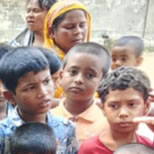
Bangladeshis Enthusiastically Welcome Lotus Ministry Trust
Ways to Contribute Beyond Donations
While financial contributions provide essential resources for Lotus Ministry's work, many supporters discover even more meaningful ways to engage. Skills-based volunteering allows professionals to contribute expertise in areas like nutrition, agriculture, education, or healthcare, either on-site or remotely. Others use their networks and platforms to raise awareness, whether through social media advocacy, community presentations, or fundraising events. Some supporters contribute through in-kind donations of equipment, educational materials, or professional services that multiply the impact of financial resources.
Volunteer Opportunities That Match Your Skills
Lotus Ministry Trust welcomes volunteers with diverse skills and time commitments. Short-term on-site volunteers participate in food distribution, community assessments, or educational workshops. Those with specialized expertise can develop training programs, analyze impact data, or contribute to strategic planning. Virtual volunteers support from anywhere in the world by translating materials, designing educational resources, managing social media, or providing remote consulting. For those unable to volunteer directly, becoming a Lotus Ambassador in your local community spreads awareness and builds support networks that sustain the mission.
Frequently Asked Questions (FAQ)
As interest in Lotus Ministry Trust's work grows, potential supporters often seek more information about their operations, impact, and engagement opportunities. The following questions address common inquiries and provide transparency about the organization's approach.
Whether you're considering your first donation or deeper involvement, understanding how Lotus Ministry functions helps ensure your contribution creates maximum impact for communities in need.
What areas of Bangladesh does Lotus Ministry Trust serve?
Lotus Ministry Trust currently operates in four districts of Bangladesh: Rajshahi, Khulna, Barisal, and Patuakhali. Within these districts, they prioritize the most remote and underserved villages, particularly those vulnerable to seasonal flooding, cyclones, and food insecurity. Their geographic focus allows for deep engagement and sustainable impact rather than scattered interventions across too many regions.
How does Lotus Ministry Trust ensure donations reach those in need?
Lotus Ministry employs a transparent distribution system with multiple accountability measures. All food relief distributions are publicly announced and conducted with local community leader oversight. Detailed recipient lists with verification systems prevent duplication, while photographic documentation and participant feedback mechanisms ensure proper delivery. Administrative costs are kept below 12% of total expenditures, with financial reports available to donors and regular third-party audits conducted. Learn more about Lotus Ministry's success stories.
Can I volunteer remotely with Lotus Ministry Trust?
Yes, Lotus Ministry offers numerous remote volunteer opportunities that create real impact without international travel. Virtual volunteers contribute through grant writing, graphic design, translation services, social media management, and technical consulting in areas like agriculture, nutrition, or education. Remote volunteers receive orientation training and are connected with on-ground team members to ensure their contributions align with actual community needs.
Many remote volunteers develop long-term relationships with specific villages through virtual meetings, becoming valued team members despite the physical distance. This approach has proven especially effective for professional volunteers with limited availability for extended travel.
What percentage of donations goes directly to programs?
Lotus Ministry Trust maintains a commitment to financial efficiency, with 88% of all donations directly supporting program activities including food procurement, distribution costs, educational materials, and community development initiatives. The remaining 12% covers essential administrative functions, monitoring and evaluation systems, and modest staff salaries—investments that actually increase program effectiveness through proper management and accountability.
How does Lotus Ministry Trust select communities to support?
Community selection follows a systematic assessment process that considers multiple vulnerability factors including food insecurity levels, child malnutrition rates, geographic isolation, disaster vulnerability, and absence of other support services. Lotus Ministry also evaluates community readiness factors such as local leadership engagement, potential for partnership with existing institutions, and prospects for sustainable improvement. This balanced approach ensures resources reach those most in need while creating conditions for successful long-term engagement.
The journey from hunger to hope begins with a single meal but extends far beyond. Through Lotus Ministry Trust's holistic approach, immediate relief becomes a gateway to lasting transformation for individuals, families, and entire communities. Each success story represents not just a life improved, but a future reimagined.
These narratives of change remind us that transformation is possible even in the most challenging circumstances when compassion is coupled with strategic action and genuine partnership. They stand as testimony to human resilience and the remarkable impact of targeted support at critical moments.
To learn more about how you can contribute to these ongoing success stories, visit Lotus Ministry Trust's website today and discover your place in this transformative work.While Lotus Ministry responds effectively to immediate crises, their approach is distinguished by unwavering commitment to long-term transformation. Rather than measuring success by the number of meals distributed or villages visited, they track progress toward sustainable food security, economic resilience, and community self-sufficiency. This long-term vision shapes every aspect of their work, from program design to resource allocation.
"The easiest thing in the world is to give someone a meal today. The challenge—and our true mission—is to ensure they never need emergency food again. This requires patience, persistence, and a willingness to address root causes rather than symptoms. It's slower work, but the results endure." — Lotus Ministry Trust Founder
This commitment to sustainable change manifests in multi-year engagement with partner communities, gradually transitioning from direct service provision to capacity building and eventually to supportive monitoring. While this approach requires more time and relationship investment than quick-fix interventions, the resulting transformations prove far more durable and meaningful.
The contrast between short-term relief and long-term development isn't an either/or proposition for Lotus Ministry. Rather, they strategically integrate immediate assistance with developmental approaches, using crisis response as an entry point for deeper engagement. This balanced strategy meets urgent needs while simultaneously building foundations for lasting change.
How You Can Be Part of These Success Stories
The transformative work of Lotus Ministry Trust continues to expand, reaching more vulnerable communities each year. Yet the need remains vast, and meaningful participation extends far beyond financial support alone. Your involvement—whether through time, talent, or resources—can become part of these continuing success stories and help write new chapters of transformation.
Ways to Contribute Beyond Donations
While financial contributions provide essential resources for Lotus Ministry's work, many supporters discover even more meaningful ways to engage. Skills-based volunteering allows professionals to contribute expertise in areas like nutrition, agriculture, education, or healthcare, either on-site or remotely. Others use their networks and platforms to raise awareness, whether through social media advocacy, community presentations, or fundraising events. Some supporters contribute through in-kind donations of equipment, educational materials, or professional services that multiply the impact of financial resources.
Volunteer Opportunities That Match Your Skills
Lotus Ministry Trust welcomes volunteers with diverse skills and time commitments. Short-term on-site volunteers participate in food distribution, community assessments, or educational workshops. Those with specialized expertise can develop training programs, analyze impact data, or contribute to strategic planning. Virtual volunteers support from anywhere in the world by translating materials, designing educational resources, managing social media, or providing remote consulting. For those unable to volunteer directly, becoming a Lotus Ambassador in your local community spreads awareness and builds support networks that sustain the mission.







Comments