
Essential Warm Winter Blankets & Supplies Demand in Bangladesh

Bangladesh's northern regions experience near-freezing temperatures every winter, creating life-threatening conditions for millions who lack adequate shelter and heating.
A single quality blanket can reduce cold-related illness risk significantly — medical professionals in Bangladesh report that proper blanket distribution can cut respiratory infection rates by up to 40% in vulnerable populations.
Lotus Ministry coordinates on-the-ground blanket distribution to remote villages across northern Bangladesh, reaching families that government and larger aid programs often miss.
Not all blankets are equal in Bangladesh's unique winter conditions — the combination of cold, dense fog, and high moisture requires specific materials to provide real protection.
The current supply gap is staggering — existing programs cover only 30–40% of actual need, leaving hundreds of thousands of families without adequate warmth each year.
Every December, while much of the world associates Bangladesh with tropical heat and monsoon floods, millions of people in this South Asian nation face a very different crisis — dangerous, bone-chilling cold with almost nothing to protect them from it.
Lotus Ministry has been working directly in these communities, providing warm winter blankets and critical cold-weather supplies to families who have no other safety net when temperatures plummet. The need is urgent, it is real, and it grows every single year.
Bangladesh Gets Dangerously Cold Every Winter
Most people are genuinely surprised to learn that Bangladesh — a country famous for its tropical climate and devastating floods — has a winter season that can become medically dangerous. The Bangladesh Meteorological Department has confirmed that cold snaps have grown increasingly severe in recent years, driven by shifting climate patterns that create sharper, more extreme temperature swings.
Northern Regions See Near-Freezing Temperatures
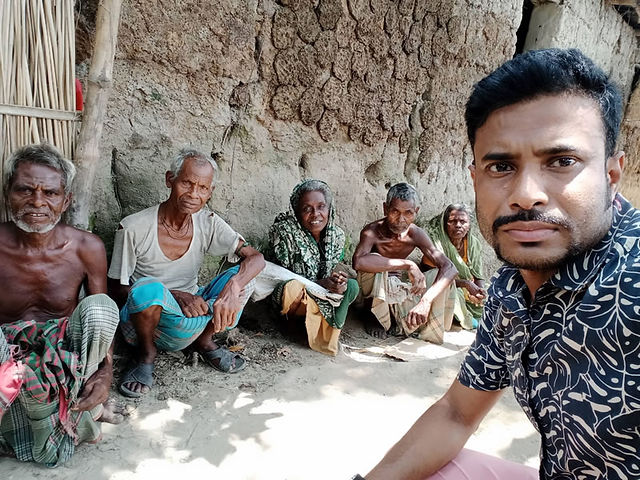
In the northern districts of Bangladesh — regions like Rangpur, Rajshahi, and Dinajpur — overnight temperatures regularly drop to between 5°C and 8°C (41°F to 46°F) from late December through mid-January. For context, homes in these areas are typically constructed from thin corrugated metal sheets, bamboo, or mud — materials that offer virtually no insulation. When the temperature outside drops, the temperature inside drops just as fast.
Dense fog compounds the problem significantly. Cold air combined with heavy moisture saturates clothing and bedding overnight, stripping away what little warmth a thin cloth or worn cotton sheet might have provided. Without a proper thermal blanket, staying warm through the night becomes nearly impossible.
Who Is Most at Risk When Temperatures Drop
Children and the elderly bear the heaviest burden of Bangladesh's winter cold. Children's higher surface-area-to-mass ratio causes them to lose body heat far more rapidly than adults, making even moderate cold exposure a genuine medical threat. Medical professionals in northern districts regularly treat children presenting with dangerously low body temperatures after cold nights spent without adequate bedding.
Day laborers, subsistence farmers, and families living in extreme poverty face compounding risks. They work outdoors in cold, damp conditions during the day and return to homes that offer no protection from the cold at night. There is no heater to switch on, no insulated wall to hold warmth. For these families, a single quality blanket is not a comfort item — it is a critical survival tool.
Why Heating Infrastructure Is Nearly Nonexistent
Unlike cold-climate countries where home heating is a basic utility, Bangladesh has virtually no residential heating infrastructure in its rural and semi-rural regions. Heating solutions such as electric space heaters are completely inaccessible to families living on less than a few dollars a day. Firewood, when available, is costly and creates serious indoor air quality hazards in the small, poorly ventilated homes typical of rural northern Bangladesh. This infrastructure gap means that warm blankets and insulated sleeping mats are not supplemental — they are the entire solution.
A Winter Blanket Is a Lifeline, Not a Luxury
The framing of blankets as a basic comfort item dramatically understates what they actually do in Bangladesh's winter context. When nighttime temperatures drop into near-freezing territory and homes provide zero insulation, a quality thermal blanket is the only barrier standing between a family and cold-related medical emergency.
Cold Exposure Leads to Real Medical Emergencies
Mild to moderate hypothermia affects thousands of people across Bangladesh's northern districts every winter season. The symptoms — uncontrollable shivering, confusion, slowed breathing, and loss of coordination — are well-documented and entirely preventable with adequate bedding. Healthcare facilities in these regions report significant seasonal spikes in cold-exposure cases during the peak winter months of late December and January.
What makes this particularly devastating is that the communities most affected are also the ones least able to access medical care. Travel distances to clinics are long, transportation is limited, and the cost of treatment can push already-struggling families deeper into poverty. Prevention through proper warm bedding is not just more humane — it is dramatically more practical.
Respiratory Illness Spikes in Winter Months
Cold exposure doesn't just cause hypothermia — it directly weakens the immune system's ability to fight off respiratory infections. Pneumonia, bronchitis, and severe respiratory illness spike sharply across Bangladesh's northern regions during winter months. Medical professionals working in these communities report that properly distributed blankets can reduce respiratory infection rates by up to 40% in vulnerable populations, creating significant health benefits that extend well beyond just staying warm at night.
Children Miss School, Adults Miss Work
The economic and developmental ripple effects of inadequate winter warmth are rarely discussed but deeply significant. When children fall ill from cold exposure, they miss weeks of school — disrupting education that families have worked hard to provide access to. When adults become sick or are too cold to function effectively, daily wage income disappears immediately, with no safety net to absorb the loss. A single blanket, provided before the cold season peaks, can prevent this entire cascade of consequences for a family.
The Best Winter Blanket Types for Bangladesh's Winter Conditions

Please, Help The Most Neglected
Not every blanket works equally well in Bangladesh's specific winter environment. The combination of near-freezing temperatures, extremely high moisture levels, and dense overnight fog means that material choice matters enormously. A blanket that performs well in dry cold can fail completely when exposed to the sustained dampness that characterizes winter nights in northern Bangladesh.
Wool Blankets: Natural Insulation That Works When Damp
Wool remains one of the most effective materials for Bangladesh's winter conditions precisely because it retains up to 80% of its insulating capacity even when wet — a critical advantage in a climate where overnight dew and fog are constant. Wool fibers trap warm air in their natural crimp structure, creating a thermal barrier that synthetic materials often cannot match under damp conditions. For families sleeping in homes with gaps in walls and roofs, wool blankets provide reliable warmth even as moisture levels rise through the night.
Fleece Blankets: Lightweight and Easy to Distribute
High-quality fleece blankets offer an important practical advantage in large-scale humanitarian distribution: they are significantly lighter than wool, making them far easier and less costly to transport across the difficult terrain of northern Bangladesh's rural districts. Fleece dries quickly, resists mildew, and provides solid mid-range insulation for the temperature ranges most commonly experienced in Bangladesh's winter. When distributed in pairs or alongside a cotton layer, fleece blankets deliver strong protection at a lower cost per unit than comparable wool options.
Heavy-Duty Thermal Winter Blankets for Emergency Situations
For the most vulnerable populations — the elderly, young children, and those already ill — heavy-duty thermal blankets designed for sustained cold exposure provide the highest level of protection. These blankets typically combine dense polyester fill with a woven outer shell that resists moisture penetration, maintaining their insulating performance through extended cold and damp conditions.
Layering is key in the coldest situations. Relief workers in northern Bangladesh consistently recommend a ground mat or sponge mattress beneath the body combined with a heavy thermal blanket above — since cold ground contact draws body heat away faster than cold air exposure. The combination addresses both heat loss vectors simultaneously and can make a measurable difference in overnight body temperature retention.
The Supply Gap Is Bigger Than Most People Realize
There is a significant and persistent mismatch between the number of families who need warm winter blankets in Bangladesh and the number that actually receive them through existing aid programs. This gap is not a minor shortfall — it represents hundreds of thousands of families left completely unprotected during the most dangerous weeks of the year.
Current Programs Cover Only 30–40% of Actual Need
Existing government and NGO winter relief programs in Bangladesh collectively reach an estimated 30 to 40 percent of the population that genuinely requires assistance during peak cold months. That means the majority of vulnerable families — including elderly individuals living alone, families with young children, and day laborers without stable income — enter the coldest weeks of the year without a single adequate blanket.
The shortfall is most acute in the remotest villages of northern Bangladesh, where distribution logistics are genuinely difficult and where the families living there are also the least visible to larger institutional aid programs. These are communities where a single dirt road may connect an entire cluster of villages, and where flooding earlier in the year may have already destroyed what little bedding families owned.
Why Funding Cycles Fail Seasonal Winter Demand
One of the structural reasons this gap persists year after year is the mismatch between how humanitarian funding cycles operate and how seasonal need actually works. Many aid organizations receive and allocate funding on annual or multi-year cycles that do not align with the narrow, predictable window of Bangladesh's winter emergency. By the time funding is approved, procurement is completed, and logistics are arranged, the coldest weeks have often already passed — or supplies arrive just barely in time with no margin for reaching remote areas. Donations made in October and November, before temperatures drop, have dramatically higher impact than those made in January when the crisis is already acute.
How Winter Blanket Distribution Actually Works on the Ground
Understanding the logistics of getting blankets from donors to families in remote northern Bangladesh reveals both the complexity of the challenge and why organizations with established local networks are so essential to making relief effective.
The process is not as simple as shipping blankets to a central location and handing them out. Effective distribution in rural Bangladesh requires navigating poor road conditions, identifying the most vulnerable households within communities, coordinating with local leaders to ensure fairness and reach, and managing inventory across multiple distribution points simultaneously — all within a narrow seasonal window.
Reaching Remote Villages in Northern Bangladesh
Many of the villages most in need of winter relief in northern Bangladesh are accessible only by narrow dirt roads that become unreliable during winter fog and cold. Distribution teams must plan routes carefully, often departing before dawn to reach multiple villages in a single day before road conditions deteriorate. Local knowledge is not optional here — it is the difference between blankets reaching the right families and supplies sitting undelivered at a roadside depot.
In some areas, rivers and waterways still serve as the primary transportation route, requiring supplies to be loaded onto small boats for final delivery. This last-mile challenge is where many large-scale aid efforts fall short, and where smaller organizations with deep local roots consistently outperform.
How Lotus Ministry Coordinates Local Distribution
Lotus Ministry operates through an established network of local community contacts and trusted village-level coordinators who have built relationships with families in northern Bangladesh over years of consistent presence. This network allows them to identify the most vulnerable households — elderly individuals living alone, families with infants, those who lost belongings to flooding — before the winter season begins, rather than scrambling to assess need after temperatures have already dropped.
Distribution events are organized at the community level, with local coordinators confirming recipient lists in advance. Blankets, sponge mattresses, and additional cold-weather supplies are transported in bulk to regional staging points, then moved to individual villages by local team members who know the roads, the waterways, and the families.
This model dramatically reduces waste, ensures supplies reach genuinely vulnerable families rather than those with more resources and easier access, and allows Lotus Ministry to operate efficiently even in areas that larger organizations cannot practically reach. The human infrastructure built over years of community trust is, in many ways, more valuable than the physical supplies themselves.
Sponge Mattresses and Ground Insulation as Added Protection
One of the most overlooked aspects of winter relief in Bangladesh is ground insulation. Many families sleep directly on mud or concrete floors, and cold ground contact is one of the fastest routes to dangerous heat loss — the body loses heat to a cold surface far more rapidly than to cold air. Sponge mattresses and insulated sleeping mats distributed alongside blankets create a complete thermal barrier above and below, providing a level of protection that blankets alone simply cannot achieve for families without elevated beds or adequate floor coverings.
$20 Can Protect an Entire Family This Winter
Twenty dollars. That is the cost of a single fast-food meal in most Western countries, and in northern Bangladesh, it is enough to protect an entire family from dangerous cold exposure for a full winter season. The math of winter relief in Bangladesh is stark, direct, and impossible to ignore once you understand it.
The low cost per family is possible because Lotus Ministry operates through established local networks that eliminate the overhead bloat common in larger aid organizations. Procurement happens through regional suppliers familiar with Bangladesh's specific climate needs, and community-level distribution coordinators are already embedded in the villages being served. Every dollar goes further because the infrastructure already exists.
What Each Donation Level Provides in Practical Terms
Understanding exactly what different donation amounts accomplish removes the abstraction from giving and makes the impact concrete and real. Here is what contributions at different levels actually provide on the ground in northern Bangladesh:
$10 — Provides one heavy-duty thermal blanket for an elderly individual living alone, offering critical overnight protection during peak cold weeks.
$20 — Covers a complete family winter kit: two warm blankets and a sponge mattress ground pad that together address both above and below heat loss.
$50 — Equips an entire household with layered protection, including multiple blankets for children, adults, and elderly family members under one roof.
$100 — Protects five families completely, covering procurement, transport, and last-mile delivery to remote villages in northern Bangladesh.
$500 — Funds blanket distribution for an entire small village cluster, including the logistical coordination required to reach areas inaccessible by standard routes.
These figures reflect the real delivered cost of supplies — not just the purchase price of a blanket, but the full cost of getting that blanket into the hands of a family in a remote northern district before temperatures peak. That transparency matters, because understanding where money goes is what separates meaningful giving from uncertainty.
How to Donate Through Lotus Ministry's Winter Relief Program

Donating through Lotus Ministry's winter blanket program is straightforward. Contributions made directly to their winter relief campaign are allocated specifically to blanket procurement and cold-weather supply distribution in northern Bangladesh. Lotus Ministry maintains transparency around how funds are used, with community-level coordinators tracking distribution and reporting back on families served.
Timing matters enormously. Donations received in October and November allow procurement and staging to happen before the cold season peaks, giving distribution teams the lead time they need to reach remote villages before temperatures drop to their lowest. A donation made in December still helps, but one made six weeks earlier can reach twice as many families with the same budget.
Act Before Temperatures Drop — Winter Relief Is Time-Sensitive
Bangladesh's winter emergency follows a predictable schedule — temperatures begin dropping in mid-November, peak in late December through mid-January, and ease by late February. That predictability is actually an advantage for donors, because it means relief can be staged and delivered proactively rather than reactively. The families who suffer most are those left unprotected in the weeks before large-scale emergency responses are mobilized. Early action — driven by early donations — is what closes that gap.
The window to act with maximum impact is short. Once temperatures hit their lowest point, the logistical challenges of reaching remote northern villages intensify, costs rise, and the families most in need have already spent the most dangerous nights without protection. Donating now, before that window closes, is the single most effective thing anyone outside Bangladesh can do to prevent cold-related suffering this winter season.
Frequently Asked Questions
Bangladesh's winter crisis raises genuine questions for people encountering it for the first time. The answers are important — not just for understanding the issue, but for making informed decisions about how to help effectively.
Why Do People in Bangladesh Need Blankets if It’s a Tropical Country?
Bangladesh is a tropical country, but its northern regions experience genuine winter cold. Overnight temperatures in districts like Rangpur, Rajshahi, and Dinajpur regularly drop to between 5°C and 8°C (41°F to 46°F) from late December through mid-January. The problem is compounded by the fact that homes in these areas are built for heat and monsoon resilience — not cold insulation. Thin bamboo walls, corrugated metal roofing, and mud floors provide zero thermal protection, meaning indoor temperatures drop as fast as outdoor ones.
Dense overnight fog saturates clothing and bedding with moisture, stripping away whatever warmth a thin cloth might have provided. For families without adequate bedding, surviving these conditions without medical consequences is genuinely difficult. The tropical label simply does not capture the full climate reality of Bangladesh's winter months.
What Type of Blanket Is Best for Bangladesh’s Winter Climate?
The best blanket for Bangladesh's winter conditions needs to perform under sustained cold and high moisture simultaneously. Wool blankets are the gold standard — they retain up to 80% of their insulating capacity even when wet, making them ideal for an environment where overnight fog and dew are constant. Heavy-duty thermal blankets with dense polyester fill and moisture-resistant outer shells are the next best option and are often more practical for large-scale distribution due to lower weight and cost.
Fleece blankets work well as a mid-range option, particularly when paired with a cotton layer beneath. The most effective approach in practice is layering — a ground mat or sponge mattress below the body to block cold floor contact, combined with a heavy thermal or wool blanket above. This two-layer approach addresses both primary heat loss pathways and delivers meaningfully better protection than a single blanket alone.
How Does Lotus Ministry Distribute Blankets to Remote Areas?
Lotus Ministry uses a community-embedded distribution model built on years of local presence in northern Bangladesh. Village-level coordinators identify the most vulnerable households before the winter season begins — elderly individuals living alone, families with infants, those whose belongings were lost to pre-winter flooding. Blankets and supplies are moved in bulk to regional staging points, then transported to individual villages by local team members who know the roads, the waterways, and the families by name. In areas where roads are unreliable, river routes and small boats serve as the final delivery mechanism.
How Much Does It Cost to Provide a Family With Winter Blankets?
A complete family winter kit — including two warm blankets and a sponge mattress ground pad — costs approximately $20 through Lotus Ministry's distribution program. This figure includes procurement, regional transport, and last-mile delivery to remote northern villages. Individual blankets for elderly or single-person households run approximately $10 per unit delivered. These costs are kept low by Lotus Ministry's established local supplier relationships and community-level distribution network, which eliminates significant overhead compared to larger institutional aid programs.
When Is the Best Time to Donate for Bangladesh’s Winter Season?
The best time to donate is October through early November, before Bangladesh's cold season begins in mid-November. Donations received during this window allow Lotus Ministry to complete procurement, arrange regional transport, and stage supplies at distribution points before temperatures drop — maximizing the number of families reached before the coldest nights arrive.
December donations still make a meaningful difference, particularly for families in areas that take longer to reach logistically. January donations are the least efficient in terms of timing, as the peak cold period is already underway and last-minute procurement costs rise. The predictable annual nature of Bangladesh's winter crisis is actually an advantage for donors — it means planning ahead is entirely possible, and early action reliably translates into greater impact per dollar.
Bangladesh's winter emergency is preventable, predictable, and solvable — and Lotus Ministry provides warm winter blankets and cold-weather relief supplies directly to the families who need them most, through a trusted network built on years of community presence in northern Bangladesh.







Comments