
Lotus Ministry Trust Educational Resources & Food Aid Support
- Jeffrey Dunan
- Mar 9
- 17 min read

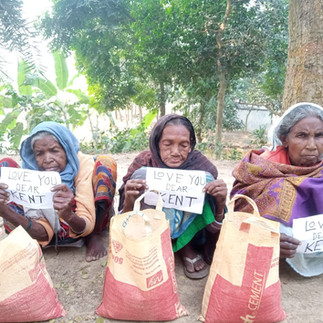
Lotus Ministry Trust, founded in 2021, delivers culturally-appropriate food aid and education programs to the most vulnerable families in northern Bangladesh.
Just $50 feeds a family of five for an entire month through Lotus Ministry Trust's efficient, community-led distribution model.
The Trust is IRS-compliant as a faith-based non-profit, making donations tax-deductible for U.S. supporters.
Food aid alone isn't enough — keep reading to learn how Lotus Ministry Trust's education programs create lasting change beyond the dinner table.
By combining immediate hunger relief with agricultural rehabilitation and youth education, Lotus Ministry Trust addresses both the symptoms and root causes of poverty in Bangladesh.
Lotus Ministry Provides Education And Food Aid
Hunger and illiteracy don't exist in isolation — and neither do the solutions. In northern Bangladesh, where food insecurity and limited access to education compound each other daily, Lotus Ministry Trust has built a model that tackles both problems at once, reaching the families and children that larger organizations consistently fail to serve.
What began in 2021 as a focused food relief effort has grown into a comprehensive humanitarian program. The Trust operates with a deep understanding of Bangladeshi culture, community structure, and the specific nutritional needs of rural families — and that local knowledge makes all the difference.
Lotus Ministry Trust Is Feeding Families and Educating Children in Bangladesh
Most humanitarian organizations treat food aid and education as separate programs with separate budgets and separate goals. Lotus Ministry Trust treats them as two sides of the same coin. A child who is hungry cannot learn. A family focused entirely on survival cannot invest in the future. By addressing both needs simultaneously, Lotus Ministry Trust creates a foundation for real, measurable community transformation.
The Trust's work is concentrated in northern Bangladesh — one of the country's most flood-prone and economically marginalized regions. Families here face a relentless cycle: seasonal flooding destroys crops, food insecurity spikes, children drop out of school to help families survive, and the cycle repeats. Lotus Ministry Trust intervenes at every stage of that cycle.
Founded in 2021, Already Serving Northern Bangladesh's Most Vulnerable
Despite being a relatively young organization, Lotus Ministry Trust has moved with urgency and precision. Since its founding in 2021, the Trust has established community distribution networks, identified the most vulnerable households through multi-layered verification systems, and launched educational programming — all within a few years of operation. That speed reflects both the severity of the need and the effectiveness of a community-led approach that doesn't wait for bureaucratic approval to act.
$50 Feeds a Family of Five for an Entire Month
The impact of a single donation is remarkably concrete here. Fifty dollars. One family. Five people. Thirty days of meals. Lotus Ministry Trust's distribution infrastructure keeps overhead low and delivery direct, meaning the vast majority of every donated dollar reaches the families who need it. The Trust designs its food packages around rice — Bangladesh's dietary staple — while incorporating additional nutritional elements specifically chosen to address deficiencies most common among rural women and children.
Education and Food Aid Work Together to Break the Poverty Cycle
The connection between consistent nutrition and educational outcomes isn't theoretical — it's documented and observable in every community Lotus Ministry Trust serves. When children eat regularly, school attendance improves. When school attendance improves, families gain access to knowledge that builds long-term resilience. The Trust's education program for disadvantaged youth in northern Bangladesh was designed with this connection explicitly in mind, making it one of the most integrated approaches to community development operating in the region today.
The Food Crisis in Northern Bangladesh Is Worse Than Most People Know
Bangladesh is frequently described as one of the world's most climate-vulnerable nations, but that headline statistic rarely captures what it means for a family in a remote northern village. The combination of geographic isolation, seasonal flooding, limited infrastructure, and systemic poverty creates a food security crisis that operates year-round — not just in the aftermath of visible disasters.
How Climate Change and the 2022 Floods Destroyed Crops and Livelihoods
The 2022 flooding across Bangladesh was among the most destructive in recent memory, inundating agricultural land, destroying stored grain, and displacing families from communities that had already been weakened by years of climate-related crop loss. For farming families in northern Bangladesh, a single flood season can erase an entire year's livelihood in days. Recovery without outside support is nearly impossible when the next planting season begins before the last disaster has ended.
Why Women and Children Carry the Heaviest Burden of Food Insecurity

You Can Help Lotus Ministry Deliver Vital Nutrition
In households where food is scarce, women and children consistently eat last and least. Lotus Ministry Trust's food package design directly addresses this reality — the nutritional profile of each package targets deficiencies most common in women of reproductive age and children under five, including iron, protein, and essential vitamins. This isn't a generalized food drop. It's a targeted nutritional intervention built on an understanding of who suffers most when supply runs short.
Children experiencing chronic undernourishment face cognitive development challenges that persist long after hunger is addressed. Early malnutrition is directly linked to reduced school performance, lower lifetime earning potential, and higher vulnerability to illness — which is precisely why Lotus Ministry Trust's integration of education and food aid is not just compassionate, but strategically essential.
"Hunger knows no boundaries." — Lotus Ministry Trust Every $50 donated feeds a family of five in northern Bangladesh for an entire month, through a community-led model that larger international organizations have consistently failed to replicate in the region's most remote areas.
Why Large International Aid Organizations Miss the Most Remote Communities
Scale is not always an advantage in humanitarian work. Large international organizations often rely on centralized distribution hubs, which means aid flows to accessible urban and peri-urban areas while the most isolated rural communities wait — or go without. Lotus Ministry Trust's model inverts this: local leaders are placed at the center of distribution decisions, and community mapping exercises identify vulnerable households before a single rice bag is packed. The result is aid that reaches the families least likely to appear on any international organization's radar.
Rice Distribution as the Core of Emergency Relief
Rice isn't just a food staple in Bangladesh — it's cultural identity, daily ritual, and survival rolled into one grain. Lotus Ministry Trust places rice at the center of every emergency food package because it is the one food that families will cook, eat, and share without hesitation, regardless of regional variation or household preference. Starting with rice also means starting with trust — families recognize the cultural respect embedded in an aid package built around what they actually eat.
Beyond cultural alignment, rice delivers reliable caloric density that stabilizes families during acute crisis periods. When flooding has wiped out everything else, a supply of rice buys time — time for floodwaters to recede, for agricultural recovery to begin, and for families to stabilize enough to access other support systems. Lotus Ministry Trust uses this window deliberately, treating rice distribution not as an endpoint but as the opening phase of a longer recovery process.
Rice forms the caloric foundation of every Lotus Ministry Trust food package
Packages are supplemented with protein sources and micronutrient-rich foods targeting common deficiencies
Cultural alignment ensures food is actually consumed rather than traded or discarded
Distribution quantities are calculated based on verified household size and nutritional need
Each package is designed to cover a family's core nutritional requirements for a full month
The supplemental components of each package — proteins, legumes, and micronutrient-rich foods — are selected based on the specific nutritional deficiencies most prevalent among rural Bangladeshi women and children. This isn't a one-size-fits-all food drop. It's a deliberately engineered nutritional intervention disguised as a bag of groceries. Learn more about the impact of Lotus Ministry Trust's food relief efforts.
How Aid Reaches the Most Vulnerable Families First
Lotus Ministry Trust employs a multi-layered verification system that begins well before distribution day. Community mapping exercises bring together local leaders, healthcare workers, and government representatives to identify the households with the greatest need — prioritizing female-headed households, families with children under five, elderly individuals living alone, and those with no viable income source. This process ensures that when limited resources must be allocated, they flow toward the families who have no other safety net to fall back on.
The Three-Phase Approach From Emergency Relief to Long-Term Food Security
Immediate food distribution saves lives — but it doesn't end food insecurity. Lotus Ministry Trust operates across three deliberately sequenced phases, moving communities from crisis response through recovery and into long-term resilience. Each phase builds on the last, and the progression is guided by community readiness rather than a fixed external timeline.
Phase 1: Immediate Emergency Food Distribution
When crisis hits — whether through flooding, drought, or economic collapse — Phase 1 activates quickly. Pre-established community networks allow Lotus Ministry Trust to mobilize distribution within days rather than weeks. Rice and supplemental food packages reach verified vulnerable households through local leaders who know exactly where the hardest-hit families live. Speed matters here: the acute hunger window following a disaster is narrow, and delays compound suffering exponentially.
Phase 2: Agricultural Rehabilitation and Seed Distribution
Once immediate survival needs are stabilized, the focus shifts to restoring families' ability to feed themselves. Phase 2 centers on agricultural rehabilitation — providing seeds, basic tools, and agricultural guidance that helps farming families replant and rebuild after disaster. The goal is to move families from aid recipients to food producers as quickly as conditions allow, reducing dependency while rebuilding dignity and self-sufficiency.
Seed selection in this phase reflects the same cultural and practical intelligence that guides food package design. Lotus Ministry Trust prioritizes locally-adapted crop varieties that families already know how to grow, process, and cook — reducing the learning curve and maximizing the likelihood that rehabilitation efforts translate into actual food on the table rather than failed experiments with unfamiliar crops.
Phase 3: Climate-Adaptive Farming and Community Food Systems
The final phase addresses the underlying vulnerability that makes communities susceptible to food crises in the first place. Northern Bangladesh faces an accelerating pattern of climate disruption — floods are becoming more frequent, dry seasons more severe, and traditional farming calendars less reliable. Phase 3 equips communities with climate-adaptive farming knowledge and infrastructure designed to withstand this new reality.
This includes training in flood-resistant crop varieties, elevated farming techniques, water management strategies, and cooperative food storage systems that protect harvests from both weather and market volatility. The Trust works alongside local agricultural experts and community leaders to ensure that new techniques are adopted sustainably rather than abandoned when outside support withdraws.
Community grain banks are one of the most powerful tools introduced during Phase 3. By pooling and storing surplus grain collectively, communities create a buffer against future shocks — a locally controlled emergency food reserve that operates independently of external aid. This single intervention has the potential to prevent the full return to Phase 1 crisis conditions when the next flood season arrives.
Flood-resistant and elevated farming methods reduce crop loss during seasonal flooding
Climate-adapted crop varieties maintain yield under increasingly unpredictable weather patterns
Community grain banks store surplus harvests as protection against future food shocks
Cooperative farming structures distribute risk and increase collective food production capacity
Water management training helps families protect both crops and household water supplies
Phase 3 is where Lotus Ministry Trust's vision extends furthest beyond immediate relief — building communities that can face the next crisis with resources, knowledge, and collective strength rather than starting from zero every time disaster strikes.
Educational Resources for Disadvantaged Youth in Northern Bangladesh
Food security and education are not competing priorities for Lotus Ministry Trust — they are inseparable ones. The Trust's comprehensive education program for disadvantaged youth throughout northern Bangladesh reflects a clear-eyed understanding: a fed child who never learns to read is only half-rescued. True community transformation requires investing in both the body and the mind, simultaneously and consistently.
Why Consistent Nutrition Directly Improves Children's Learning and Development
The science here is unambiguous. Children who experience chronic hunger show measurable impairment in concentration, memory, and cognitive development — effects that don't disappear simply because a meal is provided once. Consistent, reliable nutrition is what creates the neurological stability children need to absorb and retain new information. This is why Lotus Ministry Trust's food aid and education programs are designed to operate in tandem rather than in sequence.
In practical terms, this means that communities receiving food aid from Lotus Ministry Trust also gain access to educational programming — because the Trust understands that a teacher showing up to a classroom full of hungry children is fighting a losing battle. Addressing hunger first, or alongside education, is not a soft choice. It is the only evidence-based approach to improving educational outcomes in food-insecure communities.
The ripple effects extend beyond the classroom. Children who are well-nourished and educated become adults who make better agricultural decisions, earn higher incomes, and are less vulnerable to the shocks that send families spiraling back into crisis. Education, sustained by consistent nutrition, is the mechanism through which Lotus Ministry Trust's impact compounds across generations.
Chronic hunger directly impairs concentration, memory, and cognitive development in children
Consistent nutrition — not occasional meals — is required to support stable learning outcomes
Educated children grow into adults with stronger agricultural and economic decision-making skills
Communities with higher literacy rates show greater resilience to climate and economic shocks
Lotus Ministry Trust's integrated model addresses nutritional and educational needs simultaneously
How the Education Program Integrates With Food Aid for Lasting Community Impact
Lotus Ministry Trust's education program doesn't operate in a separate silo — it is built directly into the community infrastructure that food aid establishes. The same local leaders who coordinate food distribution are involved in identifying children who have dropped out of school, connecting families with educational resources, and ensuring that relief efforts create space for learning rather than simply extending survival. This integration means that every food distribution event is also an opportunity to assess educational needs and connect families with support. Learn more about the impact of food relief by Lotus Ministry Trust.
The long-term vision is communities where the next generation grows up with both full stomachs and the education needed to build economic independence. By investing in disadvantaged youth throughout northern Bangladesh, Lotus Ministry Trust is planting a seed that will yield returns far beyond what any single food distribution event can achieve — a generation of young people equipped to break the cycle of poverty their parents have endured.
65% of Families Reach Stable Food Security Within 18 Months
The measure of any humanitarian program is not how much aid it distributes — it's how quickly families no longer need it. Lotus Ministry Trust's community-led, three-phase model moves families toward self-sufficiency with a speed that reflects the effectiveness of an approach built on cultural understanding, local leadership, and integrated support. When food aid, agricultural rehabilitation, and education work together from day one, families don't stay dependent. They graduate.
How Community Resilience Grows From Food Relief Programs
There is a version of food aid that creates dependency — where communities wait for the next distribution, never building the capacity to feed themselves when the trucks stop coming. Lotus Ministry Trust has explicitly designed its programs to avoid this outcome. Every element of their approach, from community-led distribution to grain banks to education programming, is oriented toward building local capacity that outlasts the Trust's direct involvement.
The social infrastructure that forms around food aid programs is itself a form of community resilience. When neighbors coordinate to identify the most vulnerable households, when local leaders take ownership of distribution systems, and when families begin sharing agricultural knowledge with each other, the community is building connective tissue that will hold during the next crisis — regardless of whether outside aid arrives in time.
Volunteers, Donors, and Local Organizations Working as One
Lotus Ministry Trust does not operate as an outside force parachuting aid into communities it doesn't understand. The Trust functions as a connector — bringing together local volunteers who know their neighbors, donors whose financial support makes distribution possible, and community organizations that provide on-the-ground intelligence about where the greatest needs exist. This three-way collaboration is what allows Lotus Ministry Trust to move faster, spend more efficiently, and reach deeper into remote areas than any single actor could achieve alone.
Local volunteers are particularly central to this model. They conduct the household assessments, manage distribution logistics, and follow up with families after aid is delivered — creating a feedback loop that allows the Trust to continuously improve its targeting and effectiveness. Donors, meanwhile, can trust that their contributions are being stewarded by people with direct knowledge of and genuine commitment to the communities they serve. That combination of external resources and internal knowledge is genuinely rare in the humanitarian sector.
Grain Banks and Cooperative Farming as Long-Term Solutions
Grain banks represent one of the most elegant solutions in Lotus Ministry Trust's toolkit. By helping communities establish collectively managed stores of surplus grain, the Trust creates a locally controlled buffer against future food shocks — one that operates entirely independently of external aid timelines, donor cycles, or logistics chains. When the next flood arrives, a community with a functioning grain bank has options. A community without one has only desperation.
Cooperative farming structures work alongside grain banks to distribute both risk and reward more evenly across communities. When families pool labor and resources during planting and harvest seasons, individual households become less vulnerable to the specific misfortunes — illness, injury, equipment failure — that can devastate a single family's food supply. Over time, these cooperative structures build the kind of social trust and mutual accountability that makes communities genuinely resilient rather than simply less poor. For more on how these efforts impact communities, read about Bangladesh food relief by Lotus Ministry Trust.
How to Support Lotus Ministry Trust's Work in Bangladesh

Lotus Ministry Trust Cannot Continue Without You
Supporting Lotus Ministry Trust is one of the most direct ways to translate donor dollars into measurable human outcomes. The Trust's lean operational model ensures that the overwhelming majority of every donated dollar reaches families in northern Bangladesh rather than covering administrative overhead. Whether you give once or commit to monthly support, the impact is immediate, traceable, and real.
The Trust welcomes support in multiple forms — financial donations, awareness-raising within your own networks, and direct engagement with their mission through their online platforms. Every contribution, regardless of size, connects directly to the three-phase model of emergency relief, agricultural rehabilitation, and long-term resilience building that defines Lotus Ministry Trust's approach.
Donation Impact Breakdown: What Your Money Directly Provides
The following table illustrates exactly what different donation amounts provide to families in northern Bangladesh, based on Lotus Ministry Trust's verified distribution model and cost structure:
Donation Amount | Direct Impact | Beneficiaries |
$25 | Feeds a family of five for two weeks | 5 family members |
$50 | Feeds a family of five for one full month | 5 family members |
$100 | Two months of full family food security plus supplemental nutrition | 5–10 family members |
$250 | Supports agricultural seed distribution for one farming family | 1 farming household + community |
$500 | Contributes to community grain bank establishment | Multiple households, ongoing |
These figures reflect the efficiency of Lotus Ministry Trust's community-led model. Because local volunteers manage distribution logistics and local leaders handle household verification, the cost per family served remains remarkably low compared to organizations relying on centralized, externally staffed infrastructure.
Monthly giving amplifies impact further. A recurring $50 monthly commitment ensures that one family in northern Bangladesh maintains food security continuously — not just during acute crisis periods but through the full seasonal cycle, including the agricultural rehabilitation phases that determine whether families can eventually sustain themselves independently.
Lotus Ministry Trust Is IRS-Compliant as a Faith-Based Non-Profit
Tax-Deductibility Confirmed: Lotus Ministry Trust operates as an IRS-compliant faith-based non-profit organization. Donations made by U.S. taxpayers are tax-deductible to the extent permitted by law. Donors should retain their donation receipts for tax filing purposes and consult a tax professional regarding their specific deductibility circumstances.
For U.S.-based donors, Lotus Ministry Trust's IRS-compliant status means that financial support for families in Bangladesh also carries a domestic tax benefit. This compliance reflects the Trust's commitment to transparency and accountability — not just in how aid is delivered on the ground, but in how the organization is structured and governed at the institutional level.
Faith-based non-profits bring a distinctive combination of community trust and mission clarity to humanitarian work. Lotus Ministry Trust's faith foundation shapes its understanding of service — hunger relief and education are not just logistical challenges but moral imperatives that demand consistent, dignified, and effective response.
The Trust's governance structure ensures that donor funds are managed with the fiduciary responsibility that IRS compliance requires. For donors who want confidence that their money is being handled with integrity — not just good intentions — that institutional accountability matters. It is one of the reasons Lotus Ministry Trust has been able to grow its impact rapidly since 2021 without compromising the community trust it depends on.
To make a direct, tax-deductible contribution to Lotus Ministry Trust's food relief and education programs in northern Bangladesh, visit their GoFundMe campaign here and join the growing community of donors making a measurable difference in one of the world's most vulnerable regions.
Frequently Asked Questions
Here are the most common questions donors and supporters ask about Lotus Ministry Trust's operations, impact, and accountability — answered directly and completely.
How does Lotus Ministry Trust make sure food reaches the most vulnerable families?
Lotus Ministry Trust's Household Verification Process: Step 1 — Community Mapping: Local leaders, healthcare workers, and government representatives collaborate to identify the most vulnerable households in each target area. Step 2 — Household Verification: A multi-layered assessment confirms eligibility, prioritizing female-headed households, families with children under five, elderly individuals, and households with no viable income. Step 3 — Distribution Execution: Pre-verified households receive aid through local volunteer networks, eliminating the logistical gaps that cause larger organizations to miss remote communities. Step 4 — Post-Distribution Follow-Up: Local volunteers conduct follow-up assessments to confirm aid was received and to identify any gaps in coverage for the next distribution cycle.
This verification system is what separates Lotus Ministry Trust from aid models that rely on self-reported need or centralized registries that inevitably miss the most isolated families. By grounding every step in community knowledge — the kind that only comes from people who live in and care about these communities — the Trust ensures that aid flows where it is genuinely most needed.
The involvement of healthcare workers in the mapping process is particularly significant. In communities where women and children carry the greatest nutritional burden, healthcare workers often have the most accurate picture of who is most at risk — information that formal aid systems frequently fail to capture. Integrating that knowledge into distribution planning is one of the Trust's most operationally sophisticated choices.
The four-step system also creates accountability in both directions. Families know that their situation has been assessed fairly and that aid distribution reflects genuine need. Donors know that their contributions are being directed by people with real, verifiable knowledge of the communities they serve. That mutual accountability is foundational to the Trust's credibility and long-term effectiveness.
Lotus Ministry Trust has developed a comprehensive education program specifically designed for disadvantaged youth throughout northern Bangladesh. The program integrates directly with the Trust's food aid infrastructure — meaning that the community relationships and local leader networks built through food distribution become the delivery channels for educational support as well. The Trust identifies children who have dropped out of school due to food insecurity or economic hardship and works to reconnect them with educational opportunities, while providing the nutritional support that makes sustained school attendance possible. This integrated approach reflects the Trust's core conviction that education and food security are not separate problems requiring separate solutions, but interconnected challenges that demand a unified response.
Are donations to Lotus Ministry Trust tax-deductible?
Yes. Lotus Ministry Trust is fully compliant with IRS requirements as a faith-based non-profit organization, and donations made by U.S. taxpayers are tax-deductible to the extent permitted by applicable law. Donors should retain their contribution receipts for tax filing purposes.
For donors who want to verify the Trust's non-profit status or obtain documentation for tax purposes, the Trust maintains the institutional records required by IRS compliance standards. If you have specific questions about deductibility in your individual tax situation, consulting a qualified tax professional is always advisable — but the Trust's IRS-compliant status ensures that the foundational requirement for deductibility is firmly in place.
How does Lotus Ministry Trust's food aid differ from other international relief organizations?
The most fundamental difference is the community-led model. While large international organizations typically rely on centralized distribution infrastructure staffed by external personnel, Lotus Ministry Trust places local leaders at the center of every decision — from household verification to distribution execution to post-delivery follow-up. That local embeddedness allows the Trust to reach families in remote northern Bangladesh that larger organizations consistently miss, and to do so with cultural sensitivity that ensures aid is actually used rather than traded away for more familiar foods.
The integration of food aid with education programming is the second major differentiator. Most international relief organizations treat hunger and education as separate mandates served by separate teams with separate funding streams. Lotus Ministry Trust treats them as a single, unified challenge — and designs programs accordingly. The result is a model that doesn't just keep families alive through a crisis but actively builds the human capacity needed to prevent the next one.
How quickly does Lotus Ministry Trust respond to acute crises like floods?
Lotus Ministry Trust's pre-established community networks are specifically designed to enable rapid response when acute crises like flooding hit northern Bangladesh. Because household verification, community mapping, and local volunteer training are completed in advance — not triggered by a disaster — the Trust can mobilize food distribution within days of a crisis event rather than the weeks it takes organizations that must build their response infrastructure from scratch after each emergency.
This speed advantage is not incidental — it is the direct result of deliberate organizational design. The Trust maintains ready relationships with local leaders and volunteers across its target communities, ensuring that when floodwaters rise, the question is never who will coordinate the response or which families need help most. Those answers already exist, and distribution can begin almost immediately.
For families in northern Bangladesh, the difference between a response that arrives in two days and one that arrives in two weeks is not a matter of inconvenience — it is a matter of survival, child nutrition outcomes, and whether a family loses enough ground during a crisis to require years of recovery rather than weeks. Lotus Ministry Trust's rapid-response capacity is one of the most operationally important aspects of its humanitarian model, and one of the strongest reasons to direct your support here rather than to organizations whose response timelines are measured in bureaucratic cycles rather than community readiness.







Comments