
Lotus Ministry Trust's Role in Bangladesh Rice Food Aid

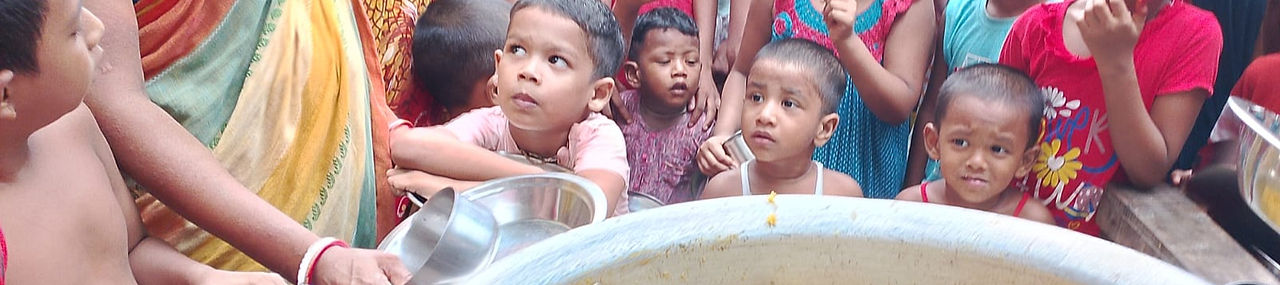
Lotus Ministry Trust has distributed rice food aid across some of Bangladesh's most disaster-prone districts, reaching orphans, widows, the elderly, and disabled individuals who fall through the cracks of larger aid systems.
Rice is not just a staple in Bangladesh — it accounts for roughly 70% of daily caloric intake for millions of families, making consistent rice distribution a matter of life and death during flood and cyclone seasons.
Lotus Ministry Trust began its rice distribution operations in 2021, growing from a grassroots effort into a coordinated humanitarian program with local partnerships and direct community delivery systems.
Supporting Lotus Ministry Trust's GoFundMe campaign is one of the most direct ways to get rice into the hands of the most vulnerable Bangladeshis — keep reading to understand exactly why this work is irreplaceable.
Rice Is A Matter Of Life And Death
Please Help Us Continue To Deliver
Support us directly through the founders' PayPal

Bangladesh is one of the most flood-prone nations on earth, and when the water rises, the first thing families lose is access to food.
Rice Food Aid in Bangladesh: Why Lotus Ministry Trust Matters
In a country where natural disasters strike with brutal regularity and millions live below the poverty line, rice food aid is not a luxury program — it is an emergency lifeline. Organizations working at the community level, with local knowledge and lean operations, often reach people that larger international agencies simply cannot. Lotus Ministry Trust is one of those organizations, operating directly inside Bangladeshi communities with a ground-up approach to rice distribution that has quietly built a meaningful track record since 2021.
What sets this Trust apart is not just what it distributes, but who it prioritizes. Widows, orphans, elderly individuals, and people living with disabilities — the groups most likely to be overlooked — are the central focus of every distribution effort. That intentional targeting makes the impact of each kilogram of rice significantly more meaningful than a blanket distribution approach.
Bangladesh's Food Security Crisis at a Glance
Bangladesh sits in one of the most climatically vulnerable positions of any nation in the world. Wedged between the Bay of Bengal and the Himalayan river systems, it absorbs the full force of monsoon flooding, cyclones, and tidal surges year after year. Each disaster event doesn't just destroy homes — it wipes out crops, contaminates water supplies, and collapses the informal food markets that rural families depend on entirely.
Why Rice Is Central to Survival in Bangladesh
Rice is Bangladesh. It covers more than 75% of the country's total cultivated land and accounts for the overwhelming majority of daily caloric intake for the rural poor. When a flood destroys a rice crop or cuts off road access to markets, families don't switch to an alternative — there often isn't one. This is why rice-specific food aid programs carry outsized importance in the Bangladeshi humanitarian context compared to almost any other country in South Asia.
The dependency on rice also means that price spikes during lean seasons hit Bangladeshi households with immediate, severe consequences. A 20% rise in rice prices can push a family from food-insecure to acutely hungry within weeks. Aid organizations that understand this dynamic — and respond with direct rice distribution rather than cash transfers in unstable market conditions — provide far more reliable relief.
The Communities Most at Risk From Food Insecurity
Rural communities in areas with limited road infrastructure bear the heaviest burden of food insecurity in Bangladesh. Within those communities, specific demographic groups face compounded vulnerability:
Orphaned children without family income or caregivers to advocate for aid access
Widowed women, particularly those excluded from formal employment and land ownership
Elderly individuals who cannot engage in physical labor to earn food income
People with physical disabilities who face both economic exclusion and mobility barriers during disaster evacuations
These are precisely the groups Lotus Ministry Trust has structured its operations around reaching — and that targeting decision is not accidental. It reflects a clear-eyed understanding of who falls through the gaps when larger aid systems prioritize scale over specificity.
How Natural Disasters Repeatedly Devastate Food Supply
Bangladesh experiences an average of several major flood events per year, with cyclone seasons between April–May and October–November adding storm surge destruction to an already stressed food system. When Cyclone Amphan struck in 2020, it damaged or destroyed crops across 1.5 million hectares of agricultural land. Events of this scale reset food security progress by years, not months. For more information on how rice food aid plays a crucial role during such times, read about Bangladesh's food security efforts.
What makes the cycle particularly brutal is that disaster-affected communities rarely fully recover before the next event hits. Families replant crops only to lose them again. Road infrastructure rebuilt after flooding is damaged again before distribution networks stabilize. This chronic instability is what makes consistent, relationship-based aid organizations — rather than one-time emergency responders — so critical to long-term food security outcomes in Bangladesh.
The structural nature of this crisis means that rice food aid cannot be treated as a short-term emergency measure. It has to be embedded in long-term community presence, local trust, and adaptive logistics — all things that define how Lotus Ministry Trust has chosen to operate.
Lotus Ministry Trust: Who They Are and What They Do

Your Generosity Does Not Go Unappreciated
Support us directly through the founders' PayPal
Lotus Ministry Trust is a non-profit humanitarian organization focused on direct food relief and community development in rural Bangladesh. Unlike large multilateral agencies that operate through government channels and formal procurement systems, Lotus Ministry works at the grassroots level — identifying vulnerable households through local community networks and delivering rice food aid with minimal administrative overhead between donor and recipient.
Their operational model is built on accountability and proximity. Volunteers and local partners on the ground know the communities they serve, which means rice reaches the right families rather than being captured by more vocal or better-connected households during distribution events.
Lotus Ministry Trust Core Focus Areas 🌻 Direct rice food aid distribution to the most vulnerable 🌻 Emergency response during cyclones and flood events 🌻 Lean season supplemental feeding programs 🌻 Community development including clean water and education support 🌻 Agricultural training and livelihood resilience programs
When and Why Lotus Ministry Trust Was Founded
Lotus Ministry Trust launched its Bangladesh operations with a recognition that existing aid infrastructure was not reaching the most marginalized. The founding motivation was straightforward: too many of Bangladesh's most vulnerable people were receiving little to no structured food support. The Trust was established to close that gap with direct action rather than advocacy.
The Core Mission Behind Their Bangladesh Operations
The Trust's mission centers on restoring dignity through consistent, targeted food relief while building toward longer-term community resilience. Rice distribution is the entry point, but the broader vision includes reducing the conditions that make communities so catastrophically vulnerable to food insecurity in the first place — addressing water access, agricultural knowledge, and livelihood diversity alongside emergency feeding programs.
The History of Rice Food Aid Distribution by Lotus Ministry Trust
Tracing the history of Lotus Ministry Trust's rice distribution work means understanding how a focused commitment to one staple food — delivered consistently to the right people — can compound into meaningful humanitarian impact over time. From its earliest distributions to its expanding geographic reach, the Trust's food aid history is a record of deliberate, community-anchored action.
How Operations Began in 2021
Lotus Ministry Trust's rice food aid operations in Bangladesh began in 2021, emerging during a period of compounded crisis. The COVID-19 pandemic had severely disrupted informal labor markets that millions of Bangladeshis depended on, while the country simultaneously absorbed the ongoing displacement and hunger pressures from cyclone damage in coastal regions. It was in this context that the Trust initiated its first structured rice distributions, targeting communities where formal aid presence was thin and need was acute.
The early distributions were deliberately focused and localized — establishing trust with communities, refining logistics for difficult terrain, and building the local volunteer and partner networks that would later allow the Trust to scale its operations. Rather than attempting wide coverage immediately, the 2021 program prioritized doing rice food aid well in a small number of communities before expanding the geographic footprint.
This approach — depth before breadth — proved foundational. The relationships and local credibility built in those first distribution cycles became the operational infrastructure for everything that followed, including the Trust's capacity to respond rapidly to acute emergency events like cyclone strikes in subsequent years.
Scale of Distribution: Metric Tons Delivered and Households Reached
Lotus Ministry Trust's rice distributions have reached thousands of households across its operational districts, with rice delivered in targeted packages designed to provide meaningful caloric support rather than token quantities. Each distribution event is structured around the specific scale of need identified in a given community, with package sizes and frequency adjusted based on household composition and vulnerability level. The Trust's lean operational model — keeping administrative costs low and community coordination tight — means that a significantly higher proportion of every donated dollar translates directly into rice on the ground compared to larger institutional aid programs.
Priority Beneficiaries: Orphans, Widows, the Elderly, and the Disabled
Every rice distribution Lotus Ministry Trust conducts is anchored by the same beneficiary priority framework. Orphaned children without household income come first. Widowed women — particularly those without adult sons in a social context where that matters enormously for resource access — are central to every distribution list. Elderly individuals who have aged out of labor markets and people living with physical disabilities who face compounded barriers to food access round out the core beneficiary profile. This isn't a checklist exercise; it reflects a genuine operational commitment to reaching those who would otherwise receive nothing.
How Lotus Ministry Trust Delivers Rice Food Aid on the Ground

A Charitable Donation Keeps The Food Aid Program Alive
Support us directly through the founders' PayPal
Getting rice from a donor's contribution to a widow's hands involves a chain of decisions, relationships, and logistics that most people never see. Lotus Ministry Trust has spent years refining exactly that chain — building a delivery model that is both responsive to emergency conditions and consistent enough for communities to rely on during lean seasons when no disaster headline is driving donations.
Direct Community Distribution Methods
Lotus Ministry Trust uses direct community distribution as its primary delivery mechanism, meaning rice moves from procurement through local storage directly to identified beneficiary households — without the layers of contractor intermediaries that can slow aid delivery and inflate costs in larger programs. Distribution events are organized at the community level, with local volunteers managing logistics and community leaders verifying beneficiary lists. This ground-level coordination is what allows the Trust to maintain targeting accuracy even in high-pressure post-disaster conditions when distribution can become chaotic.
Local Partnerships With Leaders and Government Bodies
Effective rice distribution in rural Bangladesh cannot happen without the cooperation of local leadership structures. Lotus Ministry Trust has invested heavily in building working relationships with union parishad officials (Bangladesh's lowest tier of local government), mosque and church community leaders, and established local NGO partners who have existing trust within target communities. These relationships are not transactional — they represent genuine embedded partnerships that give the Trust advance intelligence on emerging food crises before they become acute emergencies.
Working alongside local government bodies also provides the Trust with access to official vulnerability registries and disaster damage assessments that improve beneficiary targeting. When a cyclone strikes Khulna and local union parishad officials already know Lotus Ministry Trust's field coordinators by name, the coordination time between disaster event and rice delivery compresses dramatically — and in acute food crises, that speed difference is measured in lives.
Technology and Logistics Behind Efficient Aid Delivery
Lotus Ministry Trust applies practical technology solutions to the persistent logistical challenges of distributing rice in flood-prone, infrastructure-poor regions. Beneficiary registration and tracking systems allow the Trust to maintain updated household records across its operational districts, reducing duplication of aid and ensuring that the most vulnerable households are not missed across consecutive distribution cycles. Mobile communication tools keep field volunteers connected to coordination teams even in areas with limited road access, enabling real-time reporting on distribution progress and emerging logistical obstacles.
On the physical logistics side, the Trust has developed procurement and storage arrangements with regional suppliers that allow rapid scaling of rice quantities in response to sudden emergency demand. Rather than waiting for emergency funding to trigger procurement, the Trust maintains relationships with local rice suppliers who can mobilize stock quickly — a supply chain design choice that reflects hard-won experience with how disaster response timelines actually work in rural Bangladesh.
Challenges Lotus Ministry Trust Faces in Remote Areas
Operating in Bangladesh's most remote and disaster-prone communities is not a logistical challenge that gets easier with time — it requires continuous adaptation, resourcefulness, and a tolerance for conditions that would halt less committed operations entirely. Lotus Ministry Trust confronts a set of recurring obstacles that define the difficulty of delivering rice food aid at the community level in this environment.
Navigating Disaster-Prone and Hard-to-Reach Terrain
The coastal communities where Lotus Ministry Trust operates are, by definition, the hardest places to reach in Bangladesh. River islands are accessible only by boat, and during cyclone season or monsoon flooding, even boat access becomes dangerous or impossible for extended periods. Road infrastructure in flood-affected areas is routinely damaged or submerged, forcing field teams to identify alternative routes or delay distributions until conditions allow safe passage. Every distribution event in these areas requires contingency planning that accounts for the near-certainty that at least one logistical element will not go according to plan.
The Trust has responded to these terrain challenges by investing in local volunteer capacity in the most remote communities — training community members to manage small-scale storage and distribution locally so that rice already positioned in a community can be released to beneficiaries even when outside field teams cannot physically access the area. This decentralized approach to last-mile delivery is one of the most operationally sophisticated aspects of the Trust's distribution model.
Supply Chain Management Under Crisis Conditions
Securing consistent rice supply during the exact moments when demand is highest — immediately after a major flood or cyclone event — is a challenge that tests even well-resourced humanitarian organizations. When disasters strike, local rice prices spike, road transport becomes unreliable, and competing aid organizations all attempt to procure from the same regional suppliers simultaneously. Lotus Ministry Trust's response to this challenge has been to build procurement relationships in advance, maintain standing arrangements with suppliers across multiple districts, and develop a donor communication model that frontloads emergency funding appeals before crises peak rather than after.
Maintaining supply chain integrity under these conditions also requires strict accountability at every handoff point — from supplier to transport to storage to community distribution. The Trust's local partner network plays a critical role here, with trusted community-level contacts providing verification that rice quantities are arriving intact and reaching the correct beneficiaries. In an environment where supply chain leakage is a known and documented risk in humanitarian distribution programs, this verification layer is not optional — it is fundamental to the Trust's operational credibility and donor accountability.
Beyond Rice: Lotus Ministry Trust's Broader Development Goals
Rice distribution is where Lotus Ministry Trust's work begins — but it is not where the Trust's ambition ends. The recurring food crises that devastate Bangladeshi communities are symptoms of deeper structural vulnerabilities: lack of clean water, limited educational access, agricultural knowledge gaps, and livelihood fragility that leaves families with no buffer when disaster strikes. Lotus Ministry Trust has recognized from the outset that feeding people today without addressing why they are hungry tomorrow is an incomplete humanitarian strategy.
Clean Water Access and Educational Support Initiatives

Without Your Help, This Would Not Be Possible
Support us directly through the founders' PayPal
Access to clean water and rice food security are inseparable issues in rural Bangladesh. Flood events that destroy rice crops also contaminate the water sources that families depend on for drinking, cooking, and basic sanitation. Lotus Ministry Trust's work in clean water access runs parallel to its food aid operations — because families receiving rice food aid who are simultaneously drinking contaminated water remain acutely vulnerable to the waterborne illnesses that compound malnutrition into genuine health emergencies. The Trust's educational support initiatives follow the same integrated logic: children who are chronically food insecure cannot learn effectively, and communities with low educational attainment are less equipped to navigate the agricultural, economic, and disaster preparedness challenges that determine their food security outcomes over time.
Lotus Ministry Trust's Food Aid Work Proves Long-Term Investment Is the Only Real Solution
Bangladesh's food security crisis will not be solved by any single distribution event, no matter how well-executed. What Lotus Ministry Trust's operational history since 2021 demonstrates is that consistent, community-embedded, deliberately targeted food aid — combined with a clear vision for addressing the root causes of vulnerability — is the only model that produces durable improvement in the lives of Bangladesh's most marginalized people. Every kilogram of rice distributed to a widow or an orphaned child is both immediate relief and evidence of what sustained humanitarian commitment looks like in practice. The Trust's trajectory — from early localized distributions to a multi-district program with emergency response capacity and a development pipeline — is a direct argument for long-term investment over short-term charity. Supporting their GoFundMe campaign is a direct way to extend that trajectory and keep rice moving to the people who need it most.
Frequently Asked Questions
Here are answers to the most common questions about Lotus Ministry Trust and its rice food aid operations in Bangladesh.
What is Lotus Ministry Trust and where does it operate in Bangladesh?
Lotus Ministry Trust is a non-profit humanitarian organization that delivers direct rice food aid and community development support to vulnerable populations in rural northern Bangladesh. The Trust operates across multiple districts, with a particular focus on communities that are underserved by larger aid programs — including low-income rural villages experiencing lean season food shortages.
The Trust's operational presence is a ground-level approach, built on local partnerships and community volunteer networks, allows it to reach beneficiaries in areas where institutional aid infrastructure is thin or absent entirely.
How does Lotus Ministry Trust decide who receives rice food aid?
Lotus Ministry Trust uses a structured beneficiary prioritization framework that targets the most vulnerable household types within each community it serves. Orphaned children, widowed women, elderly individuals without family income support, and people living with physical disabilities are the primary beneficiary groups across all distribution events. Community leaders and local partner organizations provide verification of household circumstances, ensuring that targeting decisions are grounded in on-the-ground knowledge rather than administrative assumptions.
This targeting approach means that Lotus Ministry Trust's rice food aid is not distributed on a first-come, first-served basis — a model that tends to systematically exclude the most marginalized who lack the mobility or social capital to queue at distribution points. Instead, identified beneficiaries are reached through proactive outreach, which is particularly important for elderly and disabled individuals who cannot travel to centralized distribution locations.
Which districts in Bangladesh does Lotus Ministry Trust focus on for rice food aid distribution?
Lotus Ministry Trust's rice food aid distribution operations are concentrated in districts that share a common profile of high disaster exposure, significant rural poverty, and communities that frequently fall below the coverage threshold of larger humanitarian programs. Each district presents distinct logistical challenges, from the coastal flood exposure of Khulna to the haor wetland terrain of Sylhet, and the Trust's operational approach is adapted to the specific geographic and infrastructure conditions of each area. For more insights, read about Lotus Ministry's rice distribution and Bangladesh's food aid operation.
How can I support Lotus Ministry Trust's rice food aid efforts in Bangladesh?
The most direct way to support Lotus Ministry Trust's rice distribution work in Bangladesh is through their GoFundMe campaign for urgent food relief assistance. Contributions go toward rice procurement and distribution logistics, with the Trust's lean operational model ensuring that the maximum proportion of every donation translates directly into food reaching beneficiary households rather than administrative overhead.
Because Lotus Ministry Trust operates without the large institutional infrastructure of major international NGOs, individual donor contributions carry a proportionally higher impact. A relatively modest donation can fund rice packages for multiple households during a single distribution event — particularly in the lean season periods when food insecurity is acute but emergency funding is less abundant than in the immediate aftermath of a high-profile disaster event.
Does Lotus Ministry Trust only provide rice, or are there other forms of aid?
Rice is the foundation of Lotus Ministry Trust's food aid work in Bangladesh, reflecting the central role that rice plays in Bangladeshi nutrition and the specific vulnerability that rice supply disruptions create for low-income communities. However, the Trust's aid packages are sometimes supplemented with additional nutritional components — including lentils and other protein sources — to address the full nutritional profile of vulnerable households, particularly those with young children or elderly members who have elevated nutritional needs beyond basic caloric intake.
Beyond food aid, Lotus Ministry Trust's broader development program includes clean water access initiatives and educational support efforts that address the interconnected causes of poverty and food insecurity. Agricultural training and livelihood diversification programs are in development, intended to build longer-term food security resilience in the communities the Trust serves.







Comments