
Lotus Ministry Trust Founder Expresses Gratitude & Appreciation

Article-At-A-Glance
Lotus Ministry Trust was founded to deliver direct food aid to Bangladesh's most overlooked communities — with rice distribution at the center of every operation.
The Lotus Ministry Trust Founder's gratitude is a direct response to donor action — every contribution has translated into measurable relief for orphans, widows, and elderly individuals across rural Bangladesh.
Since launching in 2021, Lotus Ministry Trust has reached over 100,000 people across districts including Cox's Bazar, Bhola, Barisal, Khulna, and Sylhet.
Lotus Ministry Trust operates with no middlemen — donations move directly from donors to food in the hands of families who need it most.
Keep reading to discover the faces behind the numbers — and why the founder's message of thanks carries the weight of real lives changed.
Your Support Keeps Families Alive
Support us directly through the founders' PayPal

Lotus Ministry Trust Founder Thanks Donors Who Are Changing Lives in Bangladesh
When the founder of Lotus Ministry Trust speaks about gratitude, it is not a formality — it is a direct acknowledgment that donor generosity has kept families alive in some of Bangladesh's most food-insecure regions. The organization, which has been operating since 2021, has built its entire model around the idea that every dollar given should reach a person in need without being absorbed by layers of administration. That commitment has made donor trust the most valuable resource the Trust holds, and the founder's message of appreciation reflects exactly that.
For those new to the organization, Lotus Ministry Trust is a humanitarian non-profit operating at the ground level inside Bangladesh's rural communities. Their flagship intervention is rice and lentil distribution — not because it is logistically convenient, but because it is what keeps people alive in the districts where formal aid systems rarely reach. The founder's expression of gratitude is rooted in the reality that this work only continues because of people who chose to give.
Who Is Behind Lotus Ministry Trust
Lotus Ministry Trust was built by individuals with a direct connection to the communities they serve. The organization did not emerge from a boardroom — it grew from firsthand exposure to chronic hunger, displacement, and the gaps left by larger aid structures in rural Bangladesh. That origin shapes everything about how the Trust operates today, from the way volunteers are recruited to the way food is distributed at the family level.
The Mission That Drives the Organization
The Trust's mission is straightforward: alleviate hunger, restore dignity, and build long-term resilience in Bangladesh's most vulnerable communities — one family at a time. What makes this mission credible is not the language, but the operational reality behind it. Since 2021, the Trust has delivered food aid to over 100,000 people across multiple districts, maintaining transparent distribution records so donors can see exactly where their contributions have gone. Learn more about the food delivery efforts in rural Bangladesh.
Rice is the primary vehicle for that mission. In Bangladesh, rice is not just food — it is cultural sustenance, daily security, and the most immediate buffer against crisis. By centering rice distribution, Lotus Ministry Trust aligns its relief efforts with the actual food culture and nutritional baseline of the people it serves.
Why Bangladesh's Most Vulnerable Are the Priority
Bangladesh sits at the intersection of several compounding vulnerabilities. It is one of the world's most densely populated countries, highly exposed to cyclones, floods, and riverbank erosion. Coastal and northern inland communities — particularly those on river islands called chars — face near-total isolation during disaster seasons. Formal government and international aid pipelines struggle to penetrate these areas quickly enough to prevent acute suffering.
Lotus Ministry Trust positioned itself specifically to fill that gap. Rather than operating from urban centers outward, the Trust built its volunteer and distribution networks from within those hard-to-reach communities. That positioning is why the founder's gratitude carries such weight — it is not theoretical appreciation, it is recognition that donors made it possible to physically be in places that other organizations cannot reach in time.
What the Lotus Ministry Trust Founder's Gratitude Is Really About
Gratitude in the context of humanitarian work is always about more than politeness. When the founder of Lotus Ministry Trust thanks donors, the subtext is a precise accounting of what those donations prevented — children who did not go to bed hungry, elderly individuals who were not forced to choose between eating and surviving the week, widows with no income who had rice on the table because someone on the other side of the world decided to give.
The Direct Impact Donors Have Made on the Ground
The impact numbers from Lotus Ministry Trust's operations since 2021 are not estimates — they reflect tracked distributions across verified beneficiary lists. Here is what donor contributions have made possible across the Trust's primary operating districts:
Over 100,000 individuals reached through direct food aid deliveries since 2021.
Active distribution networks operating in Cox's Bazar, Bhola, Barisal, Khulna, and Sylhet.
Priority delivery to orphans, widows, and elderly individuals — the three demographics most consistently excluded from formal safety nets.
Community-embedded volunteers who identify vulnerable families before crisis escalates rather than after.
Transparent donor reporting so every contribution can be traced to a real distribution event.
These are not outcomes generated by a large institutional infrastructure. They are the result of a lean, direct-action model funded almost entirely by individual donors who trusted the founder's vision enough to give. That is the specific source of the gratitude being expressed.
Each distribution event is a coordinated effort between local volunteers who know the community and a logistics chain that prioritizes speed and accuracy. In districts like Bhola — a coastal island district among the most flood-exposed in all of Bangladesh — getting rice to families within days of a disaster is the difference between food insecurity and food crisis. Donors funded that speed.

Your Support Could Mean Their Survival
Support us directly through the founders' PayPal
Families That Would Have Gone Without Food
"The families we reach are not on any official list. They fall between every formal system — too poor to access markets, too remote for government distribution, too overlooked by large NGOs focused on scalable metrics. Your donations are the only reason they eat." — Lotus Ministry Trust Founder
That statement captures the operational truth of what Lotus Ministry Trust does. The beneficiaries the Trust reaches are structurally invisible to most aid systems. They are not registered in urban assistance programs. They do not have the documentation that some formal relief processes require. They live in places where roads flood, where cyclone damage cuts off supply chains for weeks, and where the nearest market may require a boat journey that costs more than a day's food budget.
Donor contributions — whether through GoFundMe, direct PayPal transfers to the founders, or partner campaigns — have funded distributions specifically for these individuals. The rice that reached a widow in Sylhet last monsoon season did not come from a government program. It came from a donor who found Lotus Ministry Trust online and decided that the directness of the model was worth trusting.
That chain — from donor decision to rice in hand — is what the founder is expressing gratitude for. Not the money in abstract terms, but the human decision to act, and the downstream effect of that decision on a real family in a real place where hunger was the alternative.
How Every Contribution Has a Real Face Behind It
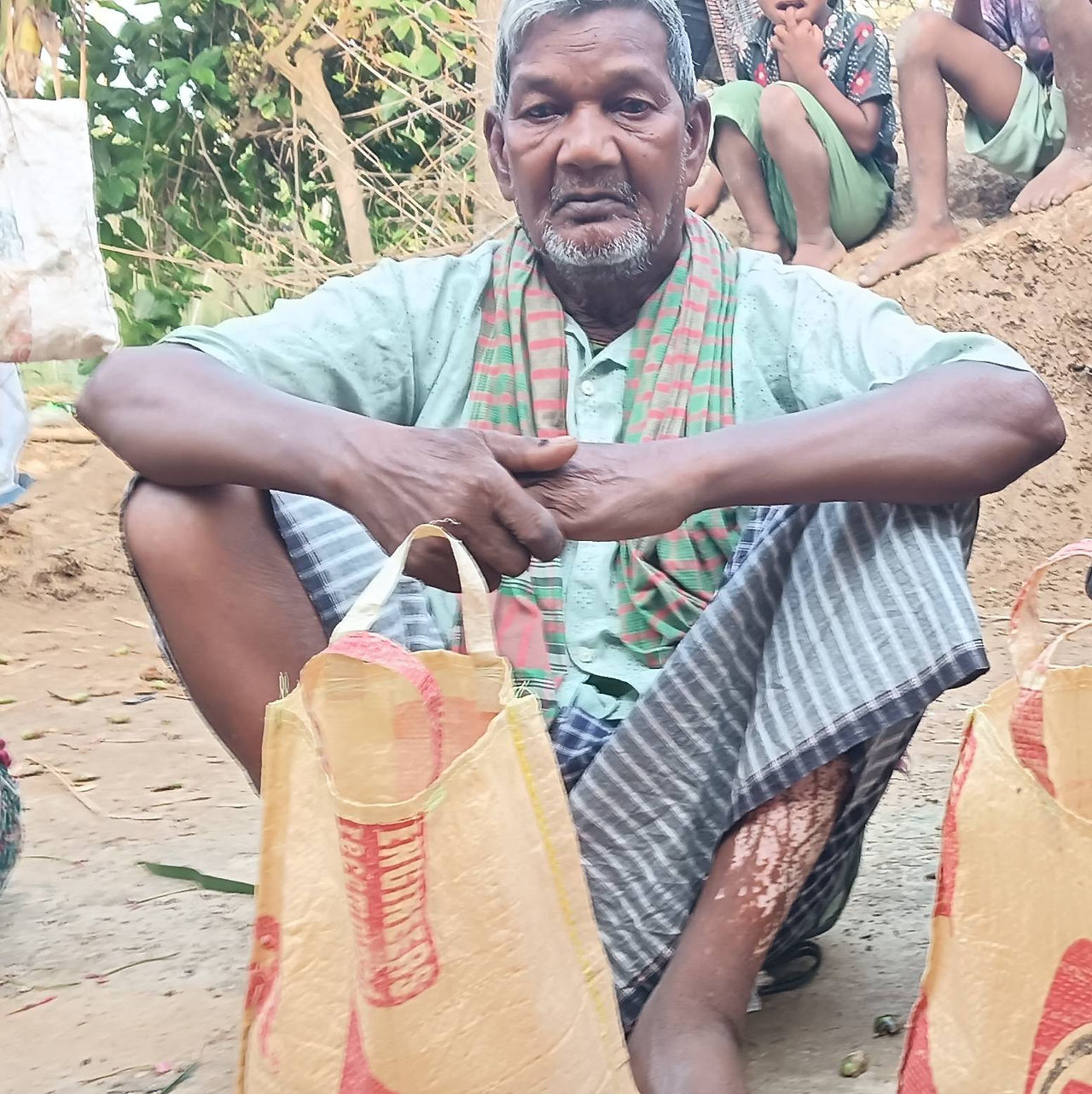
Behind every rice distribution number is a specific person — not a demographic category, not a statistic, but an individual whose week looked fundamentally different because a donation arrived in time. Lotus Ministry Trust's community-embedded volunteer model means that before any food is distributed, local volunteers have already identified who needs it most. The result is that donations do not get absorbed into a general fund and redistributed by formula. They reach the elderly man in Khulna who has no family. They reach the orphaned children in Cox's Bazar whose household has no adult income earner.
This is why the founder's gratitude is so specific in tone. It is not the generalized thankfulness of an organization acknowledging financial support. It is the acknowledgment that a donor's decision created a direct, traceable line to a person who is eating today because of it. That specificity is what separates Lotus Ministry Trust's model from larger aid structures, and it is what makes the founder's expression of appreciation feel like a genuine accounting rather than a press release formality.
How Lotus Ministry Trust Puts Donations to Work
The operational model at Lotus Ministry Trust is built around one core principle: remove every unnecessary step between a donor's contribution and food in a family's hands. That means no subcontractors, no third-party logistics companies absorbing margins, and no administrative layers that slow delivery or dilute impact. It is a model that requires strong local relationships and an on-the-ground volunteer network — both of which the Trust has been building since 2021.
Direct Distribution With No Middlemen
Most large humanitarian organizations operate through a chain of intermediaries — international procurement, national logistics partners, regional distributors, and finally local implementers. Each link in that chain has costs, timelines, and inefficiencies. Lotus Ministry Trust bypassed that entire structure by building its own community-level distribution system from the ground up. Donations are converted into rice and lentils through local procurement channels, then delivered by volunteers who live in the same communities as the recipients.
This approach has two major advantages. First, it dramatically reduces the cost per beneficiary — more of every donated dollar becomes food rather than operational overhead. Second, it accelerates response time. When a cyclone hits Bhola or flooding isolates a char community in Barisal, Lotus Ministry Trust's local volunteers are already present and can mobilize distributions within days rather than weeks. That speed is not incidental — in acute food crises, the difference between a fast and slow response is measured in lives.
Who Receives Relief First
Lotus Ministry Trust applies a clear priority framework when determining who receives food aid first. Orphans without family support networks come first — children with no adult income earner are the most acutely vulnerable in any food crisis. Widows who have lost their primary household earner follow closely, particularly in rural communities where women have limited access to independent income. Elderly individuals without able-bodied family dependents round out the Trust's core priority group. These three demographics share one common characteristic: they are the least likely to be reached by any other formal system, which is precisely why Lotus Ministry Trust prioritizes them.
How Donors Can See Exactly Where Their Money Goes
Transparency is not an afterthought at Lotus Ministry Trust — it is a structural commitment that shapes how every distribution is documented. The Trust maintains records of each distribution event, including the district, the beneficiary count, and the quantity of food delivered. Donors who contribute through the Trust's fundraising channels can access updates that connect their specific contribution period to real distribution outcomes in named locations.
This level of accountability is especially significant for international donors who cannot physically verify operations on the ground. The Trust's founder has made donor trust a foundational organizational value, understanding that the credibility of the entire operation depends on the ability to show — not just claim — that donations are reaching the people they are intended for. For a lean, community-based organization operating in some of Bangladesh's most logistically challenging districts, that transparency is a meaningful operational achievement.
The Communities That Benefit From Your Support
Lotus Ministry Trust's operating geography covers some of Bangladesh's most structurally exposed districts. Cox's Bazar, Bhola, Barisal, Khulna, and Sylhet are not chosen arbitrarily — they represent the intersection of high food insecurity, low formal aid penetration, and populations that are disproportionately affected by the climate-related disasters that hit Bangladesh with increasing frequency. Understanding these communities makes the founder's gratitude more concrete: this is not relief work in accessible urban centers. It is food delivery in places where getting there is itself a logistical problem.
Orphans, Widows, and Elderly Individuals Without a Safety Net
Bangladesh's formal social protection systems — while expanding — still leave significant gaps for the country's most marginalized individuals. Orphans in rural communities often fall outside institutional care structures entirely, relying on extended family networks that may themselves be food-insecure. Widows in conservative rural areas frequently face both economic exclusion and social isolation after losing a spouse, with limited pathways to independent income. Elderly individuals without family support face a stark binary: rely on community generosity or go without. Lotus Ministry Trust's distribution model is specifically calibrated to reach all three groups before a crisis forces them into that binary.
Rural Bangladesh: Where Food Insecurity Hits Hardest

Please Help — Their Lives Depend On It
Support us directly through the founders' PayPal
Bangladesh's rural food insecurity is not simply a function of poverty — it is compounded by geography, climate, and infrastructure. The country's extensive river delta system means that millions of people live on low-lying land that floods seasonally, cutting off road access, destroying crops, and disrupting local food markets for weeks or months at a time. In char communities — small river islands that emerge and disappear with shifting waterways — families may be entirely cut off from mainland supply chains during monsoon season.
Northern and coastal districts face compounding pressures. Sylhet experiences intense seasonal flooding that regularly displaces communities and destroys food stores. Cox's Bazar, home to one of the world's largest refugee settlements, has a host community that is itself deeply food-insecure, often overlooked in favor of the more visible refugee population. Bhola and Barisal sit in one of the most cyclone-exposed corridors in South Asia. These are not background facts — they are the operational context in which every Lotus Ministry Trust distribution happens.
In these environments, the logistics of getting rice to a family are genuinely complex. Roads that exist in the dry season disappear under water in July. Volunteers navigate by boat. Distribution points must be chosen based on what is physically accessible, not just what is geographically central. The Trust's local knowledge — built over years of community presence — is what makes those logistics solvable in ways that remote aid management simply cannot replicate.
District Primary Vulnerability Key Beneficiary Groups Cox's Bazar Host community food insecurity, displacement Orphans, low-income host families Bhola Cyclone exposure, coastal flooding Widows, elderly individuals Barisal Riverbank erosion, seasonal displacement Char community residents, orphans Khulna Salinity intrusion, cyclone damage Elderly individuals, widows Sylhet Severe seasonal flooding Flood-displaced families, orphans
How to Be Part of the Work That Is Drawing This Gratitude
Supporting Lotus Ministry Trust is straightforward — and every contribution, regardless of size, enters a distribution system designed to convert it into food with minimal delay. The Trust accepts donations through GoFundMe and directly through the founders via PayPal, both of which connect donors immediately to active relief operations across Cox's Bazar, Bhola, Barisal, Khulna, and Sylhet. If you have been moved by the founder's message of gratitude and want to be the reason a family eats next week, the path to doing that is genuinely direct — there is no bureaucratic barrier between your decision and its impact on the ground in Bangladesh.
Frequently Asked Questions
The following questions address the most common points of interest from people who have encountered Lotus Ministry Trust's work and want to understand the organization more deeply before deciding to support it.
What Does Lotus Ministry Trust Do With Donated Funds?
Donated funds are converted into rice and lentils through local procurement in Bangladesh, then distributed directly to verified vulnerable families through a community-embedded volunteer network. The Trust's direct-action model means that the vast majority of every donation becomes food rather than administrative overhead — there are no subcontractors, no third-party logistics companies, and no intermediary layers absorbing costs between the donor and the beneficiary.
Distribution events are documented by district, beneficiary count, and food quantity, giving donors a clear line of sight from their contribution to a real outcome. The Trust operates across five primary districts — Cox's Bazar, Bhola, Barisal, Khulna, and Sylhet — with local volunteers managing last-mile delivery even in flood-isolated communities where road access is unavailable.
Who Does Lotus Ministry Trust Help in Bangladesh?
Lotus Ministry Trust targets Bangladesh's most structurally excluded populations — the individuals who fall between every formal aid system and have no alternative source of food security. The Trust's priority framework is deliberate and consistent across all districts.
The three core beneficiary groups are orphans without family support networks, widows who have lost their primary household income earner, and elderly individuals without able-bodied family dependents. These groups share a common vulnerability: they are the least likely to be reached by government programs or large NGOs operating on scalable-metrics models.
Beyond these priority groups, the Trust also responds to acute food crises affecting broader rural communities — particularly in the aftermath of cyclones, floods, and riverbank erosion events that regularly displace and isolate populations across Bangladesh's coastal and northern inland districts.
Orphans — children without adult income earners in the household, particularly in rural areas outside institutional care reach
Widows — women who have lost their primary earner and face both economic exclusion and social isolation in conservative rural communities
Elderly individuals — those without family support networks who face the starkest food insecurity with the least capacity to advocate for themselves
Disaster-displaced families — communities in Cox's Bazar, Bhola, Barisal, Khulna, and Sylhet who face acute food crisis following seasonal flooding or cyclone events
Char community residents — people living on river islands with no road access who are structurally cut off from mainstream food markets for months at a time
How Does Lotus Ministry Trust Ensure Accountability to Donors?
Distribution records are maintained for every delivery event, including district location, beneficiary count, and food quantity delivered
Donor updates connect contribution periods to specific distribution outcomes in named locations, not just general organizational summaries
Community-embedded volunteers operate as local accountability partners — they are known to beneficiaries, making misallocation visible and socially costly
Direct procurement through local channels creates a short, auditable supply chain from donation to distribution
Founder-level transparency — the Trust's leadership is directly accessible to donors through the same channels used for giving, creating a direct line of communication rather than a communications filter
This accountability structure is especially meaningful for international donors who cannot physically verify operations. The Trust has built transparency into its operational model rather than adding it as a reporting afterthought, which means accountability is continuous rather than periodic.
For an organization operating in logistically complex environments — coastal flood plains, river islands, cyclone-affected districts — maintaining this level of documentation requires deliberate systems. Lotus Ministry Trust has invested in those systems because the founder understands that donor trust is the organization's most important long-term asset.
The result is an accountability model that scales with the organization's growth. As Lotus Ministry Trust expands toward its target of reaching an additional 50,000 people, the same documentation and reporting structures that apply to current distributions will apply to every new community served — giving donors consistent visibility regardless of the Trust's operational size.
Can International Donors Support Lotus Ministry Trust?
Yes — Lotus Ministry Trust accepts international donations through both GoFundMe and direct PayPal transfers to the founders, making it straightforward for donors anywhere in the world to contribute to active food relief operations in Bangladesh. There are no geographic restrictions on giving, and the Trust's transparent reporting system means international donors receive the same accountability visibility as local supporters. If you are outside Bangladesh and want your contribution to reach a family in Cox's Bazar or Sylhet within days of giving, both channels are designed to make that possible with minimal friction.
How Does Lotus Ministry Trust Differ From Other Aid Organizations?
The most significant structural difference is the absence of intermediaries. Most international humanitarian organizations operate through multi-layered chains — international procurement, national logistics partners, regional coordinators, and finally local implementers. Each layer has legitimate costs, but those costs reduce the proportion of every donation that becomes actual food. Lotus Ministry Trust eliminated that chain by building its own community-level distribution infrastructure from the ground up, starting in 2021.
The second key difference is community embeddedness. Lotus Ministry Trust's volunteers are not outsiders deployed into unfamiliar areas — they are members of the communities they serve. That local presence means the Trust can identify vulnerable families proactively, before a crisis forces them into acute need. It also means the Trust can operate in flood-isolated char communities and post-cyclone districts where external organizations cannot deploy quickly enough to prevent suffering in the critical first days after a disaster.
The third distinction is the specificity of the Trust's beneficiary targeting. Rather than applying broad geographic coverage, Lotus Ministry Trust focuses on the three demographic groups most consistently excluded from formal safety nets — orphans, widows, and elderly individuals without family support. This specificity ensures that distributions are not diluted across general populations but concentrated where structural vulnerability is highest and alternative support is lowest.







Comments