
Lotus Ministry Trust's Critical Role in Bangladesh Rice Food Aid

Rice is the backbone of nutrition in Bangladesh — when disaster strikes, Bangladesh rice food aid becomes the difference between survival and starvation for millions of vulnerable families.
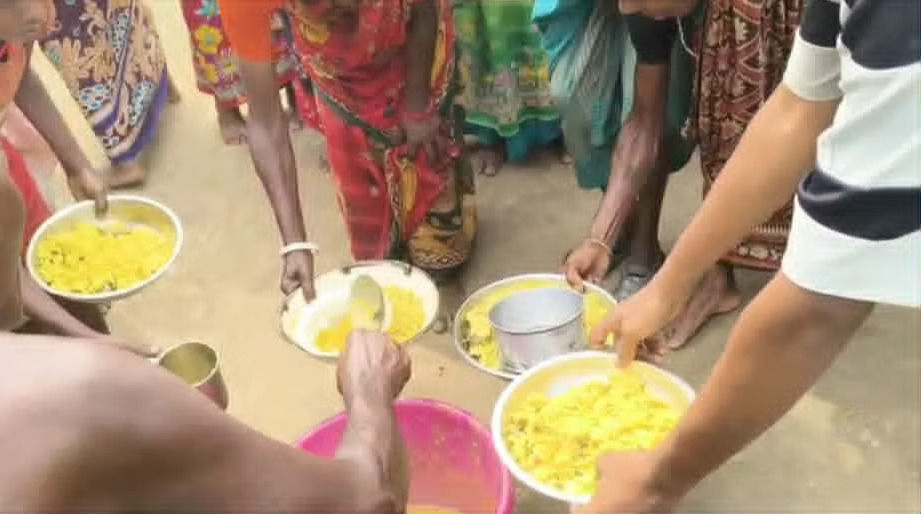
Lotus Ministry Trust operates across Bangladesh's most disaster-prone districts, including Cox's Bazar, Bhola, Barisal, Khulna, and Sylhet, delivering emergency and ongoing rice aid where it's needed most.
The Trust's programs go beyond emergency relief — orphans, widows, the elderly, refugees, and people with disabilities all receive targeted support through structured rice distribution initiatives.
Strategic local partnerships with community leaders and local governments allow Lotus Ministry Trust to reach families that large-scale aid organizations often miss.
You can directly support life-saving rice food aid in Bangladesh — read on to discover exactly how Lotus Ministry Trust's work transforms communities and how your contribution creates real, measurable change.
Help Lotus Ministry Trust's Volunteers
Support us directly through the founders' PayPal

Every year, millions of Bangladeshis wake up not knowing where their next meal will come from — and rice, the nation's most essential food, is often out of reach for those who need it most.
Bangladesh sits at one of the most food-insecure crossroads in the world. Wedged between the Bay of Bengal and the Himalayan river systems, the country absorbs punishing floods, cyclones, and drought cycles that repeatedly devastate agricultural output. For families already living below the poverty line, a single flood season can wipe out months of food supply in hours. Rice isn't just a staple here — it accounts for roughly 70% of daily caloric intake for the rural poor. When the rice runs out, everything falls apart.
Lotus Ministry Trust has stepped directly into that gap, building one of Bangladesh's most responsive and community-rooted rice food aid programs. Rather than operating from a distance, the Trust embeds itself in the communities it serves, working alongside local leaders and families to ensure rice reaches the people who need it before hunger turns into crisis.
Bangladesh's Rice Crisis and Why It Demands Urgent Action
Bangladesh is the world's third-largest rice producer, yet food insecurity remains a persistent, painful reality for a significant portion of its 170 million people. The contradiction is stark — a nation that grows so much rice still cannot guarantee that its most vulnerable citizens eat enough of it.
Recurring floods destroy crops across low-lying char lands and coastal districts annually
Cyclones like Amphan and Sidr have historically wiped out entire harvests across southern Bangladesh in a matter of hours
Lean seasons between harvests create predictable hunger spikes, particularly from March to May and September to November
Extreme poverty concentrates food insecurity among landless laborers, widows, and the elderly who have no agricultural fallback
Climate change is accelerating the frequency and severity of weather events, compressing recovery windows between disasters
The intersection of geography, poverty, and climate vulnerability creates a food security situation that demands more than seasonal charity. It demands structured, reliable, and geographically intelligent rice food aid — exactly what Lotus Ministry Trust has been building program by program across Bangladesh's most exposed regions.
Lotus Ministry Trust's Role in Bangladesh Rice Food Aid
Lotus Ministry Trust is a non-profit humanitarian organization with deep operational roots across Bangladesh. Since its founding, the Trust has centered rice distribution as its primary food aid intervention — not because it's the easiest option, but because rice is culturally essential, nutritionally foundational, and logistically practical for reaching remote and disaster-affected communities across the country.
What separates Lotus Ministry Trust from broader international aid efforts is its ground-level specificity. The Trust doesn't deploy generic food packages. It designs rice aid programs around the seasonal patterns, disaster histories, and population vulnerabilities of each district it serves — making every kilogram of rice distributed count toward maximum impact.
Operations in Disaster-Prone Districts
Lotus Ministry Trust concentrates its rice food aid operations in the districts that face the highest combination of natural disaster risk and chronic poverty. Cox's Bazar — already under pressure as host to the world's largest refugee settlement — receives ongoing rice support for both host communities and displaced populations. Bhola, the low-lying island district in the Bay of Bengal, is another critical focus area. The village of Char Kukri Mukri in Bhola has been a direct beneficiary, representing exactly the kind of geographically isolated community that standard aid pipelines routinely miss.
Barisal, Khulna, and Sylhet round out the Trust's primary operational zones — each presenting distinct logistical challenges. Khulna's Sundarbans-adjacent communities require boat-based delivery during flood seasons. Sylhet's tea garden workers, among Bangladesh's most economically marginalized groups, receive targeted rice packages during lean harvest periods when wages collapse and food prices spike simultaneously.
Local Partnerships That Make Distribution Work
No external organization can effectively distribute food aid in Bangladesh without trusted local networks — and Lotus Ministry Trust has spent years building exactly that. By partnering with community leaders, local government officials, and grassroots organizations in each district, the Trust ensures that rice aid bypasses bureaucratic bottlenecks and reaches families directly. These partnerships also function as early warning systems, allowing the Trust to mobilize emergency rice distribution within hours of a disaster rather than days.

Keep Providing Nourishment To Bangladeshi Villagers
Or support us directly through the founders' PayPal
Rice Food Aid Programs Run by Lotus Ministry Trust
Lotus Ministry Trust's approach to rice food aid is deliberately multi-tiered. Rather than running a single program, the Trust operates distinct initiatives tailored to different types of vulnerability — ensuring that emergency crises, chronic poverty, and structural disadvantage all receive appropriate responses.
1. Emergency Relief After Floods and Cyclones
When a cyclone makes landfall or floodwaters breach embankments across Bangladesh's river deltas, Lotus Ministry Trust activates emergency rice distribution within its operational districts. Pre-positioned rice stocks combined with rapid volunteer mobilization allow the Trust to deploy emergency kits — containing rice alongside essential nutritional supplements like lentils and cooking oil — to displaced families within the critical first 72 hours after a disaster. This speed matters enormously; acute hunger sets in fast when families lose both their food stores and their ability to purchase food simultaneously.
2. Ongoing Aid for Orphans, Widows, and the Elderly
Beyond emergency response, Lotus Ministry Trust runs sustained rice aid programs targeting Bangladesh's most structurally vulnerable populations. Orphans without family support networks, widows who have lost their primary income earners, and elderly individuals without able-bodied family members to rely on all face chronic food insecurity that has nothing to do with disaster cycles — it is simply the daily reality of poverty.
The Trust's regular rice distribution for these groups operates on a scheduled basis, providing consistent food security rather than sporadic relief. This predictability matters as much as the rice itself — families can plan, allocate what little money they have toward non-food needs like medicine and school fees, and maintain a basic nutritional baseline regardless of what the season brings.
Rice packages for these ongoing programs are typically combined with nutritional supplements to address the specific dietary vulnerabilities of each group. Elderly recipients often receive smaller, more frequent packages suited to their household sizes and cooking capacity. Orphan-focused distributions are coordinated through community care structures to ensure the rice actually reaches the children it's intended for.
3. Targeted Support for People With Disabilities
People with disabilities represent one of Bangladesh's most overlooked food aid demographics. Physical limitations frequently prevent disabled individuals from accessing standard distribution points, and social stigma compounds their economic marginalization. Lotus Ministry Trust addresses this directly by coordinating home-delivery rice aid for beneficiaries who cannot travel to collection points — a logistically demanding but morally essential component of its overall program.
The Scale of Rice Aid Across Bangladesh
Understanding the sheer geographic and logistical scope of Lotus Ministry Trust's operations puts the scale of need — and response — into sharp perspective. Bangladesh's vulnerable populations aren't concentrated in one place. They are spread across river islands, coastal flood plains, urban slums, and remote hill districts, each requiring a different delivery approach.
Districts Covered by Lotus Ministry Trust
Lotus Ministry Trust's rice food aid operations span multiple high-vulnerability districts across Bangladesh, with particular concentration in areas where the combination of poverty, climate exposure, and limited government reach creates the deepest food security gaps. The Trust's primary operational districts include:
Cox's Bazar — serving both host communities and displaced refugee populations
Bhola — reaching isolated char land communities including Char Kukri Mukri village
Barisal — targeting landless agricultural laborers and flood-displaced families
Khulna — delivering rice via boat networks into Sundarbans-adjacent communities
Sylhet — focusing on tea garden workers during wage collapse periods
Northern Bangladesh districts — addressing seasonal monga (lean season) hunger among subsistence farmers
Thousands of Metric Tons Distributed
Over the course of its operations, Lotus Ministry Trust has distributed thousands of metric tons of rice across Bangladesh's most vulnerable communities. Each distribution cycle is carefully documented to ensure accountability to donors and to build the operational data needed to improve targeting in subsequent programs. The Trust's volume of rice aid is not incidental — it reflects years of sustained fundraising, logistical refinement, and community trust-building that allows operations to scale when disaster demands it.
Real Impact on Bangladeshi Families
Numbers tell part of the story. But what rice food aid actually means to a family in Bhola or a widow in Barisal goes beyond any metric. It means a child goes to school with a full stomach. It means an elderly grandmother doesn't choose between eating and buying her heart medication. It means a family displaced by a cyclone has something to cook on the first night in a relief shelter.
The village of Char Kukri Mukri in Bhola district illustrates this impact directly. As a low-lying island community surrounded by tidal waters, Char Kukri Mukri faces annual inundation that destroys both crops and food stores. When Lotus Ministry Trust's rice aid reaches families here, it doesn't just feed them for a week — it buys them the recovery time needed to rebuild livelihoods before the next agricultural cycle begins.
Drop in Acute Malnutrition Rates
Consistent rice food aid delivery in targeted communities correlates directly with reductions in acute malnutrition — particularly among children under five and elderly recipients who face the highest physiological risk during food shortages. When rice aid is combined with nutritional supplements like lentils and fortified oils, as Lotus Ministry Trust's packages are, the nutritional impact compounds significantly beyond what rice alone would provide.
Beneficiary families report that regular rice distributions allow them to maintain baseline dietary consistency even during lean seasons and post-disaster recovery periods — the two windows when malnutrition risk spikes most sharply. This consistency is what transforms food aid from a temporary patch into a genuine health intervention.
How Rice Aid Frees Families to Cover Other Basic Needs
One of the least visible but most significant effects of rice food aid is what it unlocks financially for recipient families. When a household doesn't have to spend its entire daily budget on rice — which can consume 60–70% of income for Bangladesh's poorest families during price spikes — those freed resources move toward school fees, medicine, and basic household maintenance. For more on this topic, explore how rice food aid acts as a lifeline for Bangladesh's food security and poverty relief.
Lotus Ministry Trust's beneficiaries consistently report this secondary effect: rice aid doesn't just feed families, it gives them enough financial breathing room to start breaking cycles of debt and deprivation that keep them trapped in poverty. That downstream impact is difficult to quantify but impossible to overstate.
Challenges Lotus Ministry Trust Faces on the Ground
Operating food aid programs across Bangladesh's most logistically demanding terrain is not without significant obstacles. Lotus Ministry Trust navigates a complex landscape of geographic, seasonal, and resource-based challenges that require constant operational adaptation.
Flooding — the very disaster that creates the greatest need for rice aid — simultaneously makes distribution the hardest. Roads become rivers. Villages become islands. Standard vehicle-based delivery fails entirely in the char lands and coastal districts where need is most acute. The Trust's reliance on boat networks and local volunteer coordination during these periods is essential but expensive and time-consuming to maintain.
Beyond logistics, funding consistency is a persistent pressure. Emergency disasters attract donor attention and fundraising spikes, but the chronic, ongoing need for rice aid among orphans, widows, the elderly, and disabled populations doesn't generate the same urgency in donor communications. Sustaining programmatic funding between disasters requires continuous advocacy and transparency about the year-round nature of food insecurity in Bangladesh.
On the ground reality: During peak flood seasons in Bangladesh's southern districts, Lotus Ministry Trust volunteers have navigated hours of boat travel through floodwaters to deliver rice to families stranded on elevated ground — families who would otherwise go days without food while waiting for waters to recede. This is what last-mile food aid delivery actually looks like.
Collaborations Driving Greater Reach
No single organization can address Bangladesh's scale of food insecurity alone. Lotus Ministry Trust's operational effectiveness is significantly amplified by the strategic partnerships it has cultivated at local, national, and international levels — partnerships that extend reach, reduce duplication, and improve targeting precision across its rice food aid programs.
Working With Local Governments and Community Leaders
At the community level, Lotus Ministry Trust works closely with union parishad officials, local imams and religious leaders, and elected ward representatives to identify the most vulnerable households within each distribution area. These local actors serve as both intelligence sources and credibility anchors — their endorsement of the Trust's operations builds community confidence and reduces the friction that often slows down external aid programs.
Local government coordination also helps the Trust avoid duplication with government-run food safety net programs, ensuring that Lotus Ministry Trust's rice aid reaches families who fall through official program eligibility gaps — a population that is substantial in Bangladesh's most remote and informal communities.
What Comes Next for Rice Aid in Bangladesh
Lotus Ministry Trust's vision for Bangladesh rice food aid extends beyond emergency response and chronic poverty relief. The Trust is actively developing program components designed to reduce long-term aid dependency by addressing the structural vulnerabilities that make communities food insecure in the first place.
Agricultural training integrated with climate resilience education represents the next frontier of the Trust's work. By helping farming families in flood-prone districts adopt flood-resistant rice varieties, improved post-harvest storage techniques, and diversified cropping strategies, Lotus Ministry Trust aims to progressively reduce the frequency and severity of food crises that trigger emergency rice aid deployment. The goal isn't to make rice aid unnecessary overnight — it's to build toward a Bangladesh where communities have enough agricultural resilience to withstand climate shocks without falling into acute hunger every time a cyclone makes landfall.
Agricultural Training and Climate Resilience Education
Lotus Ministry Trust is embedding agricultural training directly into its food aid programs — recognizing that handing a family a bag of rice solves today's hunger but doesn't prevent next season's crisis. The Trust is introducing flood-resistant rice varieties, such as BRRI dhan52 and BRRI dhan51 developed by Bangladesh Rice Research Institute, which can survive submersion for up to two weeks — a critical adaptation for char land and coastal farming communities. Paired with improved post-harvest storage techniques using hermetic bags that reduce grain spoilage by up to 20%, these interventions directly address the agricultural fragility that keeps communities locked in aid dependency cycles.
Climate resilience education workshops run alongside distribution events, using community gathering moments to share practical knowledge about early warning systems, crop diversification, and embankment maintenance. The Trust partners with local agricultural extension officers to ensure the technical guidance it provides aligns with both national agricultural policy and the hyperlocal farming realities of each district. For families in Sylhet's tea garden communities or Bhola's tidal flood plains, this kind of targeted knowledge transfer is as valuable as the rice itself.
The Vision: From Aid Dependency to Self-Sufficiency
Lotus Ministry Trust's long-term vision for Bangladesh is not a country perpetually dependent on outside rice aid — it is a Bangladesh where communities have the agricultural resilience, economic stability, and institutional support to weather climate shocks without sliding into acute food crisis. That vision requires decades of sustained investment in both emergency response and structural capacity building, and the Trust is committed to both simultaneously.
The Trust envisions a staged transition: communities currently receiving emergency rice aid move into stable ongoing support programs; those in stable programs receive agricultural training and livelihood support; and those who have built sufficient resilience become peer educators and community distribution volunteers. This progression model transforms aid recipients into active participants in Bangladesh's food security ecosystem — and every bag of rice distributed today funds a step toward that self-sufficient future.
"Rice aid is not the destination — it is the bridge." Lotus Ministry Trust's operational philosophy centers on using immediate food relief as the entry point for longer-term community development. Every distribution event is also an opportunity to assess household vulnerability, connect families with training programs, and build the trust that makes deeper community engagement possible. The rice matters. But so does everything that follows it.
The path from emergency rice aid to community self-sufficiency is neither short nor linear in Bangladesh. Climate change is accelerating disaster frequency, and economic headwinds continue to compress recovery windows for the country's poorest families. But the infrastructure Lotus Ministry Trust has built — the local partnerships, the distribution networks, the community trust — creates a platform for increasingly sophisticated interventions that go far beyond rice alone.

Be A Food Aid Provider
Support us directly through the founders' PayPal
Support Lotus Ministry Trust's Life-Saving Work Today
Bangladesh's food insecurity crisis doesn't pause between cyclones. It operates every day, in the background, grinding down families who have no buffer against the next flood, the next price spike, or the next failed harvest. Lotus Ministry Trust's rice food aid programs are active year-round precisely because hunger doesn't take a season off.
Every contribution to Lotus Ministry Trust translates directly into rice on tables in Bhola, Khulna, Cox's Bazar, and Sylhet. The Trust maintains transparent accounting of its distributions — donors can track how their contributions move from fundraising to procurement to community delivery. That accountability isn't just good governance; it's a reflection of the Trust's core belief that the people who fund this work deserve to see exactly what their generosity makes possible.
If you want to take direct action on Bangladesh's rice food crisis, the most immediate step is contributing to the Trust's urgent food relief fund. Donations of any size are pooled for bulk rice procurement, maximizing the volume of aid each contribution generates. A single donation can provide a family with rice for weeks — and for a widow in Barisal or a displaced family in Cox's Bazar, those weeks matter enormously.
Donation Amount | Estimated Rice Provided | Families Supported |
$10 | Approximately 5–8 kg of rice | 1 individual for 1–2 weeks |
$25 | Approximately 15–20 kg of rice | 1 small family for 2–3 weeks |
$50 | Approximately 30–40 kg of rice | 1–2 families for up to a month |
$100 | Approximately 60–80 kg of rice | Multiple families across a distribution event |
$500+ | Bulk procurement for emergency deployment | Community-wide disaster response support |
Frequently Asked Questions
Bangladesh's rice food aid landscape raises important questions — about why the need is so persistent, who it affects most, and how organizations like Lotus Ministry Trust actually get rice to the people who need it. The answers reveal a food security situation that is both deeply complex and urgently addressable.
Understanding these fundamentals matters whether you're considering a donation, looking to volunteer, or simply trying to grasp why rice food aid in Bangladesh is not a temporary problem but a sustained humanitarian priority.
Why is rice so important to food security in Bangladesh?
Rice is the cornerstone of nutrition in Bangladesh, accounting for approximately 70% of daily caloric intake for rural and low-income populations. Unlike other staple crops, rice is deeply embedded in Bangladeshi food culture, agricultural systems, and daily cooking practices — making it the single most effective food aid intervention for both nutritional impact and community acceptance.
When rice supplies are disrupted by floods, cyclones, or economic shocks, entire households face acute caloric deficits almost immediately. There is no culturally equivalent substitute that can be rapidly deployed at scale — which is precisely why targeted rice food aid remains the most critical humanitarian intervention during Bangladesh's recurring food crises.
Which regions of Bangladesh does Lotus Ministry Trust operate in?
Lotus Ministry Trust operates primarily across Bangladesh's highest-vulnerability districts, with established distribution networks in Cox's Bazar, Bhola, Barisal, Khulna, and Sylhet. Each district presents distinct logistical and demographic challenges — from boat-dependent delivery in Khulna's Sundarbans-adjacent communities to refugee population support in Cox's Bazar.
The Trust also operates across northern Bangladesh districts affected by monga — the seasonal lean period that creates predictable hunger spikes among subsistence farming communities between October and December each year. Northern district operations focus specifically on this seasonal vulnerability window, deploying rice aid to bridge the gap between harvest cycles.
Who are the main beneficiaries of Lotus Ministry Trust's rice food aid?
Lotus Ministry Trust's rice aid programs target Bangladesh's most structurally vulnerable populations — orphans without family support networks, widows who have lost primary income earners, elderly individuals without able-bodied family dependents, people with disabilities who face both physical and economic barriers to food access, and families displaced by floods and cyclones. The Trust also extends rice aid to refugee communities in Cox's Bazar who lack stable access to food within the formal humanitarian supply chain.
How does Lotus Ministry Trust ensure rice aid reaches the most vulnerable?
Lotus Ministry Trust uses a community-embedded identification system that relies on local leaders, union parishad officials, and trusted community contacts to identify and verify the most vulnerable households before each distribution event. This ground-level intelligence prevents aid from going to those who don't need it most and ensures that homebound recipients — including the elderly and disabled — receive home delivery rather than being excluded by inaccessible distribution points. Pre-distribution household assessments and post-distribution monitoring together create an accountability loop that continuously improves targeting accuracy across all of the Trust's operational districts. Learn more about how rice food aid plays a critical role in food security in Bangladesh.
How can I support rice food aid efforts in Bangladesh?
The most direct way to support Lotus Ministry Trust's Bangladesh rice food aid programs is through a financial contribution to their urgent food relief fund. Contributions are pooled for bulk rice procurement, which maximizes the volume of aid generated per dollar donated. The Trust accepts one-time donations for emergency response as well as recurring contributions that fund its year-round programs for orphans, widows, the elderly, and displaced families.
Beyond direct financial support, raising awareness about Bangladesh's food insecurity crisis through social sharing, community advocacy, and donor network engagement helps Lotus Ministry Trust reach new supporters who can amplify the volume and reach of its rice distribution programs. Every conversation about Bangladesh's food aid needs is an opportunity to bring a new contributor into a supply chain that directly feeds some of the world's most vulnerable families.
If you are an organization, business, or institutional donor interested in a structured partnership with Lotus Ministry Trust, the Trust welcomes collaborative discussions about co-funded programs, matched giving campaigns, and joint distribution initiatives that can significantly expand rice aid coverage across Bangladesh's most food-insecure districts. Reach out directly through Lotus Ministry Trust's website to explore how a partnership could work.




Comments