
Urgent Humanitarian Relief Bangladesh: Lotus Ministry Trust Answers Call
- Jeffrey Dunan
- 11 minutes ago
- 13 min read

Article At A Glance: Lotus Ministry Trust Bangladesh Relief Drive
Lotus Ministry Trust has delivered humanitarian relief to over 100,000 individuals across Northern Bangladesh since its founding in 2021 — reaching communities that larger NGOs consistently overlook.
The organization's Kichri Aid program distributes a culturally familiar, nutritionally complete meal that recipients immediately recognize and accept — a critical factor in effective food relief.
Lotus Ministry Trust is now expanding to reach 45,000 more people across 75 new villages in Northern Bangladesh — but that goal depends entirely on donor support.
When floods and cyclones hit, the relief model shifts fast — find out how the organization keeps food moving even when roads wash out and infrastructure fails.
Every dollar donated goes directly toward sourcing rice and lentils, supporting local volunteers, and operating community kitchens — with no large administrative overhead consuming funds.
Help Lotus Ministry Bring Food Relief
To Families Of Northern Bangladesh
Support us directly through the founders' PayPal

Over 100,000 meals delivered — and the families of Northern Bangladesh still need more.
Lotus Ministry Trust, a faith-based humanitarian relief organization headquartered in San Francisco, has been quietly doing what larger aid organizations have struggled to do since 2021: getting food directly into the hands of the most vulnerable people in Northern Bangladesh, village by village, family by family. Their expanded 2025 relief drive is now underway, and the scale of what they are attempting is worth understanding.
100,000 Meals Delivered — and the Need Is Still Growing
One hundred thousand individuals fed is not a statistic — it is a grandmother who started eating again, a child who could focus in school, a family that made it through monsoon season without going hungry. Since its founding in 2021, Lotus Ministry Trust has built a food relief operation that has reached that milestone through consistent, ground-level distribution in one of the world's most challenging humanitarian relief environments.
Bangladesh faces compounding food security pressures. Rising global food prices, frequent natural disasters, and deep rural poverty create a situation where millions of people exist on the edge of food insecurity year-round. Northern Bangladesh, in particular, sits at the intersection of geographic isolation and economic vulnerability — a combination that makes standard aid distribution models unreliable at best and completely ineffective at worst.
How Northern Bangladesh Became the Focus of This Relief Drive
Northern Bangladesh — encompassing districts like Rangpur, Dinajpur, and Rajshahi — is characterized by seasonal flooding, agricultural dependence, and limited road infrastructure. During the lean seasons between harvests, food becomes scarce and expensive precisely when rural households have the least income. It is a predictable crisis that repeats annually, and yet the area receives a fraction of the humanitarian relief attention directed at urban centers like Dhaka or disaster-visible coastal regions.
Lotus Ministry Trust identified this gap early and built its entire operational model around it. Rather than responding reactively to high-profile disasters, the organization maintains a continuous relief presence in communities where hunger is a quiet, persistent reality rather than a sudden emergency. That sustained approach is what separates their impact from the episodic relief surges that characterize most humanitarian relief responses.
What “Food Insecurity” and "Humanitarian Relief" Actually Looks Like in Rural Bangladesh
Food insecurity in rural Bangladesh is rarely the dramatic, visible starvation that attracts international media coverage. It is subtler and, in many ways, harder to address. It looks like families reducing to one meal per day during flood months. It looks like elderly individuals skipping meals entirely so younger family members can eat. It looks like children arriving at school too hungry to learn, and mothers making impossible choices between food and medicine.
These are the households Lotus Ministry Trust specifically targets — the ones where hunger is chronic and invisible, where no camera crew is coming, and where the absence of a consistent food source has generational consequences for health, education, and economic stability.
How Lotus Ministry Trust Gets Food to People Others Miss
The core challenge of food relief in rural Bangladesh is not finding people who need help — it is physically reaching them with food, consistently, in a way that is culturally appropriate and logistically sustainable. Lotus Ministry Trust has developed a distribution model built on four interlocking elements that together solve problems that have defeated larger, better-funded organizations.
1. Community-Embedded Volunteers Replace Outside Aid Professionals
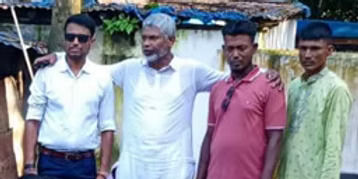
You Can Be The Foundation That Supports Lotus Ministry Volunteers
Support us directly through the founders' PayPal
Instead of deploying outside relief workers who are unfamiliar with local geography, language, and social dynamics, Lotus Ministry Trust works through volunteers who already live and work within the communities they serve. These individuals know which households are most vulnerable, which families are too proud to ask for help, and which elderly residents cannot travel to a distribution point. That local knowledge is operationally irreplaceable.
This model also eliminates the trust barrier that slows down outside-managed aid programs. When a neighbor arrives with food, recipients do not feel stigmatized or suspicious — they feel supported. That social dynamic accelerates distribution, reduces waste, and builds the kind of community buy-in that makes a relief program sustainable over years rather than weeks.
2. Community Kitchens Serve as Local Distribution Hubs
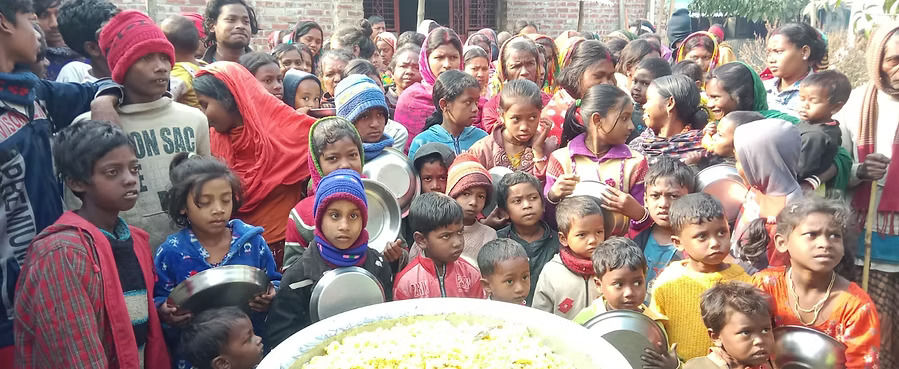
Community kitchens anchor the distribution network by serving as both a food preparation site and a gathering point for the surrounding area. Rather than requiring recipients to travel to a central urban warehouse, the kitchen model brings preparation close to the people who need it. This dramatically reduces the logistical burden on elderly, disabled, and extremely poor recipients who lack transportation.
3. Direct Household Delivery for Those Who Cannot Travel
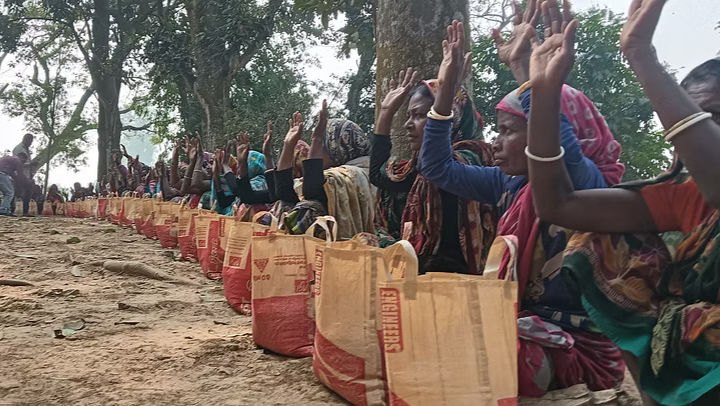
For the most vulnerable individuals — those who are bedridden, elderly without family support, or living in areas that flood severely — Lotus Ministry Trust coordinates direct household delivery through its volunteer network. This ensures that physical mobility or geographic isolation does not disqualify someone from receiving aid.
This layer of the distribution model requires more coordination and volunteer time, but it closes the gap that almost every other food relief program leaves open. The people hardest to reach are, almost by definition, the people most at risk — and reaching them is not optional if the mission is genuine.
4. Local Partnerships Solve Logistical and Cultural Barriers
Lotus Ministry Trust works alongside local mosques, community leaders, and village organizations to navigate the cultural and logistical realities of each area. These partnerships provide trusted entry points into communities, help identify the most vulnerable households, and lend credibility to the relief effort in areas where outside organizations are viewed with skepticism. The result is a distribution network that moves faster, reaches deeper, and wastes less than top-down aid models.
Kichri Aid: Why This Meal Is at the Center of the Program
Every effective food relief program eventually arrives at the same question: what do you actually feed people? The answer matters more than most donors realize, and Lotus Ministry Trust got it right by building their program around a single, strategically chosen meal.
What Kichri Is and Why It Works for Food Relief
Kichri is a traditional South Asian dish made primarily from rice and lentils, cooked together into a thick, nourishing porridge. It has been a staple of Bengali households for generations — eaten at breakfast, served to the sick, and prepared during celebrations and lean times alike. It is not foreign food dropped into a crisis zone. It is home food, prepared with familiar ingredients, carrying cultural comfort alongside its nutritional value.
From a logistics standpoint, kichri is nearly ideal for large-scale relief distribution. Rice and lentils are shelf-stable, inexpensive to source locally, easy to prepare in bulk, and require no refrigeration. A single large pot can feed dozens of people. The ingredients can be stockpiled ahead of monsoon season or disaster events, and local volunteers already know how to prepare it correctly without training. That combination of cultural relevance and logistical simplicity is exactly what a sustainable food relief program requires.
How Nutritional and Cultural Fit Shapes Food Relief Outcomes
Food aid fails when recipients do not eat it. This is a well-documented problem in humanitarian relief — organizations ship in unfamiliar foods, recipients reject them or trade them away, and the nutritional goal is never achieved. Lotus Ministry Trust bypasses this problem entirely by distributing food that people already want to eat.
Beyond acceptance, kichri delivers genuine nutritional value. The combination of rice and lentils provides both carbohydrates for energy and protein for bodily repair and immune function — a pairing that addresses two of the most common nutritional deficits in food-insecure populations. For children, whose developing bodies are especially sensitive to protein deficiency, regular kichri meals can have measurable impacts on growth and cognitive development.
For elderly recipients who may have compromised digestive health, the soft texture of kichri makes it easier to consume than harder staple foods. For families in crisis, the familiarity of the meal reduces the psychological burden of receiving outside assistance — it feels less like charity and more like a neighbor sharing a meal. These are not small details. In humanitarian relief work, they are often the difference between a program that works and one that does not.
Rice and lentils are sourced locally, keeping costs low and money within the regional economy
No refrigeration required means the supply chain remains functional during power outages and flood events
Bulk preparation at community kitchens allows volunteers to feed large groups efficiently
Cultural familiarity ensures high acceptance rates and eliminates food waste from rejection
Nutritional completeness addresses both energy and protein needs in a single meal
When Floods and Cyclones Hit, the Relief Model Changes Fast
Road access disappears as low-lying paths and bridges flood within hours of heavy rainfall
Community kitchens may be compromised if the surrounding area floods or loses fuel access
The most vulnerable households become even harder to reach as water levels rise
Local volunteers face personal displacement while simultaneously being needed for distribution
Food prices spike immediately following disaster events, making emergency sourcing more expensive
Bangladesh is one of the most disaster-prone countries on earth. It sits in the delta of three major river systems, faces annual monsoon flooding across huge portions of its territory, and lies in the path of Bay of Bengal cyclones that can devastate coastal and inland areas with little warning. For a food relief organization operating in Northern Bangladesh, this is not a background risk — it is a core operational reality that has to be planned for explicitly.
What makes disaster response particularly difficult for food relief programs is the compounding nature of the crisis. A cyclone does not just destroy homes — it destroys the roads needed to deliver food, the community spaces used for distribution, the stored supplies that were prepared in advance, and the livelihoods that households were depending on to supplement whatever aid they received. Recovery is slow, and the need for external food support intensifies precisely when it is hardest to provide.
Lotus Ministry Trust has built its operational model with this reality at its core. Pre-positioned rice and lentil supplies in multiple community locations mean that when one distribution point is compromised, others can absorb the need. Volunteer networks with established communication channels can pivot rapidly, identifying which households have been cut off and coordinating alternative delivery routes even when primary roads are impassable.
How Natural Disasters Disrupt Food Access in Rural Bangladesh
When flooding hits a rural village in Northern Bangladesh, the food supply chain breaks at multiple points simultaneously. Local markets either flood or hike prices as supply chains from urban centers are disrupted. Household food stores — often kept in ground-level storage — are contaminated by floodwater. Agricultural families lose both their crops and their primary income source in a single event, creating food insecurity that persists for months after the water recedes. To address this crisis, initiatives like the Bangladesh Food Relief & Rural Assistance drive have been announced to support affected communities.
The households most affected are consistently the same ones that were already most vulnerable before the disaster — elderly residents, families without a working-age income earner, and those without savings to absorb an economic shock. For these families, a flood does not just mean temporary displacement. It means a food security crisis that can last an entire season.
How Lotus Ministry Trust Responds During Disaster Conditions
When disaster conditions are confirmed, Lotus Ministry Trust activates its emergency response protocol through its existing volunteer network. Because volunteers are embedded within the affected communities rather than deployed from outside, they are already present when the crisis begins — assessing damage, identifying the most urgent cases, and coordinating with program coordinators to redirect supplies and resources where they are needed most. This immediate, on-the-ground response capacity is something that outside-managed relief organizations simply cannot replicate at the same speed.
The Expansion Target: 45,000 More People Across 75 New Villages

Be The Source Of Relief - Join Lotus Ministry Trust In The Effort
Support us directly through the founders' PayPal
With 100,000 individuals already reached, Lotus Ministry Trust has set its next target: 45,000 more people across 75 new villages in Northern Bangladesh. That number is not aspirational — it represents a mapped, specific expansion plan built on the same community-embedded model that has driven results since 2021. The infrastructure exists. The volunteer networks are being developed. What determines whether those 45,000 people get fed is funding.
Three New Districts in the Crosshairs for 2026
The 2026 expansion focuses on deepening reach in the Rangpur, Dinajpur, and Rajshahi districts — three areas of Northern Bangladesh where food insecurity rates remain high, existing relief infrastructure is thin, and Lotus Ministry Trust has identified willing local partners ready to anchor community kitchen operations. Each district presents different logistical challenges, but all three share the same core characteristic: large numbers of vulnerable households that current aid programs are not reaching.
The village-level targeting process involves direct community assessment by local partners who identify household vulnerability, map distribution points, and establish volunteer rosters before the first meal is ever prepared. This front-loaded preparation work is what allows the organization to begin operating effectively in a new area quickly rather than spending months building trust and infrastructure from scratch after funding is secured.
Why Donor Support Directly Controls How Far This Reaches
Unlike large NGOs with multi-year institutional funding, Lotus Ministry Trust operates on a direct-donation model where every contribution has a measurable and immediate impact on how many people get fed. There is no large administrative apparatus consuming funds. Rice and lentils are sourced locally at scale, volunteer coordination is lean, and community kitchens operate with minimal overhead. The result is a funding model where donor dollars translate into meals at a rate that larger organizations cannot match.
The math is straightforward: more funding means more villages activated, more community kitchens operational, and more of those 45,000 target individuals receiving consistent meals. A shortfall in funding does not just slow the expansion — it means specific, identifiable communities that were mapped and ready do not get served. The accountability runs both directions: donors can see exactly where their support goes, and the organization is accountable for ensuring it gets there.
For anyone considering where to direct humanitarian relief, that combination of operational efficiency, ground-level accountability, and proven delivery track record is exactly what distinguishes a program worth supporting from one that consumes resources without proportional impact. Supporting Lotus Ministry Trust's Bangladesh relief drive is one of the most direct ways to translate a donation into meals for people who genuinely have no other consistent food source.
Founded in 2021 — Here Is What Lotus Ministry Trust Has Built Since
Lotus Ministry Trust launched in 2021 with a clear and urgent mandate: reach the people in Northern Bangladesh that larger humanitarian relief organizations were consistently failing to serve. In the years since, the organization has built a ground-level food relief infrastructure that has delivered nutritious meals to over 100,000 individuals — a milestone achieved not through massive institutional funding, but through a community-embedded model that keeps costs low and impact high.
What the organization has constructed since 2021 is more than a food distribution program. It is a network of trusted local relationships, tested logistics, pre-positioned supply chains, and volunteer rosters that function reliably even under disaster conditions. That infrastructure took years to build and cannot be replicated quickly — which is exactly why sustaining and expanding it now, while the foundation is strong, is the most effective use of humanitarian relief resources available for Northern Bangladesh.
Support the Drive: Here Is How Your Contribution Reaches Bangladesh
When you donate to Lotus Ministry Trust's Bangladesh food relief program, the funds move quickly and directly. Rice and lentils are sourced locally in Bangladesh, keeping costs low while supporting the regional economy. Those ingredients move to community kitchens, where embedded volunteers prepare and distribute kichri meals to the most vulnerable households in their villages. There is no large administrative overhead, no layers of international bureaucracy, and no diversion of funds to operational expenses that have nothing to do with feeding people. Your contribution becomes a meal — often within days of the donation being received.
Frequently Asked Questions
The questions below address the most common inquiries about how Lotus Ministry Trust operates, what makes their approach effective, and how individuals can get involved in supporting food relief across Northern Bangladesh.
Each answer draws directly from the organization's operational model and documented track record since 2021 — providing honest, specific information rather than generalized humanitarian relief talking points.
How does Lotus Ministry Trust distribute food in remote areas of Bangladesh?
Lotus Ministry Trust distributes food through a network of community-embedded local volunteers who already live and work within the villages they serve. Rather than managing distribution from urban centers, the organization operates community kitchens close to recipients and coordinates direct household delivery for individuals who cannot travel. Local partnerships with community leaders and organizations provide trusted access to vulnerable households that outside-managed programs cannot easily reach.
Who does Lotus Ministry Trust prioritize for food relief in Bangladesh?
The program specifically targets the households most likely to be overlooked by standard aid distribution — elderly individuals living alone, families without a working-age income earner, children in food-insecure households, and people with mobility limitations that prevent them from traveling to central distribution points.
Within Northern Bangladesh, the organization focuses on rural villages in districts like Rangpur, Dinajpur, and Rajshahi, where food insecurity is high, infrastructure is limited, and consistent humanitarian relief coverage from larger NGOs is largely absent. The guiding principle is simple: reach the people who have no other consistent food source and who would go hungry without this specific program.
What happens to Lotus Ministry Trust’s food relief operations during floods and cyclones?
When disaster conditions hit, Lotus Ministry Trust activates its emergency response through its existing on-the-ground volunteer network. Because volunteers are already embedded within affected communities, they are present from the moment a crisis begins — assessing needs, identifying cut-off households, and coordinating supply redirections in real time. Pre-positioned rice and lentil stocks at multiple community locations ensure that when one distribution point is compromised, others can absorb the demand without a gap in service to the most vulnerable recipients.
How many people has Lotus Ministry Trust helped since its founding in 2021?
Since its founding in 2021, Lotus Ministry Trust has delivered nutritious meals to over 100,000 individuals across Northern Bangladesh. That figure represents consistent, repeated distribution across multiple communities — not a single one-time relief event. The current expansion drive is targeting an additional 45,000 people across 75 new villages, with donor funding directly determining how quickly and completely that target is reached.
How can I donate to Lotus Ministry Trust’s Bangladesh food relief program?
Donations can be made directly through the Lotus Ministry Trust GoFundMe campaign, where funds go immediately toward sourcing rice and lentils, supporting local volunteers, and operating community kitchens in Northern Bangladesh. For more information about their initiatives, you can read about their Bangladesh food relief and rural assistance drive. The organization is IRS-compliant as a faith-based nonprofit charity, meaning US-based donors can contribute with full confidence in the organization's accountability and legitimacy.
Every contribution — regardless of size — has a direct and measurable impact on how many meals get prepared and delivered. There is no minimum donation required, and the lean operational model means a higher percentage of every dollar reaches the people it is intended to serve compared to larger institutional aid organizations with significant administrative overhead.
If writing a check or making an online donation is not the right fit, sharing the campaign with your own network is equally valuable. Awareness drives donations, donations drive meals, and meals change the daily reality for families in Northern Bangladesh who have no other consistent food source and no other organization consistently showing up for them. Lotus Ministry Trust exists to change that — and your support, in any form, makes it possible.







Comments