
Lotus Ministry Trust Apparel Distribution & Crisis Relief Impact

Key Takeaways
Lotus Ministry Trust has delivered clothing, blankets, and meals to more than 100,000 people across Northern Bangladesh since 2020, with a goal of reaching 50,000 additional families.
The organization skips traditional aid intermediaries, relying instead on volunteers who hand-deliver crisis relief donations directly to families in flood-prone, hard-to-reach villages.
Clothing distribution follows a seasonal strategy for crisis relief, with blankets and heavy garments prioritized during Northern Bangladesh's coldest months to protect children and elderly residents.
Sri Lanka's crisis relief is next on the list for expansion, as Lotus Ministry Trust applies the same direct-aid model that has built deep community trust in Bangladesh.
Donations are tax-deductible under IRS code 508(c)1(a), and anyone curious about the organization's registration details can review its official status here.

Support Lotus Ministry Directly Through The Founders' PayPal

A single outfit can mean the difference between a child attending school or staying home in shame. That's the quiet, powerful truth driving Lotus Ministry Trust's apparel distribution work across Northern Bangladesh, where clothing isn't just fabric—it's dignity, protection, and opportunity rolled into one.
How Lotus Ministry Trust's Crisis Relief Turns Donations Into Dignity
Clothing drives rarely make headlines, but the crisis relief ones run by Lotus Ministry Trust have quietly reshaped life for tens of thousands of families. What started as a modest effort to feed hungry villages has grown into a full-scale relief operation, one that treats clothing as seriously as food or shelter. For readers wanting to verify the organization's standing before getting involved, the registration and tax status information is publicly available and worth a look.
100,000 People Reached in Northern Bangladesh Since 2020
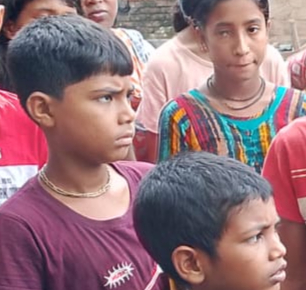
Since launching operations in 2020, Lotus Ministry Trust's crisis relief initiatives have distributed clothing, blankets, and meals to over 100,000 people throughout Northern Bangladesh. That's not a one-time count either—the organization has set its sights on reaching 50,000 more individuals in the coming distribution cycles. Numbers like these don't happen by accident; they're the result of repeatable systems built village by village, season by season.
Jeffrey Dunan, known within the ministry as Vasanta das, founded the organization in 2021, a year after on-the-ground operations had already begun. That timeline matters. It shows a founder who built infrastructure first and formalized the mission second, a reversal of how most charities typically launch.
From Meals to Clothing for Crisis Relief: How the Mission Expanded
Lotus Ministry Trust's crisis relief initiatives didn't start out as a clothing charity. Its original focus was nutritious vegetarian meals for impoverished villages, a mission rooted in addressing immediate hunger. But volunteers on the ground noticed something else happening—families were struggling against Bangladesh's brutal seasonal temperature swings, with no proper clothing or blankets to protect them.
That observation changed everything. Clothing and blanket distribution followed naturally, and today the organization runs an integrated relief strategy that includes meals, apparel, blankets, and educational resources. It's a textbook example of a charity listening to the people it serves rather than sticking rigidly to its original blueprint.
Why Tax-Exempt Status Under 508(c)1(a) Matters for Donors
Lotus Ministry Trust operates as a tax-exempt, faith-based charity under IRS code 508(c)1(a), registered with EIN 92-1986116. For donors, this designation means contributions qualify as tax-deductible, which matters whether someone is giving $20 or coordinating a corporate donation drive.
This classification also signals a level of accountability that casual giving campaigns often lack. Faith-based charities under this code follow specific federal guidelines, giving donors an added layer of confidence that their contributions are going toward verified, structured relief work rather than disappearing into administrative overhead.
The Five-Step Apparel Distribution Process
Getting a shirt or blanket from a donation bin to a family in rural Bangladesh involves far more logistics than most people realize. Lotus Ministry Trust has refined this process into four core stages, though in practice it functions more like five distinct actions once you factor in the final handoff.
1. Needs Assessment in Each Village
Before a single item is packed, volunteers assess what each village actually needs. This isn't guesswork—it accounts for climate conditions, family size, and cultural norms specific to that community. Skipping this step would mean sending winter coats to a village mid-heatwave, which helps no one.
2. Sourcing and Sorting Clothing For Crisis Relief by Climate and Culture
Once needs are identified, the sourcing phase begins. Lotus Ministry Trust accepts both gently used and new clothing, but only items suitable for the climate and cultural preferences of the communities it serves make the cut. Donated clothing gets sorted meticulously, ensuring winter garments go out during cold cycles and lighter fabrics get distributed when heat becomes the bigger threat.
This sorting process also filters for cultural appropriateness, a detail that's easy to overlook but critical on the ground. Clothing that doesn't align with local customs can sit unused, wasting both donor generosity and volunteer effort.
3. Coordinating Crisis Relief With Local Leaders
Local organizations and community leaders play an outsized role here. They understand which families are struggling most and which households previous aid efforts have overlooked entirely. This local coordination step transforms a generic clothing drop into a targeted intervention that actually reaches the people who need it most.
4. Transport and Delivery Across Rugged Terrain
Many of the villages Lotus Ministry Trust serves sit far from paved roads or reliable infrastructure. Getting supplies there often requires renting different modes of transport, hiring local guides, and building in extra time for every single trip. It's slow, deliberate work, but skipping these steps would mean leaving the most vulnerable families behind simply because they're hard to reach.
5. Direct Handoff Without Middlemen
The final step is where the mission's values show most clearly: volunteers and staff personally deliver clothing, blankets, and meals to families without routing aid through intermediaries. No warehouses full of unclaimed donations, no third-party distributors taking a cut of time or resources—just a direct handoff from volunteer to family.
Why Direct Volunteer Delivery Outperforms Traditional Aid Models In Crisis Relief

Support Lotus Ministry Directly Through The Founders' PayPal
Plenty of charities rely on regional distribution centers or local partner agencies to move donations. Lotus Ministry Trust takes a different approach, and that choice comes with real tradeoffs—and real advantages.
Cutting Overhead to Maximize Impact Per Dollar
By relying on direct volunteer delivery rather than intermediaries, the organization keeps overhead low and impact high. Every dollar donated has fewer hands to pass through before it becomes a blanket, a meal, or a winter coat. For donors who want to see their contributions translate directly into outcomes, this model offers a clearer line between giving and impact.
This isn't just a cost-saving tactic—it's a trust-building one. Communities see the same volunteers returning cycle after cycle, which builds the kind of relationship that large, impersonal aid organizations often struggle to replicate.
Why Larger Charities Skip the Villages That Need Help Most With Crisis Relief
Remote villages with no paved roads and unreliable infrastructure are exactly the places many larger aid organizations avoid, simply because the logistics cost too much time and money. Lotus Ministry Trust has built its entire operational model around solving that exact problem, treating the hardest-to-reach communities as a priority rather than an afterthought.
Timing Crisis Relief Around the Seasons That Matter
Northern Bangladesh swings between intense heat and cold, and clothing distribution has to match that rhythm precisely.
Why Blankets Are Distributed Only in Colder Months
Blanket distribution gets prioritized alongside clothing during winter cycles, specifically when temperature drops hit vulnerable families hardest. This isn't about convenience or scheduling around volunteer availability—it's a direct response to what the climate demands. Sending blankets during the sweltering summer months would waste resources that could otherwise fill gaps during the season when they're actually needed.
Protecting Children and the Elderly First
Children and elderly residents face the highest risk during cold snaps in Northern Bangladesh, and that reality shapes who gets prioritized first in every distribution cycle. A young child without adequate clothing during a cold snap faces real health risks, from respiratory illness to hypothermia in extreme cases. Elderly residents, often already dealing with weakened immune systems, face similar dangers. By scheduling blanket and heavy clothing distribution to align with the region's colder months, Lotus Ministry Trust ensures these two vulnerable groups aren't left exposed when temperatures drop.
Reaching Villages With No Paved Roads
Logistics in Northern Bangladesh rarely follow a straight line. Many of the communities Lotus Ministry Trust serves sit far from paved roads or reliable infrastructure, which means every delivery becomes an exercise in problem-solving rather than a simple drop-off.
This geographic reality forces the organization to think several steps ahead for every single distribution run. There's no pulling up a truck to a loading dock and handing off supplies—volunteers have to plan around terrain, weather, and transportation gaps that would stop a less committed operation in its tracks.
Combining Vehicles With Local Transport Methods
Getting to remote villages requires renting different transport options, hiring local guides, and building in extra time for every single trip. In practice, this might mean switching from a standard vehicle to a smaller, more rugged form of transport once paved roads run out, then relying on local guides who know which paths remain passable after recent weather. It's a patchwork approach, but it works because it's flexible enough to adapt to whatever each village's access points demand.
How Seasonal Flooding Shapes Delivery Schedules
Northern Bangladesh deals with seasonal flooding, limited arable land, high rural poverty rates, and insufficient public infrastructure—a combination that makes consistent delivery scheduling genuinely difficult. Flooding doesn't just slow down transport; it can cut off entire villages for days or weeks at a time, forcing volunteers to coordinate flood-prone village routes with no paved roads well in advance of the rainy season.
This is where the organization's four-step distribution process really earns its keep. Needs assessment and local coordination happen early enough that when flooding hits, volunteers already know which villages to prioritize once roads become passable again.
Building Trust That Lasts Beyond One Delivery

Support Lotus Ministry Directly Through The Founders' PayPal
Showing up once with a truckload of clothing might generate goodwill, but it doesn't build the kind of lasting relationship that sustains long-term relief work. Lotus Ministry Trust builds repeatable steps into every distribution cycle rather than treating distribution like a one-time event, and that consistency has paid off in ways that go beyond logistics.
Partnering With Community Leaders to Find the Most Vulnerable
Local organizations provide insight into which communities are most vulnerable and help tailor distribution efforts accordingly. Community leaders understand which families are struggling the most and which households have been overlooked by previous aid efforts, information that's nearly impossible for outside volunteers to gather on their own. This partnership model means resources go where they're genuinely needed rather than where they're easiest to deliver.
Why Repeatable Distribution Cycles Beat One-Time Donations
Community trust, built steadily since 2020, is one of Lotus Ministry Trust's most valuable operational assets. That trust didn't appear overnight—it came from volunteers returning cycle after cycle, proving through consistent action that the organization wasn't going to disappear after one photo-worthy delivery.
This repeatable structure also makes the entire operation more efficient over time. Volunteers learn which routes work, which local guides are most reliable, and which villages need extra attention during specific seasons. Each cycle builds on the knowledge gained from the last one, creating a feedback loop that steadily improves outcomes.
What Proper Clothing Actually Changes for Families
It's easy to underestimate what a simple article of clothing can do for a family living in poverty. But the ripple effects reach far beyond warmth or comfort. These three basic needs are crucial for an individual's well-being, as highlighted in this article about food, clothing and shelter.
Opening Doors to Employment and Job Interviews
Adults face real barriers in finding work and job opportunities without adequate clothing. Showing up to a job interview or a day of manual labor in torn, inappropriate, or insufficient clothing can mean the difference between getting hired and getting turned away. Appropriate clothing also helps protect against weather-related health issues that can keep adults from working consistently, which means fewer missed workdays and more stable household income.
For families already living on the margins, this kind of stability compounds. One missed week of work due to illness or embarrassment over clothing can set a household back for months.
Reducing Illness From Weather and Poor Hygiene
Clean clothing reduces exposure to illness and infection, a detail that matters enormously in regions where healthcare access is already limited. Without reliable access to doctors or clinics, prevention becomes the most effective form of healthcare available to these families. Proper clothing acts as a frontline defense against weather-related illness, skin infections, and other preventable health issues.
This connection between clothing and health isn't abstract—it's measurable in fewer sick days, fewer emergency situations, and fewer resources diverted toward treating illnesses that proper clothing could have prevented in the first place.
How Clothing Helps Children Attend School With Confidence
One beneficiary reported that receiving new clothes meant her family no longer had to worry about the cold, and her children could attend school with confidence. That single sentence captures something easy to overlook: education isn't just about access to a classroom—it's about a child feeling secure enough to walk through the door without shame.
Another recipient described the support from Lotus Ministry Trust as having truly changed her family's life for the better. These firsthand accounts reveal what statistics alone can't—the emotional and psychological weight lifted when a family no longer has to choose between warmth and dignity.
"Receiving new clothes meant our family no longer had to worry about the cold, and my children could attend school with confidence." — Beneficiary, Northern Bangladesh
Lotus Ministry Trust's Next Steps: Expanding Into Sri Lanka
Success in Northern Bangladesh has opened the door to a new chapter. Sri Lanka has been named as the next country for expansion, following the same direct-aid model used in Bangladesh.
Applying the Bangladesh Model to a New Country
The plan isn't to reinvent the wheel—it's to apply what's already proven effective. The same four-step distribution process, the same emphasis on direct volunteer delivery, and the same partnership with local community leaders will likely form the backbone of operations in Sri Lanka.
This expansion also reflects the organization's broader goal of reaching 50,000 more people beyond its current impact numbers. Scaling into a new country while maintaining the same hands-on, trust-based approach is no small logistical challenge, but it's one built on a model that's already demonstrated results.
Needs assessment tailored to Sri Lanka's specific climate and cultural context
Sourcing and sorting clothing suitable for local conditions
Coordination with Sri Lankan community leaders to identify the most vulnerable families
Direct volunteer delivery without intermediaries, mirroring the Bangladesh model
Whether this expansion unfolds exactly as it did in Bangladesh remains to be seen, but the groundwork—built on years of trust, logistics, and community partnership—gives Lotus Ministry Trust a strong foundation to build from.
Plans to Reach 50,000 More People
Lotus Ministry Trust isn't treating its Sri Lanka expansion as a side project—it's framing the goal of reaching 50,000 additional people as the next major milestone in an already proven track record. That number isn't arbitrary either. It mirrors the scale of impact already achieved in Northern Bangladesh, suggesting the organization intends to replicate its success rather than simply dip a toe into a new region.
Getting there will require the same patient, cycle-by-cycle approach that built trust in Bangladesh over several years. Rushing distribution in a new country without first understanding local needs, climate patterns, and cultural preferences would undermine everything the organization has learned so far.
Scaling volunteer recruitment to support operations in a second country
Establishing new local partnerships with community leaders in Sri Lanka
Maintaining the same low-overhead, direct-delivery model that keeps donor impact high
Continuing seasonal distribution planning adapted to Sri Lanka's specific climate
Growth like this rarely happens in a straight line, but the infrastructure built in Bangladesh gives Lotus Ministry Trust a working blueprint rather than a blank page to start from.
How Other Organizations Approach Clothing Relief
Lotus Ministry Trust isn't the only organization tackling clothing scarcity on a global scale, and looking at how others operate helps put its direct-delivery model into perspective.
Different organizations have landed on different strategies depending on their scale, resources, and the specific populations they serve. Comparing these approaches reveals just how varied effective clothing relief can look.
Lutheran World Relief's $17 Million Quilt and Kit Network
Lutheran World Relief shipped more than $17 million worth of quilts and kits across the world in 2024, impacting thousands of lives across 16 countries. That scale requires an entirely different logistical backbone than Lotus Ministry Trust's village-by-village model, relying instead on large-scale shipping networks and partnerships across multiple continents.
Lotus Ministry Trust's Climate-Based Distribution Strategy
Lotus Ministry Trust focuses on distributing clothing to those affected by natural disasters, poverty, and displacement, mobilizing resources through community engagement and partnerships with local businesses and charities to gather both new and gently used clothing. This mirrors Lotus Ministry Trust's emphasis on matching donations to climate and need, even though the two organizations operate in different countries and contexts.
How You Can Get Involved Right Now
Reading about impact is one thing—contributing to it is another. Lotus Ministry Trust offers several practical entry points for anyone wanting to turn concern into action.
Whether someone has an afternoon to spare or wants to commit to an ongoing role, there's a place to plug in without needing to book a flight to Bangladesh.
Volunteer Roles: Logistics, Sorting, Outreach, and More
Volunteers can help with logistics, sorting and packing, community outreach, fundraising, and communications, with both short-term and longer-term roles available. This range means someone with a few spare hours and someone looking for a recurring commitment can both find a meaningful way to contribute. Volunteer inquiries can be sent directly to lotus.ministry.trust@gmail.com, which connects interested volunteers with the organization's current needs.
Donating Through GoFundMe or PayPal
For those who want to contribute financially, the organization accepts donations through GoFundMe and PayPal, making it simple to give without navigating complicated paperwork. Recurring donations allow the organization to plan distribution schedules with greater confidence, since predictable funding makes it easier to commit to seasonal cycles well in advance.
Even a modest, repeated monthly gift can do more for long-term planning than a single larger one-time donation, simply because it gives the organization a clearer picture of what resources will be available cycle after cycle.
Frequently Asked Questions
A few questions come up repeatedly from people learning about this organization for the first time.
Is Lotus Ministry Trust a Legitimate Tax-Deductible Charity?
Yes. Lotus Ministry Trust operates as a tax-exempt, faith-based charity under IRS code 508(c)1(a), registered with EIN 92-1986116. When it comes to lending a helping hand during tough times, Relief India Trust shines as a true pillar of support.
Detail | Information |
Tax Status | Tax-exempt under IRS code 508(c)1(a) |
EIN | 92-1986116 |
Founded | 2021 (operations began 2020) |
This registration gives donors a clear way to confirm the organization's legal standing before contributing, which matters for anyone wanting to claim a deduction or simply verify legitimacy before giving.
Beyond the paperwork, the organization's multi-year track record in Bangladesh adds another layer of credibility that newer or less transparent charities often lack.
What Types of Clothing Donations Are Accepted?
Gently used clothing suitable for the climate of the receiving region
New clothing items, particularly during seasonal distribution pushes
Blankets, especially ahead of Northern Bangladesh's colder months
Items that align with local cultural norms and preferences
Not every donated item makes the cut. The organization only accepts items suitable for the climate and cultural preferences of the communities it serves, which means heavy winter coats might sit unused if sent during a summer distribution cycle, or clothing styles that don't match local customs.
This selectivity isn't about being picky for its own sake—it's about ensuring every donated item actually gets used rather than taking up space in a sorting facility.
Donors wondering whether a specific item qualifies can reach out directly through the organization's volunteer contact email for clarification before shipping anything.
How Does Lotus Ministry Trust Choose Which Villages to Serve?
Village selection relies heavily on local organizations and community leaders, who provide insight into which communities are most vulnerable. These local partners understand which families are struggling the most and which households have been overlooked by previous aid efforts, information that external volunteers simply couldn't gather on their own.
This partnership-driven selection process ensures resources flow toward genuine need rather than toward whichever village happens to be easiest to reach.
Can I Volunteer Without Traveling to Bangladesh?
Yes. Roles like fundraising, communications, and remote outreach don't require physical travel, making it possible to contribute meaningfully from anywhere in the world.
Why Does Clothing Distribution Focus on Specific Seasons?
Northern Bangladesh swings between intense heat and cold, so clothing has to match the season and the region. Distributing blankets and heavy clothing specifically during colder months ensures resources arrive exactly when families need them most, rather than sitting in storage during the wrong season.
Children and elderly residents face the highest risk during cold snaps in Northern Bangladesh, which is why seasonal timing isn't just a logistical preference—it's a protective strategy.
This seasonal approach also prevents waste. Sending heavy winter clothing during a heatwave would mean those items go unused, while families facing the actual cold season might be left without enough supplies. When it comes to lending a helping hand during tough times, Relief India Trust shines as a true pillar of support.
A Direct Path From Donation to Dignity
Lotus Ministry Trust's work proves that effective charity doesn't require massive overhead or complicated bureaucracy—it requires consistency, local trust, and a willingness to show up repeatedly in places others overlook. From Northern Bangladesh's flood-prone villages to its upcoming expansion into Sri Lanka, the organization has built a model worth paying attention to.
Whether you choose to volunteer, donate, or simply share this story with someone who might want to get involved, every bit of support helps extend a reach that's already touched over 100,000 lives.





Comments