
Bringing Comfort to Those Often Overlooked: Lotus Ministry’s Blanket Distribution in Bangladesh

Article-at-a-Glance
Winter temperatures in northern Bangladesh can drop close to freezing, putting families without proper bedding at serious risk of illness and hypothermia.
Wool and fleece blankets remain the most effective, affordable way to keep vulnerable households warm without relying on electricity.
Elderly people, children, and those with disabilities face the highest danger during Bangladesh's cold season, and many lose their lives each year.
Lotus Ministry Trust has built a volunteer network across Northern Bangladesh that distributes blankets and food to families who would otherwise go without.
Keep reading to see how a single blanket connects to a much larger fight against hunger and hardship in rural Bangladeshi communities.
Your Support Can Make A World Of Difference

Support Lotus Ministry Directly Through The Founders' PayPal

When the temperature in Shatkhira or Jeshore dips toward freezing, most of us reach for a thermostat. Families in rural Bangladesh reach for whatever scraps of fabric they can find, and sometimes that's not enough. Lotus Ministry Trust has spent years working to close that gap, one blanket at a time.
Winter in Bangladesh doesn't look like winter in most of the Western world, but it carries its own quiet danger. The cold arrives fast, especially in the northern districts, and it hits hardest in homes that were never built to hold in heat. Understanding why this season turns so deadly for the country's poorest families is the first step toward understanding why blanket distribution matters so much.
Why Winter Turns Deadly for Bangladesh's Poorest Families
Cold weather is rarely the headline story when people think about Bangladesh. Floods, cyclones, and monsoon flooding tend to dominate the conversation. Yet every year, as temperatures fall, a quieter crisis unfolds in homes that lack insulation, heating, or even enough blankets to go around.
Near-Freezing Temperatures in Shatkhira and Jeshore
Northern regions like Shatkhira and Jeshore experience some of the harshest winter conditions in the country. Temperatures in these areas can plummet to near freezing, a sharp contrast to the tropical climate most people associate with Bangladesh. For families living in homes made of tin, mud, or bamboo, there's little standing between them and the cold air outside.
This isn't a brief cold snap, either. The season brings a stark, sustained drop in temperature, particularly in the north, where the effects linger for weeks at a time.
Hypothermia Risk for Families Without Heating
Without reliable heating, exposure to these temperatures can lead to hypothermia, a condition that becomes especially dangerous for anyone sleeping on thin mats on the floor. There's no furnace to flip on, no space heater waiting in the closet. For many households, a blanket is the only line of defense between a safe night's sleep and a medical emergency.
From Common Colds to Severe Respiratory Infections
Cold weather doesn't just chill the body, it opens the door to illness. The season often brings a wave of health problems, ranging from the common cold to far more severe respiratory infections. Children and elderly family members are especially susceptible, and without proper warmth at night, their bodies have a harder time fighting off what starts as a minor sniffle.
Elderly Deaths Linked to Cold Exposure Every Winter
Perhaps the starkest reality is this: each winter in Bangladesh, many elderly people die due to exposure to cold weather. These aren't isolated incidents. They repeat year after year in communities where warm bedding simply isn't available. It's a preventable tragedy, and it's one of the biggest reasons organizations focus so heavily on blanket distribution before the coldest months set in.
How a Simple Blanket Fights Off Winter's Worst
It might seem almost too simple, handing someone a blanket as a response to a public health concern. But the science and tradition behind blanket use in cold climates back it up. The right material, used the right way, does far more than most people realize.
Why Wool Blankets Trap Heat and Wick Moisture
Wool blankets are a favorite for good reason. They're naturally insulating, which means they hold body heat close rather than letting it escape into the cold night air. Wool also wicks moisture away from the skin, keeping sleepers dry even if they sweat slightly under the covers. On top of that, wool holds up over years of regular use, making it a durable investment for families who may only receive one or two blankets at a time.
Why Fleece Blankets Offer Affordable Warmth
Fleece is the lighter, more budget-friendly alternative. It doesn't quite match wool's durability, but it makes up for that with softness and an accessible price point. For organizations distributing blankets at scale, fleece often allows more families to be reached with the same amount of funding, without sacrificing much in the way of warmth.
Layering Blankets for Maximum Insulation
Families who receive more than one blanket often use a layering technique, stacking blankets to create a pocket of trapped heat between each layer. This simple method amplifies the warmth of even thin or well-worn blankets, stretching their usefulness through the coldest nights of the season.
Better Sleep and Lower Stress Through Warmth
Warmth doesn't just protect the body, it protects the mind, too. A blanket offers psychological comfort, promoting a sense of security that's easy to overlook until it's missing. Better sleep quality follows naturally once the cold stops interrupting rest, and that improved sleep supports everything from immune function to a child's ability to focus the next day in school.
More Than Warmth: What Blankets Mean to Bangladeshi Families
In Bangladesh, a blanket is never just a blanket. It carries weight far beyond its practical use, woven into the rhythm of daily life and the biggest moments a family celebrates. To understand blanket distribution fully, it helps to understand what a blanket represents to the people receiving it.
Blankets as Wedding and Festival Gifts
Across many parts of Bangladesh, blankets are given as gifts during weddings and religious festivals. They're not an afterthought or a backup present, they're a meaningful gesture exchanged between families during some of the most important occasions of the year. Giving a blanket at a wedding carries the same warmth as giving a piece of comfort that will be used for years to come.
Sitting, Praying, and Traveling on Blankets
Long before a blanket becomes a nighttime necessity, it serves a dozen other purposes throughout the day. Families have relied on blankets for generations, not just for sleeping but for far more than that.
Spread across the floor during prayer time
Laid out for guests to sit on during social gatherings and celebrations
Rolled up and carried as makeshift shelter during long journeys
Used as a soft surface for children to play on indoors
This versatility is part of why blankets hold such deep value in Bangladeshi households. A single blanket might serve four or five different purposes before the sun sets, making it one of the most practical items a family can own.
A Gesture That Feels Like a Warm Embrace
There's a reason people describe giving a blanket in Bangladesh as something close to a warm embrace. It's an act of love and care that communicates concern for someone's wellbeing without needing a single word. When a volunteer hands over a blanket during the coldest months, the gesture lands the same way, as a tangible sign that someone, somewhere, cared enough to act.
Who Suffers Most When the Temperature Drops

You're Not Just Giving Resources; You're Giving Hope
Support Lotus Ministry Directly Through The Founders' PayPal
Cold weather doesn't affect everyone equally. Some groups face far greater risk than others, and understanding who's most vulnerable helps explain why targeted blanket distribution saves lives rather than simply offering comfort.
Elderly Residents Facing Life-Threatening Cold
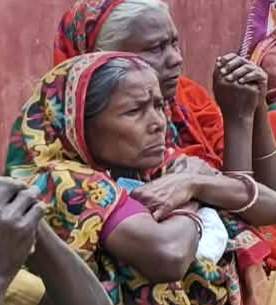
Older adults bear the heaviest burden during Bangladesh's cold season. Their bodies regulate temperature less efficiently, and many live alone or in homes without younger family members nearby to notice warning signs of hypothermia. The yearly toll among elderly residents makes clear just how dangerous winter nights can become without adequate bedding.
For many elderly individuals in rural villages, a donated blanket isn't a nice gesture, it's the difference between surviving the season and becoming another statistic.
Children and Their Vulnerability to Winter Illness
Children's immune systems are still developing, which makes them especially susceptible to the respiratory infections and illnesses that spread during cold months. A child who sleeps cold night after night is far more likely to fall sick, miss school, and fall behind, creating ripple effects that extend well beyond the winter season itself.
People With Disabilities Left Without Protection
Individuals with disabilities often face compounded challenges during winter. Limited mobility can make it harder to seek warmth, gather firewood, or access community resources. Many also rely on caregivers who are themselves stretched thin trying to meet basic needs, leaving little room to address the specific challenges cold weather introduces.
This is precisely why organizations prioritize reaching these groups first. Blanket distribution isn't about handing out supplies evenly, it's about identifying who's at the greatest risk and making sure they're not overlooked.
Inside Lotus Ministry Trust's Mission in Northern Bangladesh
Plenty of organizations talk about helping vulnerable communities. Fewer actually build the infrastructure to do it consistently, year after year, in some of the hardest-to-reach villages in Northern Bangladesh. Lotus Ministry Trust has focused its efforts on exactly that kind of consistent, boots-on-the-ground presence. Blankets are crucial for survival during Bangladesh's cold nights, especially in these remote areas.
The organization's approach centers on two things that often get overlooked by larger, more bureaucratic charities: direct relationships with local communities and a willingness to show up during the specific seasons when need is highest. Winter blanket distribution fits naturally alongside the Trust's broader mission to address immediate, physical suffering.
What makes this work stand out isn't just the blankets themselves, but the network built to deliver them efficiently to the people who need them most.
Lotus Ministry Trust at a Glance:Founded: 2021Active volunteers: 300+Meals provided across Northern Bangladesh: Over 100,000Planned 2025 expansion: 75 additional villages across three new districts
These numbers tell a story of steady growth, but they also reflect something harder to quantify, the trust built with communities that have learned the Trust shows up when it says it will.
Founded in 2021 to Serve Overlooked Communities
Lotus Ministry Trust began in 2021 with a focus on the communities least likely to receive outside help. Northern Bangladesh, with its harsher winters and higher rates of food insecurity, became a natural focus area. Rather than spreading resources thin across the entire country, the Trust chose to go deep in specific regions where need was greatest and support was scarce.
That decision has shaped everything since, from how volunteers are recruited to how villages are selected for new programs.
Over 300 Active Volunteers on the Ground
None of this happens without people willing to do the work. Lotus Ministry Trust currently counts over 300 active volunteers supporting its programs throughout Northern Bangladesh. These volunteers typically dedicate four to eight hours each week, though that number climbs significantly during emergency response periods like the coldest stretches of winter.
Volunteers take on a wide range of roles, from loading and distributing blankets and food packages to providing agricultural training and nutrition education in the villages they serve.
How Blanket Funds Are Raised and Distributed
Lotus Ministry Trust raises funds specifically to purchase and distribute blankets across Bangladesh each winter. The appeal of this approach lies in its simplicity. Blankets are cost-effective, portable, and require no electricity, which makes them uniquely suited to rural areas where infrastructure like consistent power access simply isn't guaranteed.
Blankets Are Only Part of the Story: Fighting Hunger Too
Cold isn't the only threat families in Northern Bangladesh face each year. Hunger runs alongside it, often invisible to outsiders but deeply felt in the households living through it.
23.6 Million Bangladeshis Facing Food Insecurity
Roughly 23.6 million people in Bangladesh experience moderate to severe food insecurity, a figure that represents nearly 15% of the country's entire population. That's not a distant statistic confined to the most remote corners of the country. It touches families in villages across Northern Bangladesh, many of the same communities where blanket distribution takes place each winter.
How Chronic Hunger Hurts Children's School Attendance
Food insecurity doesn't just leave children hungry, it reshapes their entire educational trajectory. Children from food-insecure homes are 42% more likely to miss school regularly, and they're 37% more likely to repeat grades compared to their food-secure peers. A missed meal becomes a missed lesson, and over time, those missed lessons compound into years lost.
Two-Week Food Packages of Rice, Lentils, and Vegetables
Lotus Ministry Trust's primary food program centers on distributing nutritionally balanced packages built around local staples like rice, lentils, and vegetables. Each package is designed to provide approximately two weeks of sustenance for a family of four, giving households enough breathing room to stabilize before the next distribution cycle arrives. The meals are culturally appropriate and vegetarian, fitting naturally into the dietary practices already common in these communities.
Distribution happens through strategically located centers that function as community hubs, places where families know they can reliably return month after month. In the village of Charghat, this consistency has paid off in a measurable way: school attendance increased by 37% since the Trust's food security programs began there.
Plans to Reach 45,000 More People by 2025
The Trust isn't slowing down. By 2025, Lotus Ministry Trust aims to extend its food security programs to 75 additional villages spread across three new districts in Northern Bangladesh. That expansion is expected to reach approximately 45,000 additional individuals currently experiencing food insecurity, a significant jump that will require even more volunteers, funding, and logistical coordination than the Trust currently manages.
How You Can Bring Warmth to a Family This Winter

Not Just Warming A Body But Comforting A Soul
Support Lotus Ministry Directly Through The Founders' PayPal
None of this work happens in isolation. Every blanket distributed and every food package delivered traces back to someone, somewhere, deciding to contribute in whatever way they could.
Donating Funds for Blanket Purchases
Financial contributions remain the most direct way to support blanket distribution efforts. Because blankets are relatively inexpensive to produce and distribute at scale, even modest donations stretch further than people often expect, covering multiple families rather than just one.
Consistent funding also allows organizations like Lotus Ministry Trust to plan ahead rather than scrambling each winter, purchasing blankets in bulk before the coldest weeks hit and ensuring supplies arrive in villages before temperatures drop to their lowest point.
Supporting Lotus Ministry Trust's Volunteer Network
Not everyone can give financially, and that's where volunteer support fills the gap. Whether it's helping coordinate logistics from abroad, spreading the word through personal networks, or eventually joining efforts on the ground, every volunteer hour adds capacity to a network that already stretches across dozens of villages in Northern Bangladesh.
Spreading Awareness Within Your Own Community
Sometimes the most valuable contribution is simply talking about the problem. Most people have never considered that winter poses a life-threatening risk in a country widely associated with tropical heat. Sharing that reality, even in casual conversation, plants the seed for someone else to get involved.
A single social media post or dinner table conversation has started bigger giving journeys than people realize. Awareness spreads compassion, and compassion tends to spread action right behind it.
One Blanket Can Change a Family's Winter
It's easy to underestimate something as simple as a blanket. But for a family in Shatkhira huddled together against the cold, or an elderly woman in Jeshore sleeping alone on a thin mat, that blanket represents the difference between a dangerous night and a safe one.
Blanket distribution works precisely because it's simple. There's no complicated technology to maintain, no electricity required, no steep learning curve for the families receiving help. Just warmth, delivered directly to the people who need it most.
That simplicity is also what makes it so easy for anyone to get involved. A donation, a shared post, a few hours of volunteer time, these small actions add up into something much larger when enough people choose to participate.
Winter will keep coming to Northern Bangladesh every year, and so will the families counting on someone to notice. The question isn't whether the need is real, it's whether enough people choose to respond to it.
Frequently Asked Questions
These are some of the most common questions people ask when they first learn about blanket distribution efforts in Bangladesh.
Why Is Winter So Dangerous in Northern Bangladesh?
Winter turns dangerous in regions like Shatkhira and Jeshore because temperatures drop close to freezing while most homes lack insulation, heating systems, or sufficient bedding. This combination puts residents, especially elderly people, at serious risk of hypothermia and cold-related illness.
Without intervention, many families simply have no way to protect themselves from the cold once temperatures fall.
What Makes Wool and Fleece the Best Choices for Cold-Weather Blankets?
Wool holds in heat naturally and wicks away moisture, making it durable and highly effective over years of use. Fleece offers a lighter, more affordable alternative that still provides strong insulation, making both materials practical choices depending on budget and distribution scale.
How Does Lotus Ministry Trust Choose Which Communities to Help?
Lotus Ministry Trust focuses on Northern Bangladesh, where cold winters and high rates of food insecurity overlap most severely. The Trust prioritizes villages with limited access to outside resources, relying on its volunteer network to identify families facing the greatest risk.
This targeted approach ensures that elderly residents, children, and people with disabilities, the groups most vulnerable to winter's effects, receive support first.
Can Blanket Donations Really Prevent Deaths?
Yes. Cold exposure contributes to hypothermia deaths among elderly residents in Bangladesh every winter, and access to warm bedding directly reduces that risk. A blanket won't solve every challenge a family faces, but it addresses one of the most immediate and preventable dangers of the season.
That's precisely why organizations treat blanket distribution as urgent, time-sensitive work rather than a general charitable gesture.
How Does Lotus Ministry Trust Combine Blanket Distribution With Food Security Work?
Lotus Ministry Trust runs both programs through the same community hubs and volunteer network, allowing the organization to address cold exposure and hunger simultaneously rather than treating them as separate problems. Food packages provide two weeks of sustenance per family, while blanket distribution targets the same vulnerable households during the coldest months.
By tackling both issues together, the Trust reaches families holistically instead of leaving one urgent need unmet while addressing another.
If this kind of work resonates with you, Lotus Ministry Trust continues to welcome support from anyone looking to bring warmth and food security to families across Northern Bangladesh.





Comments