
Bangladesh Food Aid: Lotus Ministry Trust Support & Assistance

Bangladesh Food Aid: Bangladesh faces a persistent food crisis — millions of families in rural areas survive on a single daily meal, with children bearing the worst nutritional consequences.
Lotus Ministry Trust has reached over 100,000 people since launching in 2021, delivering Bangladesh Food Aid packages directly to families who cannot access formal food systems.
Just $50 feeds a family of five for an entire month — one of the most cost-efficient humanitarian food aid ratios of any active Bangladesh relief program.
Climate shocks and inflation have dramatically worsened food access — the 2022 floods alone wiped out crops across northern Bangladesh, triggering a cascading hunger emergency.
You can take action today — from one-time donations to community fundraising, there are five concrete ways to support Bangladesh food relief efforts right now.
Hunger in Bangladesh is not a distant statistic — it is a daily reality for millions of families who wake up not knowing if they will eat that day.
Lotus Ministry Trust is a humanitarian organization working directly inside these communities, delivering food aid to the families that formal systems consistently miss. Their ground-level approach is built on local trust, efficient logistics, and a deep understanding of what rural Bangladeshi families actually need to survive.
Please Help Support Our Humanitarian Efforts
Families in Rural Bangladesh Are Going Hungry Every Day
Bangladesh has made remarkable economic progress over the past two decades, but that progress has not reached everyone equally. In rural areas — particularly in the north and along flood-prone river deltas — food insecurity remains a chronic, grinding problem. Families routinely reduce their meals to a single serving of plain rice per day, not as a temporary measure, but as a long-term survival strategy.
The gap between urban and rural food access in Bangladesh is stark. While cities have seen improved food availability and nutrition programs, villages are still heavily dependent on subsistence farming and seasonal labor — both of which are increasingly disrupted by climate events and market inflation.
Only 25% of Children Meet Minimum Daily Nutritional Standards
Child malnutrition in rural Bangladesh is one of the most urgent dimensions of this crisis. When families are forced to stretch scarce food supplies, children are often the ones who suffer the most severe long-term consequences. Stunted growth, weakened immune systems, and impaired cognitive development are all direct outcomes of chronic undernutrition in early childhood — consequences that follow these children for the rest of their lives.
Climate Shocks and Inflation Are Making Food Access Worse
Bangladesh is one of the most climate-vulnerable countries on Earth. Cyclones, flooding, and erratic monsoon seasons regularly destroy harvests across entire regions, wiping out months of agricultural labor in a matter of days. At the same time, global food price inflation has pushed the cost of staples like rice and lentils beyond the reach of the poorest households.
These two pressures — environmental and economic — are compounding each other. A family that survives one bad flood season may not recover before the next one hits. Lotus Ministry Trust's ground assessments have confirmed that in many villages, families have already been forced to cut both the quantity and quality of their meals, sometimes surviving on a single daily serving with almost no nutritional variety.
What Lotus Ministry Trust Actually Does in Bangladesh
Most large international aid organizations operate at scale but struggle with the last mile — getting food into the hands of the most isolated, most vulnerable families. Lotus Ministry Trust was built specifically to solve that problem. Their model is community-first, working through local leaders and trusted volunteers who know exactly which families need help and how to reach them.
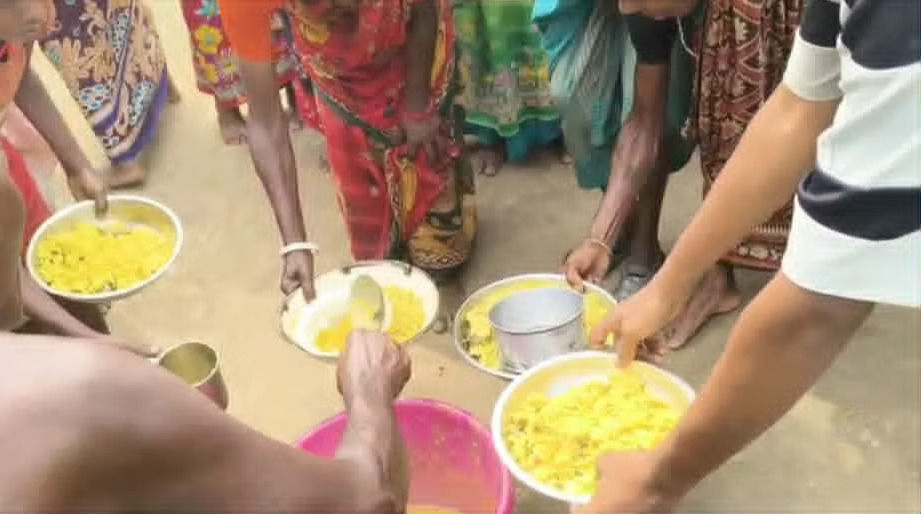
Rather than operating a centralized warehouse model that requires families to travel to a distribution point, Lotus Ministry Trust brings food directly to doorsteps. This distinction matters enormously for elderly individuals, disabled family members, and mothers with young children who simply cannot make long journeys to collect aid.
Founded in 2021, Already Reached Over 100,000 People
In just a few years of operation, Lotus Ministry Trust has built one of the most effective community-based food relief networks in Bangladesh. Since founding in 2021, the organization has delivered food aid to over 100,000 people — a number that reflects not just operational scale, but the depth of genuine community trust that makes their distribution model work.
Why Rice Is The Right Choice
Rice is not just a dietary staple in Bangladesh — it is a cultural cornerstone. Providing rice as the foundation of each food aid package is both practically smart and culturally respectful.
Each aid package is carefully designed around the specific nutritional deficiencies most common in rural Bangladesh, with particular attention to the needs of women and children. This is not generic food distribution — it is targeted nutritional support built around what these communities actually eat and need.
How Local Leaders and Volunteers Drive Distribution
One of Lotus Ministry Trust's most important operational advantages is its reliance on local knowledge. Community leaders and trained local volunteers identify the families most in need, coordinate distribution logistics, and ensure that aid does not get diverted or duplicated. This local-first model dramatically reduces overhead costs and increases the accuracy of targeting — meaning more food reaches the right people.
The 2022 Floods Changed Everything for Northern Bangladesh
In 2022, catastrophic flooding swept through large parts of northern Bangladesh, inundating farmland, destroying standing crops, and displacing thousands of families. For communities already living on the edge of food insecurity, the floods were not just a natural disaster — they were a food security emergency that wiped out the primary source of both nutrition and income for entire villages at once.
The scale of the destruction was difficult to overstate. Families who had planted and tended crops for months watched their entire harvest disappear underwater within days. With nothing to eat and nothing to sell, the crisis cascaded quickly from flood damage into acute hunger.
Crops Destroyed, Thousands of Families Left Without Food
The immediate aftermath of the 2022 floods left thousands of families across northern Bangladesh without any food reserves. Stored grain was destroyed, livestock were lost, and the informal support networks that communities normally rely on were overwhelmed. For many families, the floods marked the beginning of a prolonged period of food deprivation that stretched well beyond the initial disaster window.
How Lotus Ministry Trust Responded to the Crisis

Join Us in Bringing Food and Hope to Those Who Need It Most
When the 2022 floods hit northern Bangladesh, Lotus Ministry Trust mobilized quickly. Their existing network of local volunteers and community leaders meant they could identify the hardest-hit families within days rather than weeks. Emergency rice and lentil packages were dispatched directly into flooded communities, reaching families who were completely cut off from markets and formal aid channels. The speed of that response was only possible because the trust and infrastructure were already in place before the disaster struck.
Women and Children Carry the Heaviest Burden
In Bangladeshi households facing food scarcity, women and children consistently eat last and eat least. Mothers routinely skip their own meals to ensure their children get whatever food is available — and even then, children's portions are often nutritionally insufficient. The consequences for young children are severe and long-lasting: stunted growth, weakened immunity, and developmental delays that no amount of future food aid can fully reverse. Lotus Ministry Trust's aid packages are specifically weighted toward households with young children and pregnant or nursing mothers, recognizing that these groups face the sharpest nutritional cliff.
What $50 Does When You Donate to Lotus Ministry Trust
Numbers matter in humanitarian aid, and Lotus Ministry Trust has one of the most compelling cost-efficiency ratios of any active Bangladesh relief program. A single $50 donation provides a complete monthly food supply for a family of five — covering the full caloric and basic nutritional needs of an entire household for 30 days. That kind of direct, measurable impact is rare in international aid work, where overhead costs frequently consume a significant share of every dollar donated.
One Month of Food for a Family of Five
Each food package delivered by Lotus Ministry Trust is designed around a family of five, providing enough rices to sustain the household for a full month. Rice delivers the caloric density that forms the backbone of the Bangladeshi die. This is not symbolic aid. It is a calculated nutritional intervention built around real dietary data from the communities being served.
How the Organization Keeps Distribution Costs Low
Lotus Ministry Trust keeps operational costs low by leaning heavily on its local volunteer network rather than maintaining a large paid staff in the field. Local community leaders coordinate distribution logistics, identify eligible families, and handle last-mile delivery — tasks that would cost significantly more if contracted to outside logistics providers. This structure means that a far greater proportion of every donated dollar goes directly into food supplies rather than administration.
The organization also sources rice and lentils locally wherever possible, reducing transportation costs while simultaneously supporting Bangladeshi agricultural markets. This dual benefit — feeding families in need while also investing in local food economies — reflects a sophisticated understanding of how sustainable food relief actually works at the community level.
5 Ways to Support Bangladesh Food Relief Right Now
Whether you have money, time, or simply a platform, there is a meaningful way for you to
contribute to Lotus Ministry Trust's work in Bangladesh. The food crisis affecting rural communities is urgent, but it is also solvable — with the right support directed to the right places.
Here are five concrete actions you can take today:
1. Make a One-Time or Monthly Donation
The most direct way to support Bangladesh food relief is through a financial contribution to Lotus Ministry Trust's active GoFundMe campaign. A one-time $50 donation feeds a family for a month. A recurring monthly contribution of the same amount means one family never goes without food for as long as you maintain that giving. Monthly donors are particularly valuable to the organization because predictable funding allows Lotus Ministry Trust to plan distributions in advance rather than reacting to crises after they have already deepened.
Even smaller contributions make a tangible difference at scale. Every dollar donated goes toward food packages that are delivered directly to families — not absorbed by layers of administrative overhead.
2. Volunteer Your Time or Skills
Lotus Ministry Trust welcomes volunteers with a wide range of backgrounds — from logistics and communications professionals to individuals with no specialized skills who simply want to give their time. Remote volunteers can support fundraising campaigns, social media outreach, grant writing, and donor communications. Those with experience in humanitarian logistics, nutrition, or community development can contribute at an even deeper operational level.
If you have skills in graphic design, video production, or digital marketing, those capabilities directly amplify the reach of Lotus Ministry Trust's fundraising efforts — which translates directly into more families fed.
3. Share the Campaign on Social Media
Awareness is fuel for humanitarian campaigns. Sharing Lotus Ministry Trust's food relief work on your social media platforms — with a direct link to their donation page — puts the campaign in front of people who may never have encountered it otherwise. A single share from a well-connected individual can generate dozens of new donors. It costs nothing and takes less than two minutes, but the downstream impact on families in Bangladesh can be substantial.
4. Fundraise Within Your Community
Community fundraising — whether through a workplace giving campaign, a church collection, a school event, or a local business partnership — can generate significant contributions in a short period of time. Because $50 feeds a family for a month, even a modest community fundraiser has a clear, measurable impact that makes it easy to communicate to participants. Lotus Ministry Trust can provide materials and support to help you run an effective campaign within your own network.
5. Partner With Lotus Ministry Trust as an Organization
Businesses, faith communities, and nonprofit organizations can formalize their support through an organizational partnership with Lotus Ministry Trust. Corporate giving programs, matched donation initiatives, and cause-marketing collaborations are all viable partnership structures that can significantly amplify the volume of food aid delivered in Bangladesh. Organizational partners also benefit from the credibility and visibility that comes with alignment to a verified, impact-driven humanitarian effort.
The Goal: Reach 50,000 More People Through Expanded Distribution

Every Meal, Every Bag of Rice — Your Support Makes It Possible
Lotus Ministry Trust is not standing still. With over 100,000 people already reached since 2021, the organization has set an ambitious but achievable target: extend food relief to an additional 50,000 people through expanded infrastructure, improved logistics, and deeper community partnerships across Bangladesh. Learn more about their food relief efforts.
New Distribution Centers and Improved Logistics
To hit that target, Lotus Ministry Trust is investing in new distribution centers positioned closer to the most underserved rural communities. Shorter supply chains mean lower transportation costs, faster delivery times, and a reduced risk of spoilage — all of which translate directly into more food reaching more families. The logistics improvements being implemented are not cosmetic upgrades. They are structural changes designed to handle significantly higher distribution volumes without proportionally increasing overhead costs.
Clean Water and Education Initiatives Running Alongside Food Aid
Food relief alone cannot solve the full picture of rural poverty in Bangladesh. Lotus Ministry Trust understands this, which is why their expansion plans integrate clean water access and community education programs alongside food distribution. Contaminated water is one of the leading causes of illness in food-insecure households — and illness accelerates malnutrition, creating a vicious cycle that food packages alone cannot break.
The education initiatives running in parallel focus on nutrition literacy, teaching families how to maximize the health value of available food resources, and on agricultural resilience — helping communities build food production capacity that reduces their long-term dependence on external aid. This is the difference between relief and transformation.
Every Donation Feeds a Real Family in Bangladesh
Behind every donation is a real family — a mother who can feed her children tonight, a grandfather who does not have to go to bed hungry, a child who gets to grow up with the nutrition their developing brain and body need. Lotus Ministry Trust's model is built around that human reality, and every dollar donated flows as directly as possible toward that outcome. If you are ready to make that difference, support Lotus Ministry Trust's Bangladesh food relief campaign here.
Frequently Asked Questions
The following questions address the most common concerns and points of curiosity from people considering supporting Bangladesh food relief efforts through Lotus Ministry Trust.
How Long Has Lotus Ministry Trust Been Operating in Bangladesh?
Lotus Ministry Trust was founded in 2021 and began its Bangladesh food relief operations that same year. In the relatively short time since launch, the organization has built an extensive community network and delivered food aid to over 100,000 people across rural Bangladesh.
The speed of that growth reflects both the depth of the need and the effectiveness of the community-first model Lotus Ministry Trust uses. Rather than spending years building administrative infrastructure, the organization embedded itself directly into existing community structures from day one — which allowed impact to scale quickly while keeping costs low.
What Food Items Are Included in Each Aid Package?
Each Lotus Ministry Trust food aid package contains rice — the dietary staple that form the nutritional foundation of the Bangladeshi diet. Rice provides the caloric density that households need for daily energy. The packages are sized to sustain a family of five for a full month.
How Does Lotus Ministry Trust Decide Which Families Receive Aid?
Lotus Ministry Trust relies on its network of local community leaders and trained volunteers to identify the families most in need within each target area. These individuals have direct, firsthand knowledge of their communities — they know which households are most vulnerable, which families have lost primary earners, and which children are showing signs of malnutrition.
This ground-level identification process is far more accurate than top-down needs assessments conducted by outside organizations with limited local context. It also builds community ownership of the relief effort, which strengthens trust and ensures that aid reaches the right people rather than defaulting to whoever happens to show up at a distribution point.
Priority is consistently given to households with young children, pregnant or nursing mothers, elderly residents, and individuals with disabilities — the groups that face the steepest nutritional consequences from food insecurity and the greatest barriers to accessing food through other channels.
Can I Donate on a Recurring Basis to Support Ongoing Food Relief?
Yes — and recurring donations are particularly valuable to Lotus Ministry Trust's operational planning. One-time donations are always welcome and immediately impactful, but monthly giving allows the organization to forecast supply needs, plan distribution schedules, and maintain consistent food access for families across multiple months rather than delivering sporadic support.
There are several ways to structure your ongoing support:
Monthly recurring donation through the GoFundMe campaign — $50 per month sustains one family of five continuously
Quarterly contributions that align with seasonal distribution pushes, particularly ahead of monsoon and flood seasons when need spikes
Annual giving commitments that allow Lotus Ministry Trust to include your support in longer-term program planning
Employer-matched giving — check whether your workplace has a donation matching program that could double the impact of your contribution
Legacy or planned giving for donors who want to build Bangladesh food relief into their long-term charitable commitments
Predictable funding is one of the most powerful tools in humanitarian aid. When Lotus Ministry Trust knows what resources are coming in, they can negotiate better bulk pricing on rice and lentils, reduce emergency procurement costs, and keep more of every donated dollar flowing into food rather than logistics scrambling.
To set up a recurring contribution, visit the Lotus Ministry Trust GoFundMe page and select the recurring donation option when completing your contribution.
How Does Climate Change Connect to Food Insecurity in Bangladesh?
Bangladesh is ranked among the world's most climate-vulnerable nations, and that vulnerability has a direct, measurable impact on food security. The country sits at the convergence of three major river systems and faces the Bay of Bengal — a geography that makes it extraordinarily exposed to cyclones, storm surges, and monsoon flooding. As climate change intensifies the frequency and severity of these events, the agricultural foundation that rural communities depend on is being systematically eroded.
When a flood destroys a harvest, the damage is not limited to that single season. Farmers lose their income, families exhaust their food reserves, seeds for the next planting cycle are destroyed, and soil quality is often degraded by floodwater contamination. Recovery from a major flood event can take two to three growing seasons — meaning a single climate shock can push a household into food insecurity for over a year.
Rising temperatures are also affecting crop yields independently of flooding. Heat stress during critical growth periods reduces rice output, and increasingly unpredictable rainfall patterns make it harder for smallholder farmers to time planting cycles effectively. The result is a food system under chronic, compounding pressure — one where organizations like Lotus Ministry Trust are not just filling gaps but actively preventing the collapse of household nutrition for the most vulnerable communities in the country.




Comments