
Bhagavad Gita on Unwanted Population Explained

A single thread connects Arjuna's battlefield anxiety to one of the most misunderstood phrases in Vedic literature: unwanted population.
Help Lotus Ministry Preserve Moral Structure
Support Lotus Ministry Directly Through The Founders' PayPal

When Arjuna stood on the battlefield of Kurukshetra, his mind wasn't just troubled by the thought of killing his relatives. He was deeply concerned about something far more lasting—the collapse of an entire civilization's moral structure. This single fear, expressed in just a few verses of the Bhagavad Gita's first chapter, reveals timeless wisdom about family, duty, and what happens when a society loses its spiritual compass. You can read Arjuna's original words for yourself through Prabhupada Books, which preserves these verses alongside detailed commentary from Srila Prabhupada.
Key Takeaways
The Bhagavad Gita's teaching on "unwanted population" refers to children born outside dharmic family structures, not a literal population count
Arjuna's fear centered on the Sanskrit concept of varna-sankara, where family traditions break down and irreligion takes over
Krishna's response shows that protecting spiritual values sometimes requires difficult action, even against loved ones
This 5,000-year-old warning carries direct relevance to modern conversations about family breakdown and social values
Understanding this teaching requires looking at the full chain reaction Arjuna describes, step by step
Arjuna didn't arrive at his conclusion through abstract philosophy. He reasoned it out, piece by piece, standing in his chariot and watching his own family members arrayed for battle.
What Arjuna Feared on the Battlefield of Kurukshetra
Before a single arrow flew, Arjuna lowered his bow. He told Krishna that killing his kinsmen would bring no happiness, only grief that would outlast any victory. His reasoning wasn't about fear of death or weakness in combat. It was about consequences that would ripple through generations.
He worried that killing family elders and teachers would destroy the very people meant to preserve tradition
He feared that with those protectors gone, no one would be left to guide the younger generation properly
He recognized that broken families lead to broken societies, and broken societies lose their connection to dharma
This wasn't cowardice talking. Arjuna, one of history's greatest warriors, was making a calculated argument rooted in spiritual consequence rather than battlefield strategy.
The Direct Link Between War and Family Destruction
In verse 1.40, Arjuna states plainly that the destruction of a dynasty destroys its eternal family traditions. Once those traditions vanish, he explains, irreligion overtakes what remains of the family. This isn't a minor side effect in his mind—it's the central tragedy of war.
Why Arjuna Called This Sin a Great Sin
Arjuna specifically names this outcome a "great sin" in his address to Krishna. He's not simply mourning loss of life. He's identifying a spiritual crime—the destruction of structures that keep generations connected to righteous living. That distinction matters enormously for understanding what comes next in his argument.
What "Unwanted Population" Means in the Bhagavad Gita
The phrase "unwanted population" sounds jarring to modern ears, almost like a demographic statistic. But Arjuna isn't talking about overcrowding or birth rates. He's describing children born into chaos—without proper guidance, without connection to family dharma, without the spiritual foundation that Vedic society considered essential for a meaningful life.
The Sanskrit Term Varna-Sankara Explained
The original Sanskrit term is varna-sankara, which translates roughly to "unwanted children" or children resulting from improper unions. Prabhupada's commentary clarifies that this isn't a judgment on individual worth. Rather, it describes a social condition where children lack the structured upbringing that connects them to spiritual purpose and family responsibility.
Varna-sankara occurs, according to the text, when women lose the protection and guidance traditionally provided by family elders. This isn't about blame—it's about cause and effect within a specific social framework that Arjuna understood deeply.
How Family Tradition Breakdown Creates This Problem
Family traditions, in Vedic understanding, functioned as more than customs. They were transmission lines for spiritual knowledge, moral guidance, and practical wisdom passed from one generation to the next. When war or chaos eliminates the elders who carry these traditions, the transmission line breaks. Children born afterward grow up disconnected from that inheritance.
Krishna's View on Social Order and Duty
Interestingly, Krishna doesn't dismiss Arjuna's concern as irrelevant. He acknowledges the importance of social order throughout the Gita's teachings. But Krishna's response reframes the entire situation—sometimes protecting dharma requires actions that look destructive on the surface but serve a higher purpose underneath.
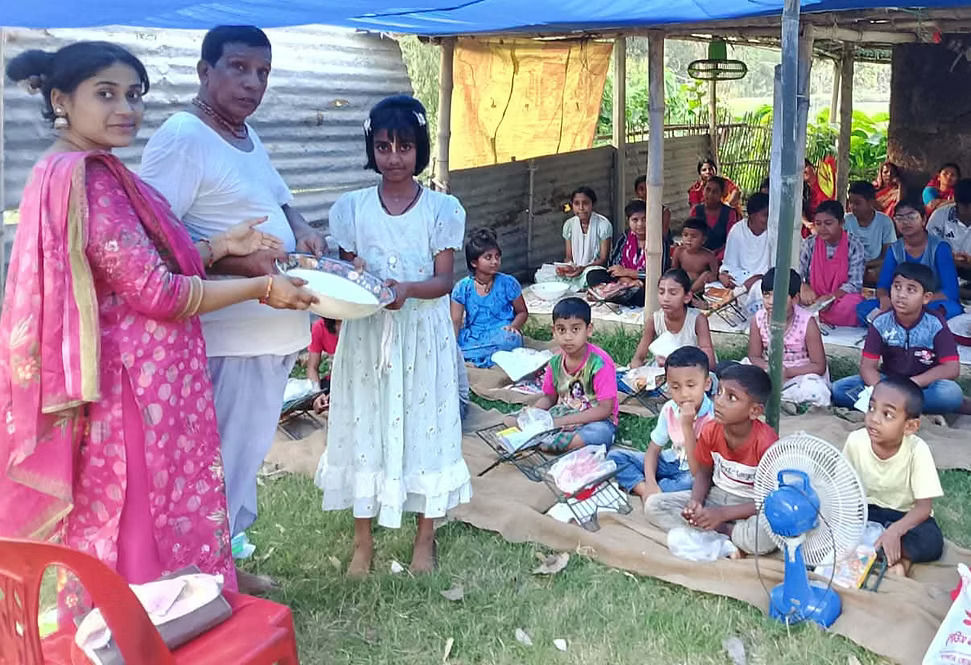
Your Help Preserves Family Traditions
Support Lotus Ministry Directly Through The Founders' PayPal
The Chain Reaction Described in Chapter One
Arjuna doesn't just name a problem—he maps out exactly how it unfolds, verse by verse. This isn't vague philosophical musing. It's a logical sequence, almost like a flowchart of social collapse.
Stage | What Happens |
1 | Family traditions are destroyed through war or conflict |
2 | Irreligion overpowers what remains of the family structure |
3 | Women lose protection and guidance from male family members |
4 | Unwanted population (varna-sankara) results from this breakdown |
5 | Both the family and its destroyers fall into hellish conditions |
Step 1: Destruction of Family Traditions
Everything starts here. Arjuna specifically points to the death of family leaders—fathers, grandfathers, teachers—as the trigger event. These aren't just individuals; they're living repositories of tradition. Their loss creates a vacuum that nothing else in the social structure can immediately fill.
Consider how traditions actually transfer in any culture. They pass through direct relationship, through elders teaching younger family members by example and instruction. Remove enough of those elders simultaneously, as war threatens to do, and you don't just lose individuals. You lose an entire generation's worth of accumulated wisdom and guidance.
Religious rituals go unperformed or improperly performed
Moral instruction that once came from respected elders disappears
Family history and identity lose their primary storytellers
Arjuna saw this clearly before Krishna ever responded. His grief wasn't shallow—it was rooted in genuine understanding of how societies actually function and fail.
Step 2: Irreligion Overpowers the Family
Once tradition-bearers are gone, Arjuna explains, irreligion doesn't creep in slowly—it overpowers the family. The Sanskrit suggests an active, almost aggressive takeover rather than a passive drift. Without people actively upholding dharmic practice, the vacuum fills quickly with its opposite.
Step 3: Women Become Corrupted
When male protectors in the family disappear, Arjuna argues, women lose the guidance and security that traditionally kept family structure intact. He's not making a statement about female capability or worth. He's describing a social reality of his time, where women depended on structured family protection, and the absence of that protection created vulnerability to outside corruption and exploitation.
Step 4: Unwanted Population Is Born
This is where varna-sankara actually appears in the chain. Children born during this breakdown period, according to Arjuna's reasoning, arrive without the structured guidance that connects them to dharmic living. They're not inherently flawed—they simply lack the traditional framework that would otherwise shape their spiritual and moral development.
Prabhupada's commentary on verse 1.40 through 1.42 makes clear that this concept reflects a specific concern about continuity. Vedic society placed enormous weight on proper lineage, not for reasons of social snobbery, but because lineage carried spiritual responsibility. Each generation was meant to receive instruction, perform specific duties, and pass forward what they'd learned.
Break that chain, and you get children raised without clear spiritual direction. Multiply that across an entire society losing its elders simultaneously, and you get what Arjuna feared most—not a literal population crisis, but a generation cut loose from its moral anchor.
Step 5: Family and Society Fall Into Hell
Arjuna's conclusion sounds dramatic, but his logic follows a clear path. He states that both the family members who caused this destruction and the family itself fall into hellish conditions. This isn't poetic exaggeration—within the Vedic worldview, failing in dharmic duty carries direct spiritual consequence, affecting not just the living but generations connected through ritual obligation.
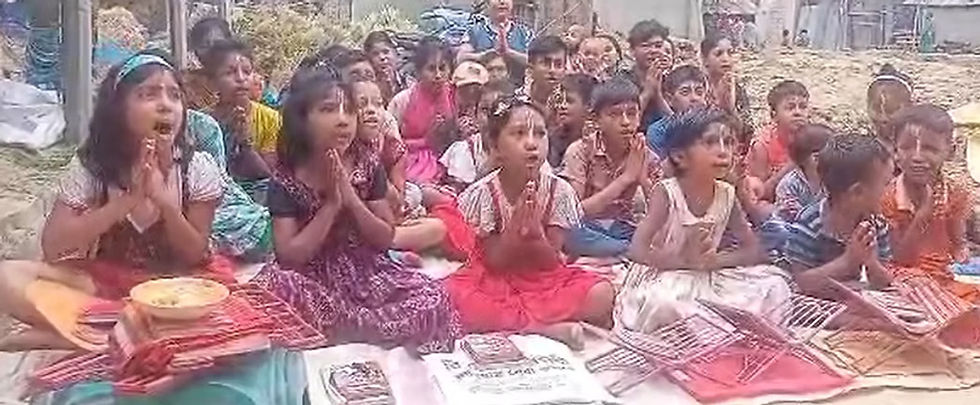
Be The Cornerstone Of This Foundation
Support Lotus Ministry Directly Through The Founders' PayPal
Why Ancestors Suffer From This Cycle
Here's where the teaching extends beyond the living family into territory many modern readers find surprising. Arjuna specifically mentions that ancestors fall down when traditional offerings stop. This connects to a broader Vedic understanding that the dead remain spiritually linked to their living descendants through ongoing ritual care.
The logic works like this: living family members perform specific offerings for deceased ancestors, maintaining a kind of spiritual relationship across the boundary of death. When family structure collapses and proper descendants no longer exist to perform these duties, that relationship breaks down. The ancestors, in this understanding, suffer the consequences of neglect they had no control over.
This isn't unique to Vedic tradition, either. Many cultures across history have held similar beliefs about ongoing obligation to deceased family members.
Chinese ancestor veneration practices share remarkably similar logic about ongoing family duty to the dead
Many African traditional religions maintain comparable beliefs about ancestral dependence on living descendants
Even some European folk traditions preserved concepts of obligation to deceased relatives through specific seasonal rituals
What makes the Gita's treatment distinct is how directly it ties this ancestral concern to Arjuna's immediate battlefield decision, making an abstract spiritual principle intensely personal and urgent.
The Tradition of Offering Rice and Water
In Vedic practice, descendants traditionally offered rice balls (called pindas) and water to deceased ancestors during specific ceremonies. These weren't symbolic gestures—they were considered essential spiritual sustenance, maintaining connection and well-being for ancestors in their continued existence beyond physical death.
Without proper descendants to carry out these ceremonies correctly, Arjuna feared, this entire support system for the dead would simply stop functioning. Generations of ancestors, going back further than anyone could count, would lose their spiritual sustenance all because living family members failed in their duty.
What Happens When These Offerings Stop
According to the text, ancestors deprived of these offerings "fall down," losing their elevated position in whatever realm they currently occupied. This creates a troubling picture for Arjuna: his choice on the battlefield wouldn't just affect the living. It would reach backward through time, disrupting the spiritual standing of ancestors who had nothing to do with the current conflict.
Spiritual Lessons for Seekers Today
Strip away the specific cultural context, and Arjuna's concern speaks to something universal—the fear that our choices today ripple outward and backward in ways we can't fully predict or control. That's a weighty realization for anyone serious about spiritual growth.
Modern seekers don't need to adopt ancient funeral rites to find relevance here. The deeper lesson concerns responsibility across generations, recognizing that how we live and what we preserve or destroy shapes more than our immediate circumstances. For a deeper understanding, you can explore the teachings of the Bhagavad Gita on these matters.
Protecting Values Over Material Gain
Arjuna's entire argument rests on valuing spiritual continuity over material victory. He's willing to lose a kingdom rather than destroy the structures that preserve dharmic tradition. That's a radical prioritization, especially coming from a warrior whose entire identity centered on achieving victory through combat.
This teaching challenges readers to examine their own priorities honestly. How often do immediate gains—financial success, social status, personal comfort—take precedence over slower, less visible forms of value like family integrity or spiritual practice?
The Gita doesn't suggest material concerns are worthless. Krishna himself acknowledges Arjuna's duties as a warrior and ruler throughout their conversation. But the text consistently places spiritual continuity as the deeper priority, worth protecting even at significant material cost.
Why Krishna Still Tells Arjuna to Fight
Given everything Arjuna fears, Krishna's eventual instruction to fight might seem contradictory. But Krishna's response operates on a different level entirely. He argues that Arjuna's duty as a warrior (his svadharma) must be fulfilled regardless of the painful consequences, because abandoning duty creates its own form of spiritual corruption.
Krishna essentially reframes the entire situation. The battle isn't really about destroying family traditions—it's about restoring dharmic order against forces that have already corrupted it. Sometimes, Krishna suggests, protecting what matters most requires accepting short-term pain that looks destructive but serves long-term spiritual restoration.
Balancing Duty With Compassion
This tension between Arjuna's compassionate concern and Krishna's call to duty doesn't resolve into a simple answer. It sits with readers, asking them to hold both truths simultaneously—genuine care for consequences alongside commitment to necessary action.
That balance remains relevant for anyone facing difficult choices today. Compassion shouldn't paralyze necessary action, and duty shouldn't eliminate genuine concern for consequences. The Gita models holding both without collapsing into either extreme.
How This Teaching Applies to Modern Life
Family breakdown looks different today than it did on an ancient battlefield, but the underlying pattern Arjuna described hasn't disappeared—it's just changed form.
Children growing up without consistent guidance from extended family or community elders
Traditions and practical wisdom failing to transfer between generations due to distance, busy schedules, or simple disconnection
Young people searching for identity and purpose without clear frameworks to guide that search
Communities losing shared rituals that once created belonging and moral grounding
None of this means modern families are failing in some absolute sense. It means the mechanisms of transmission have shifted, and that shift carries both costs and opportunities that Arjuna's ancient warning still speaks to.
Where extended families once lived under one roof or in close proximity, nuclear families now often scatter across cities and countries. Where elders once held automatic authority and daily presence, modern life frequently separates generations by geography and lifestyle. The structures have changed, but the core concern—how do we pass forward what matters?—remains exactly what Arjuna worried about thousands of years ago.
Technology adds another layer entirely. Screens now compete with grandparents and parents for a child's attention and influence, creating transmission lines that look nothing like traditional family instruction but shape values just the same.
Family Values in a Changing World
Rebuilding what Arjuna feared losing doesn't require returning to ancient social structures. It requires intentional effort to create new versions of what those structures accomplished—consistent guidance, shared values, and genuine connection across generations. That might look like regular family meals, deliberate mentorship relationships, or simply making time for honest conversation across age groups that modern life often keeps separate.
Choosing Dharma Over Convenience
Krishna's deeper teaching throughout the Gita centers on choosing right action over comfortable action. That principle translates directly into modern family life. Showing up for difficult conversations, maintaining traditions even when they're inconvenient, and prioritizing relationship over efficiency all reflect this same dharmic commitment Arjuna wrestled with on his battlefield.
This doesn't mean rigid adherence to every old custom regardless of context. Dharma, as Krishna explains throughout the text, requires discernment about what actually serves spiritual growth versus what merely feels traditional. The goal isn't nostalgia—it's genuine continuity of what actually matters.
Real spiritual growth often asks us to choose the harder path when it serves something larger than immediate comfort. That's Arjuna's entire struggle compressed into a single principle, applicable far beyond any battlefield.
The Gita's Message Stands the Test of Time
Arjuna's fear about unwanted population wasn't really about demographics or birth rates. It was about continuity—the fragile, essential thread connecting generations through shared values, guidance, and spiritual purpose. That thread can break in war, as Arjuna feared, or it can break slowly through neglect, distraction, and disconnection in peaceful times.
The Bhagavad Gita doesn't offer a simple formula for preventing this breakdown. Instead, it offers something more valuable: a framework for thinking seriously about what we owe to the generations before and after us, and the courage to act on that responsibility even when the path forward feels uncertain.
Frequently Asked Questions
What Does the Bhagavad Gita Say About Unwanted Population?
The Bhagavad Gita addresses this concept through Arjuna's concerns in chapter one, where he describes how war destroys family traditions, leading to a chain of social breakdown that produces varna-sankara, or children born without proper spiritual guidance and family structure.
Why Was Arjuna So Worried About Family Destruction?
Arjuna believed that killing family elders and teachers in battle would eliminate the people responsible for preserving dharmic traditions and guiding younger generations. Without these tradition-bearers, he feared, families would lose their spiritual foundation entirely.
What Is Varna-Sankara in Simple Terms?
Varna-sankara refers to children born during a breakdown of family and social structure, lacking the traditional guidance and connection to dharmic duty that Vedic society considered essential. It's a social condition rather than a judgment on individual worth.
Prabhupada's commentary clarifies this term represents disrupted transmission of spiritual knowledge across generations, not a statement about any child's inherent value or potential.
Does Krishna Blame Women for Social Decline?
Arjuna's original argument reflects the social context of his era, describing how women lost protective family structures during periods of upheaval. Krishna's broader teaching throughout the Gita focuses on dharmic duty applicable to all people, not blame directed at any specific group.
How Can This Ancient Teaching Help Me Today?
This teaching encourages readers to examine how well they're preserving and transmitting meaningful values to younger generations, whether through intentional mentorship, maintained traditions, or simply consistent presence and guidance.
It also offers permission to make difficult choices that prioritize long-term spiritual continuity over short-term comfort, following Krishna's model of courageous action grounded in deeper purpose.
For readers wanting to explore these verses in their original context alongside detailed scholarly commentary, Prabhupada Books remains one of the most trusted resources for authentic Bhagavad Gita translation and teaching.






Comments